Top developments
Fed pricing shifts toward later cuts
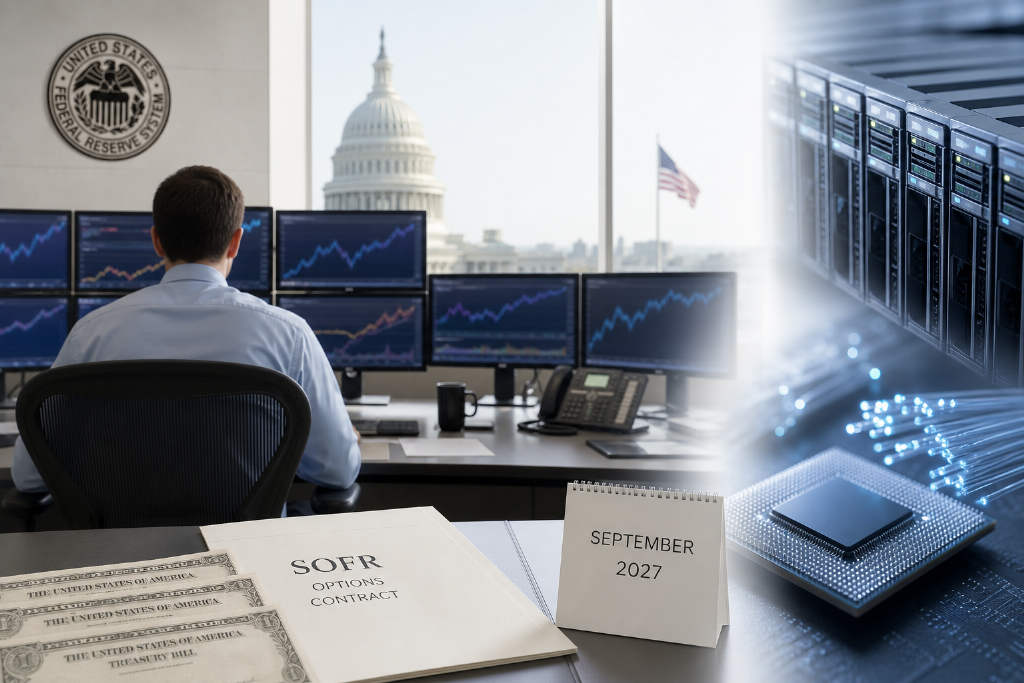
Bitget UEX said the options market tied to U.S. rates has started to reflect hedges against a reversal in Federal Reserve policy after weaker July inflation, retail sales and consumer confidence data, combined with an unexpected drop of 23,000 in nonfarm payrolls. Traders have been buying September expiry options that bet on no change in rates, while also building positions in March and June 2027 SOFR call options.

According to the report, the probability of a September rate hike has fallen to about half, down from a peak near 68% two weeks ago. Interest-rate swaps now imply only about 9 basis points of tightening for the September meeting. The note said this repricing has eased part of the market’s concern over tighter policy, though elevated long-end yields are still in place, leaving a split between short-end and long-end expectations and creating uneven pressure across growth stocks.
Iran contact paused, oil keeps geopolitical support
On commodities and geopolitics, the report said U.S. officials indicated Trump had instructed his negotiating team to suspend contact with Iran. The team named in the report includes Vice President Vance, envoy Witkoff and Kushner. It added that the White House approach had shifted from trying to deliver a quick blow to a longer-term strategy described as choking off pressure.
That pause, after earlier active discussions, keeps uncertainty around Hormuz-related negotiations in place. Bitget UEX said the move adds to supply uncertainty, gives oil prices continued geopolitical support and keeps sticky-inflation concerns alive.
Data-center power oversight becomes an AI issue
The report also highlighted tougher state-level regulation on electricity use by data centers in the U.S. Pennsylvania now requires data centers to provide their own power and increase the share of clean energy. Texas has started audits for grid access, and New York has paused the construction of new large data centers.
Bank of America strategists have listed the issue as a variable for the midterm elections. In Bitget UEX’s reading, tighter regulation may affect the pace of AI capital spending, while power and community constraints raise both the cost and uncertainty of rolling out AI infrastructure. That has drawn attention to equipment and power suppliers, even as valuations across tech hardware come under pressure.
Market review
Commodities and FX
Spot gold was around $4,343 an ounce, up 0.2%. Spot silver traded near $63 an ounce, down 0.52%. WTI crude was near $85 a barrel, up 0.87%, and Brent crude was around $89 a barrel, up 0.56%. The U.S. dollar index, or DXY, stood near 99.645 and moved only modestly.
The report linked oil’s strength to Trump’s decision to pause contact with Iran, which keeps Hormuz uncertainty in the market. Gold, by contrast, was caught between firmer expectations for future rate cuts and still-elevated long-dated Treasury yields. Silver showed a more mixed response because of its industrial and safe-haven roles. Bitget UEX said options pricing points to a clear cooling in September hike expectations, but high 30-year yields still limit upside in precious metals. The report’s institutional read was that commodities are being driven at the same time by geopolitics and by a repricing of the rates path, with the chain running from geopolitical deadlock to firmer oil, then inflation expectations, and then another reassessment of policy.
Crypto market performance
BTC traded around $64,600, up 0.31%, while ETH was at $1,915, up 0.32%. Total crypto market capitalization stood near $2.29 trillion, also up 0.2%. Over the past 24 hours, liquidations reached about $205 million, with $119 million of that coming from long positions.
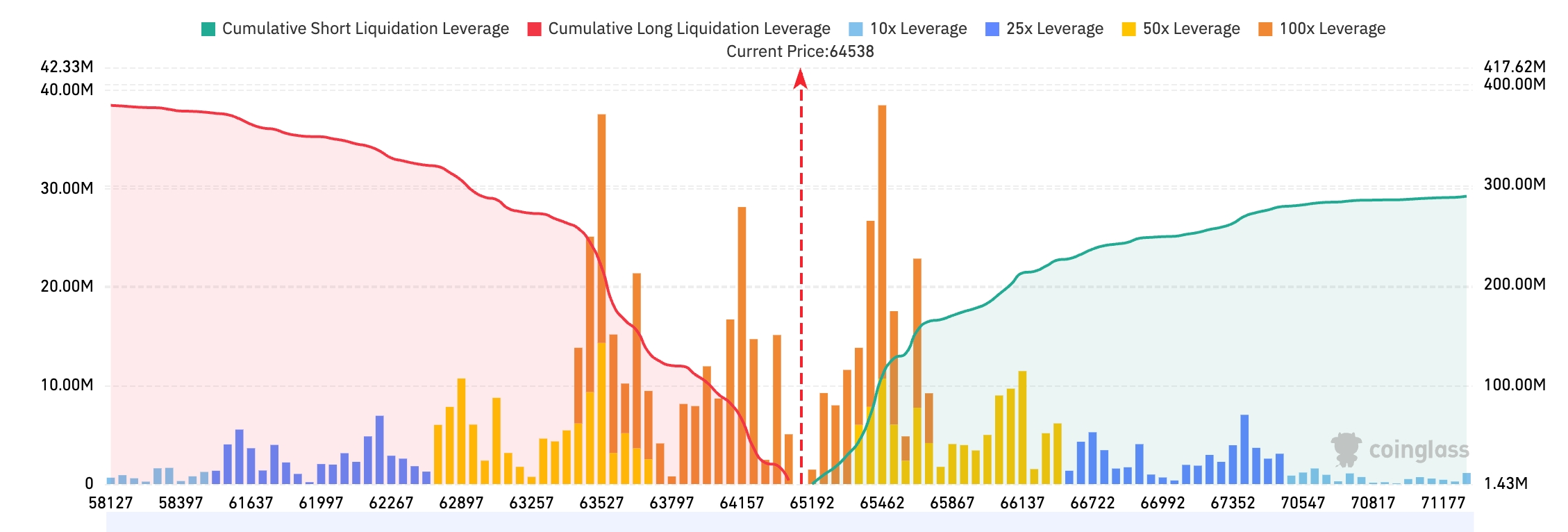
Bitget’s BTC/USDT liquidation map showed BTC at roughly $64,538, with a large concentration of highly leveraged 50x and 100x short liquidations sitting in the $65,000 to $66,000 range. The report said a break above that zone could trigger a cascade of short covering and amplify upside momentum. On the downside, some long liquidation pressure between $63,000 and $64,000 has already been released, leaving the near-term leverage balance tilted more to the upside.
For spot ETFs, the previous day recorded net inflows of $298 million, while the current dynamic net inflow reading stood at $46 million. Bitget UEX said weaker risk appetite, driven by a pullback in U.S. AI stocks and high long-end yields, has kept crypto in a choppy range. At the same time, whales have added about 43,000 BTC on a net basis over the past 60 days, pointing to dip buying by longer-term capital. The report said ETF flow volatility and leverage-driven liquidations are showing up at the same time, while institutional consensus still leans toward rangebound trading and close attention to the rates repricing and geopolitical developments feeding into risk assets.
U.S. equity indexes and megacaps
U.S. stocks closed lower across the board. The Dow Jones Industrial Average finished at 53,343.40, down 0.22%. The S&P 500 closed at 7,691.76, down 0.69%. The Nasdaq ended at 26,289.71, down 1.33%, with technology and semiconductors acting as the main drag.
Among the major tech names, Nvidia traded around $219.74, down 2.34%. Apple rose 1.45% to about $310.03. Microsoft gained 0.27% to roughly $481.63, and Alphabet added 0.06% to around $344.20. Amazon fell 0.71% to about $259.45, Meta dropped 4.45% to roughly $543.67, and Tesla slipped 0.72% to around $336.87.
Bitget UEX said the so-called Magnificent Seven showed a clear split. Apple, Microsoft and Google were relatively resilient or finished slightly higher, while Nvidia and Meta led the declines. AI hardware and semiconductor stocks corrected under the combined weight of valuation pressure and tighter regulation, and part of the market rotated toward software and defensive sectors. Even with rate-cut expectations moving closer, high long-end yields and tougher oversight for data centers still weighed on capital-intensive growth names.
Sector moves
Semiconductor and storage names fell sharply. SK Hynix dropped about 9.2%, SanDisk lost about 9.01%, and Broadcom fell about 3.17%. The report pointed to fading AI heat, valuation digestion and weakness from the Korean market as reasons money moved out of hardware.
Optical networking names were also hit. Coherent fell about 12.75% and Lumentum lost about 9.87%, with the report citing a temporary cooling in expectations for AI optical-module demand and the sector’s high-beta nature as factors that magnified the downside.
By contrast, healthcare and dividend-oriented shares held up better. Johnson & Johnson set a fresh closing high, while Eli Lilly traded near record levels. The report said capital has been rotating away from expensive AI themes and into defensive and steadier growth areas.
Single-stock breakdown
1. Coherent (COHR)
Coherent fell about 12.75% in one day, making it one of the worst performers in the AI optical communications group. The company had previously reported a fiscal fourth quarter that beat expectations, with revenue of about $2.05 billion, up about 34% year over year, and non-GAAP EPS of $1.74. It also issued next-quarter guidance above estimates, and the stock had jumped more than 7% in the prior session.
On Aug. 18, though, the shares reversed lower as profit-taking kicked in. The launch that same day of the Tradr 2X Short COHR Daily ETF (COHQ) gave bearish traders a leveraged tool and added to the move. The report said the pullback mainly reflects a technical correction after earnings delivery in a high-beta name, together with weaker risk appetite across AI hardware and market talk that Anthropic’s revenue outlook came in below some circulating expectations. Bitget UEX said fundamentals are still recognized, but valuation digestion and the introduction of leveraged products have raised short-term volatility. Its takeaway was that the demand case for optical communications remains intact, though position sizing and timing matter more in this setup.
2. Lumentum (LITE)
Lumentum dropped about 9.87%, falling alongside Coherent, Credo and other optical communications names. The report attributed the pressure to rich valuations across AI optical interconnect plays, profit-taking after the prior day’s gains and a broader sell-off in semiconductors and AI hardware.
Analysts cited in the note said the group had already run hard and was trading on elevated static valuations, making it vulnerable to a quick retreat when macro conditions or sentiment shifted. William O’Neil and others are still listed as maintaining buy ratings, but near-term fund flows have moved toward software and more defensive areas. Bitget UEX said the medium-term case for Lumentum as a core AI data-center optical-module name remains in place, but valuation swings and sector rotation are immediate risks.
3. Credo Technology (CRDO)
Credo Technology fell about 13%, placing it among the biggest decliners in AI optics and high-speed connectivity. The company has benefited from demand for high-speed SerDes and optical interconnects in data centers, but on Aug. 18 it sold off with the broader AI hardware and optical group.
The report said institutions see the move as more of a sector-level risk-off shift and a digestion of earlier gains than as a sudden deterioration in the company’s fundamentals. Its high-beta profile means bigger swings once sentiment turns. Bitget UEX said the stock may still fit as a higher-volatility way to express the AI infrastructure theme, but only with close monitoring of data-center capex trends and changes in the competitive landscape.
4. SanDisk (SNDK)
SanDisk dropped about 9%, while storage-related names including Micron and Seagate also came under pressure. The market’s concern, according to the report, was that high rates continue to weigh on growth valuations and that expectations for AI-related storage demand have cooled for now.
Bitget UEX said analysts still see medium- to long-term support from the storage cycle and AI demand, but high long-end yields and a rotation away from hardware have had a clear short-term effect. Some storage names had jumped in the prior session on policy and demand narratives, then gave back those gains as profit-taking emerged. The report’s implication was that the supply-demand gap thesis in storage remains, though near-term volatility has risen and investors will need to watch upcoming earnings and capex guidance.
5. Apple (AAPL)
Apple rose about 1.45%, outperforming in a session when the Nasdaq fell sharply and AI hardware broadly corrected. It was one of the few megacaps to finish higher.
The report described Apple as a relatively defensive technology allocation. Its hardware cycle and services business offer a buffer, and some money moved into the stock as expensive AI hardware names were sold. Bitget UEX said Apple may suit investors looking for steadier technology exposure, with attention still on the next product cycle and on how AI features translate into longer-term growth.
Market and project updates
- U.S. rate options have shifted noticeably toward pricing in 2027 rate cuts, while the chance of a September hike has retreated to about half from earlier highs.
- VanEck’s research team said 8 of the 12 capitulation indicators it tracks have now flashed, suggesting Bitcoin’s nearly 11-month correction may be approaching its later stage. BTC has traded in a $58,000 to $66,500 range since June and was around $64,700 in the report, still about 48% below its October 2025 all-time high. U.S. spot Bitcoin ETFs posted nearly $300 million in net inflows on Monday, the strongest single-day showing since May 5. VanEck said the previous three Bitcoin bear cycles took an average of 12.7 months from peak to maximum drawdown, and the current one is now in its 11th month, implying a possible accumulation phase between September and November if historical timing holds. The team also cautioned that concentrated capitulation signals have not always led to strong short-term returns. In similar cases, average 90-day and 180-day returns were below the market benchmark. Long-term holders have sold about 356,000 BTC over the past 30 days, bringing their holdings down to 11.84 million BTC and pushing their share of circulating supply below 60% for the first time in months.
- The U.S. Securities and Exchange Commission has proposed a new rule, Regulation Crypto Assets, designed to create a compliance path for digital-asset investments while allowing certain exemptions from securities-law requirements. The proposal is described in the report as a tailored issuance framework. It includes a startup exemption that would allow offerings of up to $5 million to avoid registration under the Securities Act of 1933 for four years, and a funding exemption that would allow up to $75 million of issuance over one year. The proposal also includes a safe-harbor provision under which digital assets would no longer be treated as securities once specified conditions are met and all managerial activity has ceased. The comment period is 60 days.
- Bitcoin whales have added about 43,000 BTC on a net basis over the past 60 days, with mid-sized and ultra-large holders both accelerating purchases.
- Anthropic is seeking to expand its credit line and is moving forward with a possible IPO in the fall, while its revenue has surpassed OpenAI’s, according to the report. OpenAI posted second-quarter revenue of $6.7 billion, up from $5.7 billion in the first quarter, a quarter-on-quarter increase of 18%. Its operating margin worsened further and losses widened. Some investors were disappointed because OpenAI’s revenue growth lagged Anthropic’s.
- Bank of America analyst Vivek Arya said a sum-of-the-parts free-cash-flow valuation model suggests Nvidia shares are trading at roughly a 34% to 50% discount to value, even after accounting for risks tied to financing the AI ecosystem. He said the market may be overstating Nvidia’s exposure to AI investment risk, creating what he called an attractive buying opportunity. The report said Nvidia has committed about $300 billion to projects and ecosystem partners including OpenAI’s Ohio data-center campus, made up of about $70 billion in equity investment and roughly $230 billion in residual-value guarantees or repurchase commitments. Bank of America maintained its Buy rating and $350 price target on Nvidia.
Market calendar
Wednesday, Aug. 19
The report highlighted U.S. economic releases and remarks from Federal Reserve officials as the day’s main focus. The key macro event is the release of the July FOMC minutes, due in the evening in UTC+8 time. Bitget UEX said this becomes the week’s most important macro event after last week’s CPI and that the market will be watching for details on the three dissenting votes against holding rates steady in July, along with how deeply the minutes discuss sticky inflation, the labor market and the September policy path.
Before the open, Target, Lowe’s, TJX and Analog Devices are scheduled to report results. The note said those earnings will test the health of retail consumption and demand tied to semiconductors and AI, with special attention on ADI’s industrial, data-center power and communications exposure. EIA crude inventory data is also due.
Thursday, Aug. 20
The U.S. will release the August Philadelphia Fed manufacturing index, weekly initial jobless claims and July leading indicators. Walmart is set to report before the bell, with the market focused on lower-end consumer resilience, grocery demand and general merchandise demand. Alibaba, NetEase and Deere are also scheduled, while Ross Stores will report after the close.
Friday, Aug. 21
The U.S. will publish preliminary August S&P Global manufacturing and services PMI readings, which the report said should help test the strength of economic expansion and the continuity of the soft-landing trade. Other major events are limited.
Bitget UEX added that after slower CPI and PPI readings last week, rate-hike expectations have already cooled materially. If the minutes show only limited disagreement and retail and housing data stay firm, the soft-landing trade and growth-stock bid could continue. If the minutes come in more hawkish or consumer guidance weakens, tighter pricing could return and put high-valuation sectors under pressure. The report expects moderate-to-elevated volatility and said the wording of the minutes, along with market reactions to retail earnings beats or misses, will be the main focus.
In its institutional summary, the report said the rates options market is showing a clear decline in September hike expectations, giving risk assets some support through policy repricing. At the same time, high long-end yields and valuation digestion in AI hardware are still weighing on growth stocks. The pause in Iran contact keeps geopolitical uncertainty alive and supports oil, while tighter data-center regulation adds constraints to AI infrastructure buildout and encourages rotation away from semiconductors and optical names toward healthcare and software. In crypto, the market remains rangebound as whale accumulation and ETF flow volatility play out together.
The original report also carried a disclaimer saying the content was compiled through AI search and manually reviewed for publication, does not constitute investment advice and may contain data deviations relative to live market prices.