Top stories
Tech and risk appetite: AI return concerns weigh on the Nasdaq
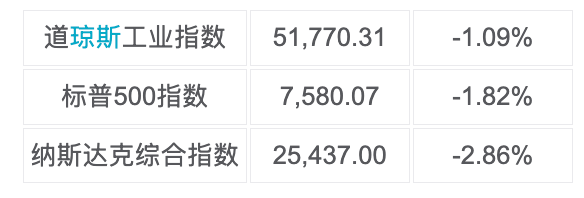
On Oct. 30, the Nasdaq Composite fell 2.86% and the S&P 500 lost 1.82%, with all seven mega-cap tech names closing lower. Intel plunged 28.58% in the first trading session after its earnings release. Amazon fell 1.41% over the same period, as strong AWS growth stood in contrast to pressure on free cash flow.
The split between earnings figures and share-price reactions shows investors are demanding clearer proof that AI spending can generate returns and support cash flow. The next question is whether tech stocks can stabilize and whether upcoming earnings reports can show that new revenue is enough to cover expansion costs. Revenue growth alone may not be enough to justify valuations.
Energy policy: seven OPEC+ members keep December production target unchanged
On Nov. 1, seven OPEC+ members including Saudi Arabia and Russia decided to keep December production requirements in line with the target set in September. The group will meet again on Nov. 29. The decision concerns production targets and does not mean actual supply or export volumes will remain unchanged.
The policy stance is unchanged for now, but oil prices still need to be assessed against actual supply, transportation, and demand conditions. For markets, energy companies may retain cash-flow support while other sectors continue to face cost pressure. Production targets alone are not enough to determine the direction of oil prices.
U.S. economy: employment costs rise 0.8% in Q3, manufacturing data due tonight
Data released in the U.S. on Oct. 30 showed civilian worker employment costs rose 0.8% quarter over quarter and 3.4% year over year in the third quarter. Wages and salaries rose 0.7% from the previous quarter, while benefit costs increased 0.9%. At 23:00 Beijing time today, the market will get October ISM manufacturing PMI and September construction spending.
Labor costs are still moving higher. Tonight’s focus is whether manufacturing demand and input prices show a fresh split. If orders stay weak while price pressure persists, both corporate margins and room for policy easing could remain constrained.
Market review
Commodities and foreign exchange
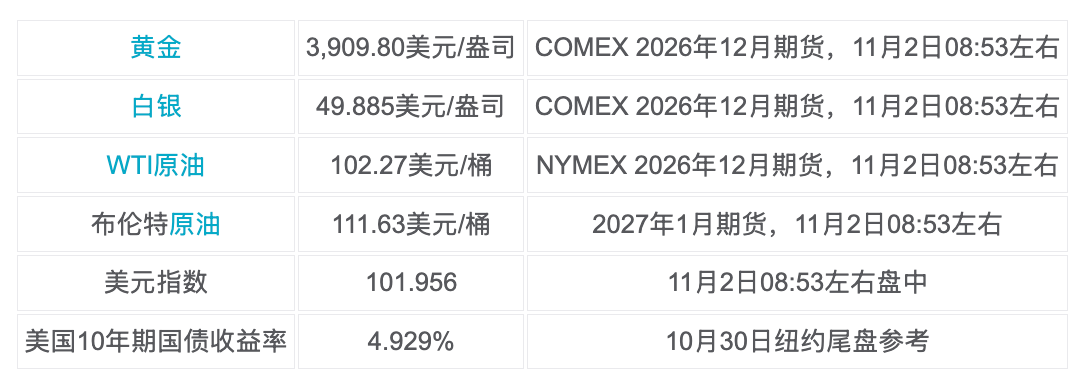
Gold remained below $4,000, oil stayed elevated, and the U.S. dollar index hovered near 102. Commodity-driven inflation pressure and valuation adjustments in tech are both in play. Brent has rolled to the January contract, so the spread versus the previous December contract should not be read directly as the day’s price decline.
Crypto performance
BTC traded at about 78,182.50 USDT, up 0.63% over 24 hours. ETH traded at about 2,274.63 USDT, up 0.53% over the same period. Total crypto market capitalization stood at roughly $2.61 trillion, down 3.25% in 24 hours. That market-cap figure was updated at 09:02 Beijing time.
BTC liquidation zones
The more visible potential short liquidation cluster on the upside sits around $78,500 to $79,000, or about 0.49% to 1.13% above the current price. On the downside, the more visible potential long liquidation cluster is around $76,950 to $77,600, or about 0.66% to 1.49% away. The nearer upside zone is slightly closer, so if the rebound continues, traders may need to watch for volatility tied to short hedging and leverage adjustments around that area.
ETH liquidation zones
The more visible potential short liquidation cluster on the upside is around $2,285 to $2,300, about 0.54% to 1.20% away. On the downside, the more visible potential long liquidation cluster is around $2,240 to $2,255, about 0.78% to 1.44% away. ETH is currently closer to the upper zone. If the rebound stalls, the lower nearby area becomes the next level to watch for support.
Institutional holding costs: BTC
Glassnode said on Oct. 28 that its estimated aggregate cost basis for U.S. spot BTC ETFs was about $81,500. The current BTC price is about 4.15% below that reference level. Strategy said on Oct. 29 that as of Oct. 25 it held 848,517 BTC at an average cost of about $75,446, putting the current BTC price about 3.54% above that level. These gaps only reflect unlevered price changes relative to holding costs and do not represent the overall returns of ETF investors or the company.
Quick market view
For BTC, the first upside area to watch is near $78,500. For ETH, it is near $2,285. If prices pull back, the report points to $77,600 for BTC and $2,255 for ETH. Strategy’s average cost is about 1.99% away from the lower edge of BTC’s downside liquidation zone, creating an adjacent observation band, but that alone does not confirm support. The aggregate ETF cost basis remains higher.
Major U.S. indexes
All three major U.S. indexes closed lower, with the Nasdaq posting the largest decline. Pressure on heavyweight tech names dragged on index performance, while energy stocks moved higher, showing that earnings and valuation logic are diverging across sectors.
Magnificent Seven performance
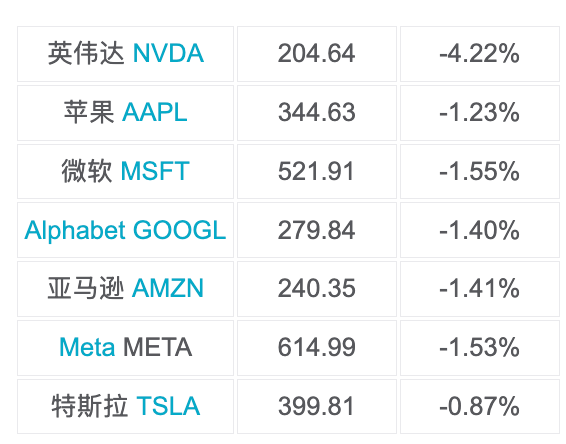
All seven names fell, with Nvidia posting the biggest decline. The pullback has spread across the main tech heavyweights. The next step is to see whether earnings guidance and cash flow create differentiation, rather than pricing all AI-related companies under one framework.
Sector moves
- Semiconductors: Intel fell 28.58%, AMD dropped 10.88%, and Nvidia lost 4.22%. Intel’s PC demand outlook and margin guidance put the durability of hardware growth under scrutiny.
- Energy: Exxon Mobil rose 2.16% and Chevron gained 1.75%. Earnings and cash-return capacity remain central, though the group is still exposed to crude prices and refining margins.
- Crypto-linked stocks: Coinbase fell 10.62%, Strategy dropped 7.84%, and Robinhood lost 7.21%. Those stock moves and Monday’s modest 24-hour rebound in crypto prices occurred in different time windows and should not be treated as a direct divergence.
Deep dive on key U.S. stocks
Intel (INTC): strong growth, but next-quarter profit delivery faces pressure
Event: Intel reported third-quarter revenue of $16.5 billion on Oct. 29, up 21% year over year, with non-GAAP earnings per share of $0.52. Its fourth-quarter guidance called for revenue of $15.0 billion to $16.0 billion and non-GAAP EPS of $0.25. On Oct. 30, the stock fell 28.58% to close at $65.76.
Market reading: Data-center growth and pressure on PC demand are happening at the same time. The company expects weakness in the PC industry to last at least through the first half of next year, leaving investors to judge whether capacity expansion, product mix, and margins can keep pace with revenue growth.
What to watch: The report points to data-center supply ramp, PC demand, and fourth-quarter gross-margin delivery. Fast growth in the current quarter does not mean profit pressure in the next quarter has gone away.
Amazon (AMZN): AWS accelerates, but cash flow remains the valuation test
Event: Amazon reported about $201.9 billion in third-quarter revenue on Oct. 29, up 12% year over year. AWS revenue reached $45.984 billion, up 39.3%. Over the trailing 12 months through the end of the third quarter, free cash flow was a net outflow of $42.4 billion. On Oct. 30, the stock fell 1.41% to $240.35.
Market reading: AWS demand growth is already visible in revenue, but infrastructure spending is still weighing on cash flow. The market is trying to determine when heavy investment will turn into durable cash returns, not just faster cloud growth.
What to watch: AWS order conversion, the pace of capital expenditure, and free-cash-flow repair. The $42.4 billion figure covers the past 12 months and should not be misread as a single-quarter cash outflow.
Exxon Mobil (XOM): cash flow and shareholder returns support relative strength
Event: On Oct. 30, Exxon Mobil reported about $15.4 billion in third-quarter GAAP earnings, adjusted EPS of $4.23, operating cash flow of $25.7 billion, and free cash flow of $19.1 billion. The stock rose 2.16% the same day to $187.25.

Market reading: Strong cash generation gives energy stocks a different earnings support profile while tech valuations are being reset. The company also announced a $20 billion buyback plan through 2027, subject to reasonable market conditions.
What to watch: Cash-flow resilience if oil prices retreat, refining margins, and buyback execution. A single quarter of earnings in a high-oil-price environment should not be projected directly into long-term profit levels.
Market and project updates
Tether releases third-quarter reserve attestation
A report disclosed on Oct. 30 showed that as of Sept. 30, total reserve assets were about $191.5 billion, excess reserves were about $7.95 billion, and direct plus indirect holdings of short-term U.S. Treasuries were about $132.4 billion. Reserve composition and redemption liquidity remain key points for tracking stablecoins. The attestation report should be distinguished from a full financial audit.
Strategy’s STRC daily dividend arrangement takes effect
According to the company’s Oct. 29 announcement, STRC adopted a daily dividend arrangement starting Nov. 1. As of Oct. 25, dollar-denominated assets were about $5.07 billion, which by the company’s measure could cover about 3.4 years of dividend and interest obligations. Cash reserves, financing costs, and preferred-share pricing still need to be watched. The dividend arrangement should not be treated as equivalent to new BTC buying.
Exchange service recovery
Binance said in an official announcement on Nov. 1 that withdrawals would resume in phases, user funds were safe, and related losses would be borne by the platform. Specific assets and networks depend on the official reopening status.
Today’s market calendar
Key event preview
For manufacturing data, the main focus is on new orders, employment, and price components. If demand improves while price pressure rises again, markets will need to reassess the balance between growth and interest rates. If demand weakens, the ability of tech companies to deliver on expansion plans may face a tougher test.
Institutional view
Oliver Pursche, senior vice president at Wealthspire Advisors, said on Oct. 30 that the market is focused on whether AI investment can generate positive returns and how long that process will take. Against that backdrop, future earnings reports may be judged more on cash returns and execution than on expansion alone.
This report is for market information only and does not constitute investment advice.
Disclaimer: Markets involve risk and investment requires caution. This article does not constitute investment advice. Readers should consider whether any opinion, view, or conclusion in this article fits their own circumstances. Any investment decision made on that basis is at the reader’s own responsibility.