
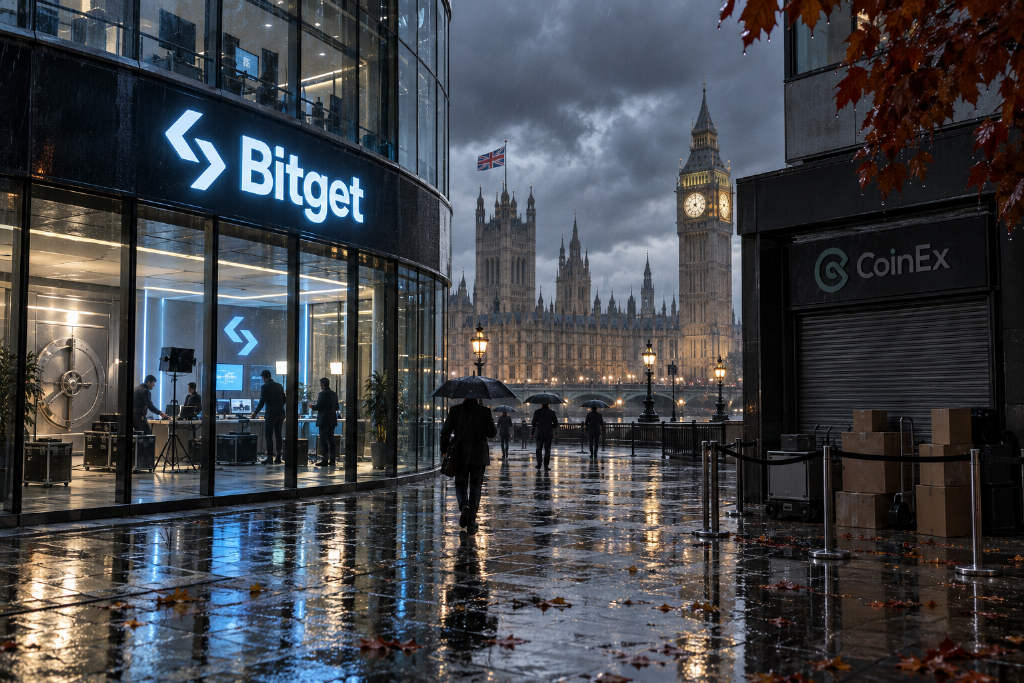
The crypto calendar for Sept. 28 through Oct. 3 includes a dense run of regulatory deadlines, exchange service changes, project shutdowns, governance votes, and token unlocks. Bitget has published a withdrawal restoration schedule after a Sept. 24 security incident, while CoinEx has said it will shut down and move into an orderly liquidation process.
Sept. 28: Bitget withdrawal plan, executive AMA, and exchange updates
Bitget executives to host live AMA
Bitget CEO Gracy Chen and Bitget Greater China head Xie Jiayin are scheduled to host a live AMA at 15:30 UTC+8 on Sept. 28 for at least two hours. The session is set to cover the incident timeline, progress on restoring withdrawals, and follow-up plans, with questions taken from the community.
Bitget to reopen withdrawals in phases
Bitget said it has identified and fixed vulnerabilities tied to the Sept. 24 security incident. The exchange said user account balances were not affected and that its protection fund will absorb the financial impact of the platform-level event. It also said the withdrawal pause was temporary and security-related, not linked to asset availability, while trading and deposits have remained normal.
The exchange’s phased reopening plan is as follows:
- Bitcoin withdrawals: 16:00 Beijing time on Sept. 28;
- Ethereum and other networks: 16:00 Beijing time on Sept. 29;
- USDT stablecoin rails on Ethereum, BSC, Solana, and Tron: 16:00 Beijing time on Sept. 30;
- All remaining tokens, fiat, and OTC services: fully restored at 16:00 Beijing time on Oct. 2.
Bitget said internal and external security teams will continue infrastructure verification and audits during the restoration period. Trading and deposits are not affected.
Upbit to delist an SNX trading pair
Upbit will end trading support for Synthetix (SNX) at 14:00 on Sept. 28. The affected market is SNX/BTC. Users must complete withdrawals by Oct. 28, after which the exchange said it will no longer be able to process the assets.
Grayscale’s Zcash ETF to carry out a 1-for-3 stock split
Grayscale’s Zcash ETF, trading under ZCSH, has filed split documents with the U.S. Securities and Exchange Commission. After the market close on Sept. 28, shareholders will receive two additional shares for each share held. The per-share price will fall proportionally, the share count will rise, and the total value of holdings will remain unchanged.
Smarter Web Company proposal goes to shareholders
U.K. bitcoin treasury company The Smarter Web Company plans to issue perpetual preferred shares on the London Stock Exchange main market under the ticker MORE. The target raise is 15 million to 25 million pounds, and the deal will not proceed if subscriptions come in below 10 million pounds. At least three market makers are also required.
The preferred shares would pay cumulative floating weekly dividends, carry liquidation preference, and include a company redemption right, but no voting rights. The company currently holds 2,878 BTC. After a High Court-approved reduction of 210 million pounds in share premium in July, it said it has about 132.5 million pounds in distributable reserves available for dividends. The proposal goes to a shareholder vote on Sept. 28 and still requires FCA approval of the prospectus.
Sept. 29: America.gov launch, Robinhood summit, CoinEx spot trading halt
America.gov set to go live
U.S. President Donald Trump is expected to launch the new government website America.gov next Tuesday alongside technology and AI leaders. The site is meant to consolidate public services and information that had been spread across federal agencies. The White House said the launch will be paired with a full day of themed discussions covering AI, energy, healthcare, space, and agriculture.
Expected attendees include Nvidia CEO Jensen Huang, Tesla CEO Elon Musk, Anthropic co-founder Tom Brown, Vice President JD Vance, and other officials. Joe Gebbia, Airbnb co-founder and current head of the national design studio, said new AI tools will help people access government support more easily. Trump also said his administration will not slow AI development in the context of technology competition with China.
The webpage currently shows a countdown with about 3 days and 13 hours remaining. The formal launch time converts to about 22:00 Beijing time on Sept. 29.
Coinbase to suspend BADGER and STORJ trading
Coinbase will suspend trading in Badger DAO (BADGER) and Storj (STORJ) at 02:00 on Sept. 29. Order books for both assets have already moved to limit-only mode, meaning users can still place and cancel orders and may still get matches. After trading stops, the assets will remain accessible and withdrawals will still be supported.
Robinhood to hold third HOOD Summit
According to Robinhood, the company will hold its third HOOD Summit in Houston on Sept. 29 and 30 under the theme “Engine of Creation.” Co-founder and CEO Vlad Tenev is scheduled to deliver a keynote at 17:30 local time on Sept. 29, where he will unveil new products and features aimed at active traders. That corresponds to 06:30 Beijing time on Sept. 30.
The second day will feature a full slate of conversations with industry figures including ARK Invest CEO Cathie Wood, Bankless founder David Hoffman, and CME Group head of retail education Craig Bewick. The event will be streamed on the Robinhood app, X, YouTube, and the company website.
CoinEx to stop operating and begin liquidation
CoinEx said it will cease operations and begin an orderly liquidation, citing a prolonged weak crypto market, shrinking trading volume and liquidity, rising regulatory requirements, and compliance costs that it said had moved beyond a reasonable range. The platform has been winding down services in stages since Sept. 15, 2026: new user registration and referral rewards stopped on Sept. 15 and futures moved to reduce-only mode; all non-spot services stopped on Sept. 22; spot trading will stop on Sept. 29, when the exchange will also repurchase all CET in user accounts at 0.005 USDT per CET; the withdrawal window ends on Dec. 22, when operations will fully stop.
CoinEx said its reserve ratio is above 100% and that user assets can be withdrawn in full. Any USDT not withdrawn on time will be moved into independent custody, with a monthly custody fee of 5% of the original balance. The exchange also said this is its final official announcement and that any later notice issued in the name of CoinEx should be treated as fraud.
Binance to migrate Funding Account assets
Binance said it will gradually move crypto assets from users’ Funding Accounts into Spot Accounts starting Sept. 29, 2026. The migration is expected to continue through January 2027, with specific dates to be announced separately. After the migration period ends, the Funding Account will be renamed the Stocks Account and used only for stock and stock options settlement.
Oura IPO expected to price on Sept. 29
Smart ring maker Oura has reportedly drawn demand of about four times the number of shares on offer in its IPO. The indicated price range is $40 to $44 per share, with 50 million shares planned. Pricing is expected on Sept. 29, and the company is set to list on Nasdaq under the ticker OURA at a valuation of as much as $14.1 billion. Binance has already listed OURAUSDT Pre-IPO perpetual contracts, and Coinbase has opened access to IPO share subscriptions tied to the deal.
0G to launch Infinite AI
AI trust layer and frontier AI lab 0G has introduced Compute Finance, or ComFi, which it describes as a financial layer for AI that lets users earn computing power credits that can be spent across AI services. The release also includes the launch of Ascend, 0G’s liquid staking product, and the debut of Infinite AI (iAI), a new compute-linked digital asset scheduled for formal launch on Sept. 29.
Under the ComFi flow described by 0G, users stake 0G through Ascend to receive a0G, use a0G to mint iAI, and then stake eligible iAI to earn compute points that can be used in supported 0G AI products. Ascend provides the staking and liquidity layer, while Infinite AI links that position to access to usable AI compute.
Hut 8 wins bid for Poolin Texas data centers
Hut 8 has emerged as the winning bidder for two Texas data center sites owned by bankrupt crypto miner Poolin, with a bid valued at $140 million. The offer, which includes cash and other consideration, covers the Pyote and Tarbush sites. The sale still requires approval from the U.S. Bankruptcy Court for the District of New Jersey, and a sale hearing is scheduled for Sept. 29.
Poolin and two U.S. affiliates filed for Chapter 11 protection in July after ending mining and hosting operations at the Texas sites. Court documents show total debt of about $173.1 million, including roughly $163.7 million in unsecured debt owed to Poolin Wallet users after withdrawals were frozen in 2022.
Sept. 29 token unlock
Falcon Finance (FF) is scheduled to unlock about 77.14 million tokens at 21:00 Beijing time on Sept. 29, equal to about 2.51% of circulating supply and worth about $10.2 million.
Sept. 30: Regulatory deadlines cluster as multiple projects shut down
U.K. FCA opens crypto authorization applications
The U.K. Financial Conduct Authority has issued new guidance to help firms understand how the country’s future cryptoasset regulatory regime may apply to their businesses and which activities may require authorization. The new regime will take effect on Oct. 25, 2027, and authorization applications open on Sept. 30, 2026.
The guidance covers issuing qualifying stablecoins, operating cryptoasset trading platforms, proprietary trading and trade matching, crypto custody, and arranging staking. Before publishing the guidance, the FCA finalized its rules and guidance in June 2026. The government also made targeted legal changes, including limited exclusions and added clarity for certain technical service providers. The FCA said it will consult in October on targeted updates to the guidance.
Australia’s digital asset licensing transition ends
The Australian Securities and Investments Commission warned that crypto firms relying on a temporary regulatory relief period must apply for a financial services license by Sept. 30 or face penalties of as much as 10% of annual turnover. From Oct. 1, companies that are not authorized and do not qualify for ASIC relief may be in breach of financial services law and face civil and criminal penalties.
ASIC said it has received more than 45 digital asset-related license applications since updating its guidance in October 2025. On June 25, it extended the relief period from June 30 to Sept. 30. ASIC also said this licensing relief is separate from the digital asset framework due to take effect in April 2027.
China’s online marketing rules for financial products take effect
China’s Measures for the Administration of Online Marketing of Financial Products, jointly issued by the central bank and seven other departments, will take effect on Sept. 30, 2026. The rules do not impose a blanket ban on online promotion of financial products. Instead, they set detailed requirements and say that marketing through public accounts, livestreams, and short videos must be conducted on self-operated platforms of financial institutions or on legally established accounts of financial institutions on third-party internet platforms.
The rules also require marketers to be employees of financial institutions, hold the relevant qualifications, and receive authorization from the institution. That means KOLs who want to market financial products must be properly licensed.
Thailand SEC consultation on overseas crypto derivatives closes
Thailand’s Securities and Exchange Commission has proposed allowing intermediaries to offer eligible overseas crypto derivatives to retail investors. The proposal says overseas products must be similar to crypto derivatives traded domestically in Thailand in terms of underlying assets, tenor, leverage, and settlement method, and they must trade on exchanges that use central counterparty clearing and are supervised by specified international regulatory bodies or member institutions of exchange groups. Products that do not meet the criteria could be offered only to institutional investors.
Thailand’s SEC formally added cryptocurrencies and digital tokens as permitted underlying assets for derivatives on March 5 and is discussing contract specifications with the Thailand Futures Exchange. The consultation period runs through Sept. 30.
EU seeks feedback on MiCA revisions
The European Union is considering revisions to the Markets in Crypto-Assets framework to cover emerging areas including tokenization and non-EU stablecoin issuers. Feedback is open through Sept. 30. MiCA completed its transition period and took full effect on July 1, with only 244 firms approved as cryptoasset service providers so far.
The review comes as tokenized securities gain traction, with on-chain equities reaching $2.16 billion, up nearly 45% month on month, and as stablecoin regulation advances globally after passage of the U.S. GENIUS Act. One EU diplomat said, “It seems inevitable to revisit the text at this point.” The European Commission launched a related inquiry in May, saying that since MiCA was drafted, digital asset markets have continued to evolve and the global policy and regulatory environment has changed significantly.
South Africa publishes draft crypto asset manual
South Africa’s National Treasury and the South African Reserve Bank have jointly released a draft Crypto Asset Manual that, for the first time, sets out clear reporting and regulatory requirements for cross-border crypto transfers. Under the draft, moving cryptoassets from a locally authorized crypto service provider to an overseas platform or a self-custody wallet would be treated as a cross-border transaction and would need to be processed through an authorized provider and reported to the Reserve Bank’s financial surveillance department.
Individuals would only be allowed to transfer crypto abroad within existing foreign exchange allowance limits. Buying and selling crypto with rand on local platforms would not require reporting. Public comments are open until Sept. 30.
Lemon exits Brazil
Argentine crypto exchange Lemon said it will leave the Brazilian market because local regulatory capital requirements are too high. Lemon Card services will stop on Sept. 30, and all Brazilian accounts will be automatically closed on Oct. 16. The company said obtaining the crypto business license required by Brazil’s central bank would tie up a large amount of capital that is disproportionate to the scale of its local business.
LayerZero to end off-chain support for 13 networks
LayerZero said it will continue phasing out off-chain service support for lower-activity networks. Its DVN and Executor services will no longer cover 13 chains starting Sept. 30: Aurora, Taiko, Japan Open Chain, LightLink, Viction, Anime, XPLA, Merlin, Gnosis, Zora, Otherworld Space, XAI, and opBNB.
As a result, Stargate Hydra will no longer support some of those networks. Users were urged to redeem or bridge out assets such as USDC.e, WETH, and Hydra USDT from the affected chains as soon as possible. Stargate support for Aurora, Taiko, LightLink, and Gnosis had already ended on Sept. 23. In a Sept. 25 update, LayerZero also said off-chain services for Gravity, Camp, Lisk, GOAT, and Metis will stop on Oct. 30, while related Stargate asset support will end on Oct. 23. The team recommended bridging assets to deeper-liquidity networks that remain supported, including Ethereum, Arbitrum, Base, and BSC.
Zcash retroactive grant vote closes
Zcash said voting is open for its Q3 Retroactive Grant program for Shielded ZEC holders and will run until 04:00 Beijing time on Sept. 30. The vote includes 37 proposals, each requiring a separate yes-or-no vote. The quorum threshold is about 420,000 ZEC. Voters need to update to Zodl 3.14.0 or later, the latest Vizor Wallet, or the latest Zkool version before voting.
Router Protocol to fully shut down by Sept. 30
Cross-chain protocol Router Protocol said it will wind down after more than four years of development and fully close by Sept. 30, 2026. The team cited persistent liquidity scarcity in Web3 over the past two years, a market shift toward AI, fading interest in cross-chain interoperability, and bridge revenue that could not cover costs. It said attempts over the past year to find a sustainable path through commercialization, licensing, and acquisitions did not succeed.
Router Protocol said it will permanently burn 303,333,198 ROUTE held in the treasury and coordinate with centralized exchanges to delist the token. Holders need to withdraw their tokens according to each exchange’s deadline. The project also said it will not launch any new ROUTE-related plans and intends to open-source some technical components for the community.
Shipyard to stop IPFS-related engineering and infrastructure work
IPFS ecosystem development team Shipyard said it will stop IPFS-related engineering, maintenance, and infrastructure operations on Sept. 30 after Protocol Labs decided not to renew funding. After the shutdown, core projects maintained by Shipyard, including Kubo, Helia, and IPFS Desktop, will no longer have dedicated maintainers. The future of public infrastructure such as ipfs.io, dweb.link, and IPFS bootstrap nodes will be decided by Protocol Labs. Shipyard said it will assist with the transition through the end of September.
Fireplace, Trepa, and Offramp all approach shutdown deadlines
Prediction market terminal Fireplace said it will close, with the website remaining online until 23:59 UTC on Sept. 30. Users need to close positions, withdraw funds, and export account data before then. The team said any builders continuing in prediction markets and interested in Fireplace’s technical work can reach out by direct message, and related resources have been collected on the project website.
Solana ecosystem prediction app Trepa also said it will shut down. The team said the final playable game round will take place on Aug. 12, and invitation rebates and win-streak rewards already earned by users will be distributed to Trepa wallets on Aug. 13. The app will remain available until Sept. 30, and users need to withdraw funds from their wallets to self-controlled addresses before then. If they miss the deadline and registered by email, access can be recovered through home.privy.io. The team said it did not find product-market fit and cited a single 1-2 p.m. UTC activity window, complex gameplay, and compliance constraints as factors that limited user growth.
Offramp, a crypto-native cross-border finance platform focused mainly on freelancers in Latin America, also said it will stop operating. Transfers, QR payments, deposits, and investment functions were disabled on July 1. Starting July 31, Offramp stopped fiat deposits and withdrawals, stopped crypto deposits, disabled physical and virtual cards, and shut down its mobile app. On Sept. 30 it will stop crypto withdrawals, and on Dec. 31 all savings and investment accounts will close as the platform fully ceases operations.
MSCI consultation on non-operating companies closes
Index provider MSCI has launched a consultation that could exclude so-called non-operating companies from its global investable market indexes. That category could include companies such as Strategy and Metaplanet.
The proposed rule would use a two-step screen. First, operating assets would need to exceed 50% of total assets. Second, five financial ratios would be assessed. If a company fails at least four of those ratios, it would be deemed ineligible for index inclusion. Applied to current data, the screen would remove Strategy, Metaplanet, and others from the MSCI ACWI IMI Index. The consultation closes on Sept. 30, and any change would not take effect before the November 2026 review.
KBW2026 to be held in Seoul
Korea Blockchain Week 2026 will be held in Seoul with Upbit, focusing on stablecoins, tokenization, and blockchain financial infrastructure. The event opens on Sept. 29 with the Upbit Institutional Summit, a closed-door invitation-only gathering co-hosted by Upbit and FactBlock. The main KBW2026 conference, also held with Upbit, will run from Sept. 30 to Oct. 1 at Walkerhill Hotels & Resorts in Seoul.
Sept. 30 token unlocks
Kamino (KMNO) is set to unlock about 229 million tokens at 20:00 Beijing time on Sept. 30, equal to about 2.81% of circulating supply and worth about $10.8 million. Collector Crypt (CARDS) is due to unlock about 59.26 million tokens at 03:00 Beijing time the same day, equal to about 10.62% of circulating supply and worth about $10.7 million.
Oct. 1: Brazil, Hawaii, and South Korea rules take effect; WLFI vote advances
Brazil central bank bars stablecoins and crypto from cross-border settlement by eFX providers
Starting Oct. 1, Brazil’s central bank will prohibit electronic foreign exchange service providers from using stablecoins and other cryptocurrencies, including bitcoin, to settle overseas remittances. The ban applies to fintech and payment companies and cuts off a backend settlement channel for cross-border fund flows, though individual crypto investors can still buy and hold assets. eFX payments must now use foreign exchange transactions or genuine non-resident accounts. Unauthorized companies must seek approval from Brazil’s central bank by May 2027.
Hawaii’s statewide crypto ATM ban takes effect
Hawaii Governor Josh Green signed House Bill 1642 in July, banning the ownership, operation, or management of self-service machines that exchange U.S. currency for digital financial assets. The ban takes effect on Oct. 1.
The law cites data from the FBI’s Internet Crime Complaint Center. In April, the agency reported that Americans lost more than $11 billion to digital asset-related scams in 2025. Hawaii residents accounted for 826 related complaints and about $80 million in losses that year. Hawaii will become the fourth U.S. state, after Minnesota, Tennessee, and Indiana, to impose a full ban on crypto ATMs and similar kiosks.
South Korea to introduce civil seizure rules for crypto assets
South Korea is set to introduce civil seizure rules for crypto assets from Oct. 1, allowing courts to directly freeze, transfer, and dispose of digital assets through local crypto exchanges.
WLFI governance participation incentive proposal targets Oct. 1 rollout
World Liberty Financial has opened voting on a proposal to launch a WLFI governance participation incentive program, with the plan aiming to roll out the incentives before Oct. 1, 2026. The proposal says all WLFI holders would retain governance voting rights. Holders of unlocked WLFI could lock tokens for at least 180 days and directly participate in governance at least once every 90 days to receive dynamically calculated rewards. Delegated voting would not count toward the participation requirement.
The reward pool could be funded by the WLF treasury, fees from World Liberty Markets, and other ecosystem and marketing incentives, with replenishment planned every two weeks. If approved, the proposal would replace an ecosystem proposal that was approved on March 12, 2026.
Oct. 1 token unlocks
Sui (SUI) is scheduled to unlock about 13.26 million tokens at 08:00 Beijing time on Oct. 1, equal to about 0.32% of circulating supply and worth about $16.7 million. EigenCloud (EIGEN) is due to unlock about 36.82 million tokens at 12:00 Beijing time, equal to about 5.19% of circulating supply and worth about $10.3 million.
Oct. 2: U.S. payrolls, Hester Peirce departure, and major unlocks
U.S. September nonfarm payroll report due
At 20:30 on Oct. 2, the U.S. will release September seasonally adjusted nonfarm payrolls, the unemployment rate, and average hourly earnings.
SEC Commissioner Hester Peirce to leave on Oct. 2
Financial journalist Eleanor Terrett said in a post on X that U.S. Securities and Exchange Commission Commissioner Hester Peirce will leave office on Oct. 2. Peirce has served at the SEC for nearly nine years and is widely known in crypto circles as “Crypto Mom.” She is set to join Regent University School of Law as an associate professor in November. After her departure, the SEC will have only Chair Paul Atkins and Commissioner Mark Uyeda remaining.
CFTC backs Kalshi in CME lawsuit over bitcoin perpetuals
The U.S. Commodity Futures Trading Commission has asked a Washington, D.C. court to dismiss the Chicago Mercantile Exchange’s lawsuit against Kalshi over its bitcoin perpetual futures contract. Kalshi’s cash-settled BTCPERP contract was approved on May 29. It has no expiration date, uses a funding-rate mechanism, and tracks the spot price of bitcoin. CME argues that a contract with no delivery date and ongoing funding payments should be treated as a swap rather than a futures contract.
The CFTC responded that CME’s lawsuit amounts to “making something out of nothing” and said CME itself could list a similar product. The regulator also said CME bitcoin futures trading volume in June and August was higher than in May, indicating no clear harm to its business. CME must file its response by Oct. 2.
Oct. 2 token unlocks
DoubleZero (2Z) is set to unlock about 1.66 billion tokens at 21:00 Beijing time on Oct. 2, equal to about 47.69% of circulating supply and worth about $114 million. Ethena (ENA) is due to unlock about 40.63 million tokens at 15:00 Beijing time, equal to about 0.45% of circulating supply and worth about $11 million.
Oct. 3: Cronos vote deadline and first AQAv2 transfer for Hyperliquid
Cronos proposal vote closes
The Cronos community has posted a governance proposal that would use all revenue generated by Ult and Cronos Launch to buy CRO on the market each month and burn it. The transactions would be executed on-chain monthly, with the hash of each trade disclosed. Operating, infrastructure, and growth costs would be covered by existing funds. Strategic reserves would support future staking rewards on Cronos POS, and rewards would continue under current Cronos POS parameters, with reserves supplementing funding as issuance declines. Voting is open through Oct. 3.
Hyperliquid’s first AQAv2 proceeds expected to reach the Assistance Fund
HyperLiquid previously said it had upgraded to the AQAv2 mechanism. Under the system, automated on-chain trades maintain a dynamic 1:9 balance of USDC between a contract address and a treasury address in each HyperEVM block. According to the official description, the process runs automatically on-chain without manual intervention. Circle handles the technical deployment role, while Coinbase is responsible for treasury deployment and management.
Under the revenue-sharing design, stablecoin issuers are required to allocate about 90% of cost-adjusted reserve income generated within the Hyperliquid system to the protocol. Revenue accrues over 30-day cycles and is automatically transferred to the Assistance Fund on the eighth day after each cycle ends. The mechanism also includes an implementation transition period, with accrual beginning on Aug. 26 and the first payout scheduled for Oct. 3. According to the input material, the first transfer could be enough to buy back about $20 million worth of HYPE.
Oct. 4: No major item listed
No major item was listed for Oct. 4 in the source material.