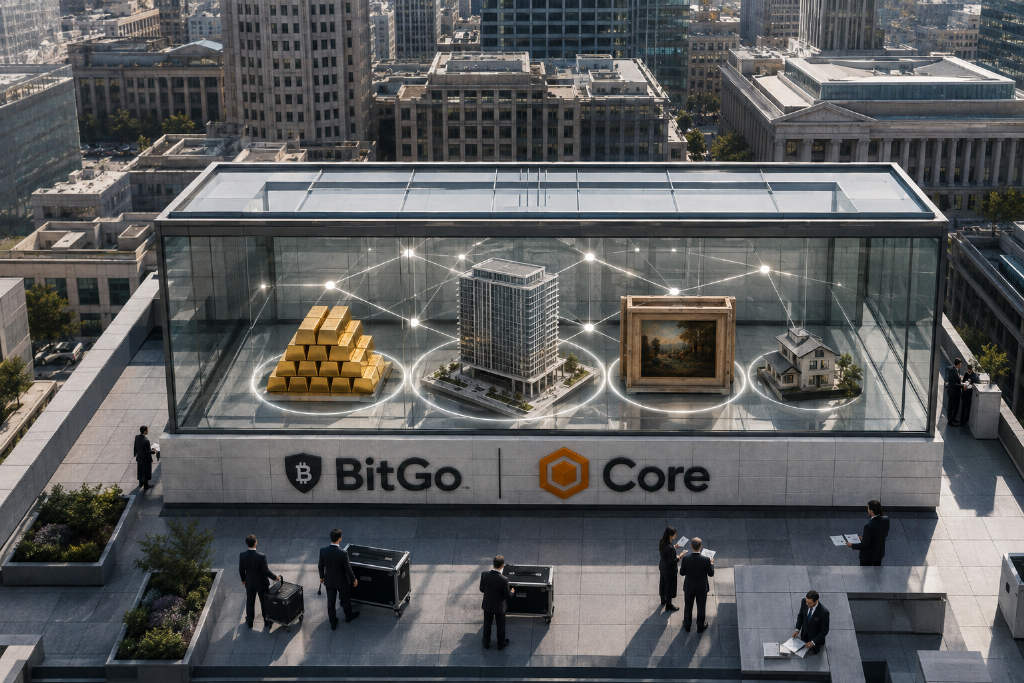
BitGo and Core Chain have announced a partnership to launch a tokenization framework for real-world assets (RWA), including physical gold, real estate, and artwork. The collaboration highlights the crucial role of custody in RWA projects, providing legal and custodial support for institutional-grade asset tokenization on blockchain. Core Chain leverages this to enter the institutional RWA market, moving beyond conventional cryptocurrency trading. The tokenization of real-world assets requires addressing complex issues such as custody, valuation, and legal rights. BitGo's involvement brings stronger institutional endorsement to on-chain assets, according to a report from Techub News.
BitGo and Core Chain have teamed up to roll out a tokenization framework for real-world assets (RWA), covering physical gold, real estate, and artwork. The deal puts custody front and center in RWA projects, with legal and custodial backing for institutional-grade asset tokenization on blockchain.
With this partnership, Core Chain steps into the institutional RWA market, pushing past the usual cryptocurrency trading use cases. It’s not simple. Turning real-world assets into tokens means dealing with messy issues like custody, valuation, and legal rights. And BitGo’s part in it gives on-chain assets firmer institutional backing, according to a report from Techub News.
This article was originally published by Bit.Fan. For more cryptocurrency news and market insights, visit www.bit.fan. Disclaimer:
The market information, project data, and third-party content displayed on this platform are for industry information sharing only and do not constitute any form of investment advice or return commitment.
Cryptocurrency trading carries high risks. Users should fully assess their risk tolerance and make independent decisions. All profits, losses, and legal responsibilities are borne by the users themselves.