
ChainCatcher’s Oct. 15 morning roundup tracked a long list of developments across crypto markets, regulation, AI infrastructure, tokenization and listed companies.
Reach Security closes Series B financing of more than $50 million
San Francisco-based cybersecurity firm Reach Security said on Oct. 13, 2026 that it had raised more than $50 million in a Series B round led by Top Tier Capital Partners, with Ballistic Ventures, In-Q-Tel, Microsoft’s venture fund M12 and existing investors also participating.
The company said the capital will be used for product innovation, broader integration partnerships, international expansion, and growth in U.S. enterprise and federal markets. At the same time, it introduced Reach Everywhere, which connects security-control insights into exposure management, security operations centers, incident response, compliance platforms and AI security environments through the Reach API, MCP servers and technology partners.
Reach said its AI reads the live configuration of security products already deployed by enterprises, determines whether exploit paths are blocked, and identifies the exact rules behind that outcome. When protection drifts, it can repair the issue immediately. The report cited VulnCheck as saying that fewer than 1.3% of vulnerabilities were exploited in the wild in the first half of 2026, and cited CrowdStrike as saying AI-enabled adversary activity rose 89%, with breakout times falling as low as 27 seconds.
The company added that its customer count doubled over the past 12 months and includes Autodesk, Insurity, MPS and Ensemble Health Partners. Independent analysis from TAG Infosphere said organizations using Reach saved more than 160 hours a week on control reviews, posture assessments and incident investigations, with a return on investment of 156%.
Williams says AI equipment shortages could last more than two years
New York Fed President John Williams said supply for AI equipment may need more than two years to catch up with demand, a gap he said could add to inflation pressures. He made the remarks in a Tuesday interview with Bloomberg, saying the buildout of AI infrastructure is lifting the cost of chips and goods that use them.
Asked whether AI supply and demand could come back into balance over the next two years, Williams said, “I think it will take longer, assuming the demand impulse continues as expected, and that is a big assumption.”
Williams also repeated that he has not changed his view that the Federal Reserve may still need one more rate increase this year. “I have not changed my view that it may take one more rate hike,” he said.
On 2027, he said “we’ll have to see,” adding that “right now I don’t see any reason to think we need to do more.” He also said AI investment is likely to stay strong even if rates rise, because investors in the sector are relatively insensitive to price and see AI as a source of large productivity gains and economic change.
The report said shortages in AI hardware could affect bitcoin miners moving into the sector because they are competing for chips and power equipment. IREN signed a new $2.8 billion AI cloud contract in July, while bitcoin miners pursuing AI projects are already facing heavy funding needs and more selective lenders.
Bitwise CIO says Q3 data points to a crypto spring
Bitwise Chief Investment Officer Matt Hougan said the third quarter may have been one of the best in crypto history, with a sharp rebound in prices and continuing on-chain market growth pointing to the start of a “crypto spring.”
Bitwise’s quarterly market review showed its broad crypto index rose 46.4% in Q3. Over the same period, U.S. spot bitcoin ETFs pulled in $6 billion, pushing year-to-date net inflows back into positive territory.
The gains were not limited to token prices. Tokenized equities rose 65.5% in value to nearly $3.2 billion, while decentralized perpetual futures open interest reached a new high near $26 billion. A rising share of that activity was linked to equities, commodities, foreign exchange and pre-IPO shares.
Bitcoin rose 42.3% in Q3, while Ethereum and Solana gained 69.1% and 59.2%. All 10 assets in the broad market index posted double-digit quarterly gains, with Chainlink leading at 97.6%.
The rally did not lift every corner of the sector. Shares of bitcoin miners Riot Platforms and Hut 8 fell 26.4% and 25.4% in Q3, while Galaxy Digital dropped 16.8%. The number of public companies holding bitcoin fell nearly 6% to 173, and the number holding ether declined from 40 to 35.
SEC revises quorum rule as commissioner count thins
The U.S. Securities and Exchange Commission released a final rule on Sept. 30 changing quorum requirements so that, in most cases, one commissioner can constitute a quorum. The rule took effect on Oct. 2. The SEC said the move is meant to improve flexibility and finality in agency rulemaking.
Commissioner Hester Peirce left earlier this month, leaving the SEC with only Chair Paul Atkins and former acting chair Mark Uyeda, even though the agency has five statutory seats. Leadership vacancies are more severe at the Commodity Futures Trading Commission, where Michael Selig has been the only Senate-confirmed chair and commissioner since December 2025.
Both agencies were intended to have five commissioners. In rulemaking, the SEC proposed a safe harbor in August for tokens not to be treated as “investment contracts,” and the CFTC followed in October. Selig said he would use existing statutory authority to move crypto oversight through proposed exchange rules. Atkins said on Oct. 2 that more regulatory proposals are coming.
The Financial Times published a commentary by Robin Wigglesworth on Oct. 5 saying that with only two commissioners, if one must recuse or cannot serve, a single commissioner could adopt formal rules affecting a securities market worth trillions of dollars. Uyeda later responded in the Financial Times, saying the SEC’s commitment to its mission had not changed and that the amendment only clarifies that the commission can still form a quorum when all but one commissioner are recused.
Paul Tudor Jones says he plans to short U.S. stocks all next year
According to Wallstreetcn, Tudor Investment founder Paul Tudor Jones said on CNBC on Tuesday that 2027 will be very difficult for equities. He said the current supply-demand setup in U.S. stocks is the worst since 2002 and resembles the period before the dot-com bubble burst in 1999. He said he plans to stay short U.S. stocks throughout next year.
He argued that buybacks and mergers had compressed stock supply over the past four years and supported the bull market, but that dynamic is now reversing. He pointed to coming large IPOs from companies such as Anthropic and OpenAI, the recent SpaceX issuance, and more equity financing ahead to fund AI construction.
Jones also flagged the U.S. fiscal deficit as another major risk and said the odds of a forced market correction are 60-40. In oil, he said he holds a long position and sees another $20 to $25 of upside because the U.S.-Iran conflict is unlikely to be resolved quickly.
Anthropic to disclose third-quarter revenue as it advances a roughly $2 trillion IPO
Anthropic is set to present third-quarter revenue figures to potential institutional investors at its San Francisco headquarters today to gauge investor reaction to its finances and listing plans. The company is said to be pursuing an IPO at a valuation of about $2 trillion and targeting a November debut after confidentially filing with the SEC, though a specific listing date has not been fixed.
The disclosure comes while the AI sector is under pressure. Last week, OpenAI updated existing investors with annualized revenue of $50 billion, below the widely circulated $70 billion figure, sparking debate over revenue methodology and weighing on semiconductor shares and the Nasdaq.
Broadcom CEO Hock Tan warned that rising interest rates could make access to capital the main constraint on AI companies. Markets will be watching whether Anthropic clarifies how it recognizes revenue, especially whether it includes income tied to cloud partners.
U.S. September CPI due ahead of Fed meeting
The U.S. Bureau of Labor Statistics is set to release September CPI at 20:30 tonight. Institutions expect headline CPI to rise 3.6% year on year, up from 3.4% in August, with a 0.6% month-on-month increase, the biggest rise in nearly five months, mainly because of higher energy prices. Core CPI is expected to rise 2.5% year on year and 0.2% month on month, below the prior 0.3% monthly reading.
This will be the final inflation report before the Fed’s Oct. 27-28 policy meeting. CME data shows the market is pricing in about a 17% chance of a rate hike in October. If core CPI comes in at 0.3% month on month, expectations for a hike this month could strengthen again. If it matches the 0.2% estimate, the Fed may hold off and push any decision to December. U.S. PPI is due on Thursday, and both CPI and PPI will shape market thinking on inflation and the Fed’s policy path.
Bumble agrees to $1.3 billion acquisition by Ithaca
Bumble Inc. said on Oct. 13, 2026 that it had entered into a definitive agreement to be acquired by Ithaca Holdings in an all-cash transaction valuing the company at $1.3 billion.
Holders of common stock will receive $6.05 in cash for each Class A common share, a premium of about 138% to the unaffected closing price on Oct. 9, 2026 and about 119% to the 30-day volume-weighted average price through that date. After review with independent legal and financial advisers, the special committee concluded the deal is in the best interests of common stockholders and recommended approval. The board unanimously approved the deal, with founder Whitney Wolfe Herd recusing herself from the review and vote.
Affiliates of Blackstone and Wolfe Herd later approved the transaction by written consent, satisfying the required shareholder approval. After closing, Ithaca co-CEOs Ravi Gupta and John Hegeman will serve as Bumble’s co-CEOs and work with Wolfe Herd. Bumble will become a private company and is expected to remain based in Austin, with offices in London, Austin and New York City.
The company plans to file its quarterly Form 10-Q for the period ended Sept. 30, 2026 by Nov. 9, 2026 and will not issue an earnings release or hold a conference call because of the transaction.
Avalanche says South Korea’s KSD platform will support its ledger
Avalanche said on Oct. 13 that Korea Securities Depository is building an “Avalanche-based infrastructure connection” for South Korea’s tokenized securities market. KSD’s technical guidance confirms Avalanche is one of several ledger technologies the platform plans to support. Avalanche said the plan covers issuance, trading, clearing, settlement and investor rights, with on-chain settlement as the end goal.
KSD’s distributed ledger guidance, reflecting development status as of July 2026, lists Avalanche alongside Hyperledger Besu and Hyperledger Fabric. That signals support for multiple ledger technologies rather than naming Avalanche as the sole option for Korean securities infrastructure.
The project has moved from a testbed into production platform construction. Samsung SDS won the build contract and plans to convert the technical test platform into a system that can handle real transactions and stable operation, with completion targeted for February 2027.
A roadmap from South Korea’s Financial Services Commission released in September said revised provisions recognizing tokenized securities will take effect on Feb. 4, 2027. Phase one begins the same month and initially covers privately placed money market funds and bonds for institutional investors, unlisted shares held through trust structures, and publicly offered fractionalized investment securities. Phase two will expand to all publicly offered securities. Stablecoin-related on-chain payments fall into the final phase, with timelines for phases two and three left flexible. The deadline for comments on implementing rules is Nov. 11.
Perpetuals.com eyes tokenized U.S. equities under SEC innovation exemption
According to CoinDesk, Nasdaq-listed fintech company Perpetuals.com plans to offer tokenized U.S. stock trading under the SEC’s innovation exemption framework. The plan predates a related proposal from the joint venture of OKX and Intercontinental Exchange.
Perpetuals.com CEO Patrick Gruhn previously co-founded Digital Assets AG, which developed stock-linked tokens for crypto exchanges including Binance and FTX before being acquired by FTX Group. Trading could begin as early as mid-November, though the company still needs to complete technical and compliance work.
Ecobank signs memorandum with CIPS
On Oct. 12, pan-African banking group Ecobank signed a memorandum of understanding with Cross-Border Interbank Payment System Co., Ltd. to strengthen renminbi payment connectivity between China and Africa. The signing took place in the presence of Togo’s minister of economy and finance during an official China visit by Faure Essozimna Gnassingbé, president of the Council of Ministers of Togo.
Ecobank Group CEO Jeremy Awori said the cooperation will strengthen connectivity between China’s renminbi payment ecosystem and Ecobank’s African network, with the aim of making it easier for Chinese companies to enter African markets and for African businesses to participate in the Chinese market. The report said China is Africa’s largest trading partner, with bilateral trade of about $348 billion in 2025.
The cooperation is expected to make renminbi payments smoother, reduce settlement complexity and improve access to cross-border payment channels. Ecobank has maintained a presence in China since 2012 and has formally opened a new Beijing office. It also has China business teams in West, Central and East Africa, offering trade finance, payments, cash management and cross-border investment services. The group operates in 34 sub-Saharan African countries as well as France, the UK, the UAE and China, employs more than 14,000 people and serves more than 32 million customers.
Coins.ph reportedly faces action from the Philippine central bank
According to two people familiar with the matter, Coins.ph, the Philippines’ largest crypto exchange, is facing enforcement action from the country’s central bank, Bangko Sentral ng Pilipinas. The alleged violations involve services provided to offshore betting companies and are serious enough to cost the 12-year-old company its operating license, one of the sources said, calling it an event that would trigger an “earthquake” in the Philippine crypto ecosystem.
Coins.ph has more than 18 million customers, about $50 million in 24-hour spot volume, and controls roughly 75% to 80% of peso and stablecoin liquidity in the Philippines. Earlier this month, BSP reportedly imposed deposit restrictions involving DCPay Philippines, the exchange’s main wallet company.
Several compliance executives had already left the exchange, including Chief Compliance Officer Lexi Herrera, head of AML transaction monitoring Chris Beaño, and money laundering reporting officer Irish Calagui.
A year ago, the Philippine central bank restricted the use of e-wallet apps for gambling and required regulated institutions to cut in-app access to gambling sites. Several betting entities later moved to Coins.ph. The report said the latest restriction is not temporary and no reason was given. Coins.ph and BSP did not respond to requests for comment.
Dell family-related fund identified as buyer of SK shares sold by Chey Tae-won
The Seoul Economic Daily, citing a large-shareholding filing submitted by SK on Oct. 13, reported that the buyer of SK Inc. shares previously agreed to be sold by SK Group Chairman Chey Tae-won is a fund related to the family of Dell Technologies founder Michael Dell.
Chey signed an agreement on Oct. 2 to sell 972,493 common shares of SK Inc., equal to 1.34% of total shares, to DFO Public Investments, L.P., a Delaware entity, for 544 billion won. The fund is managed by DFO Management, which oversees Dell family assets. That firm was formerly MSD Capital, established by Dell in 1998, and was reorganized into its current structure at the end of 2022.
Chey agreed to sell a total of 1,653,924 shares of SK Inc. for 944 billion won to raise funds for a property division settlement involving Roh Soh-yeong, director of the Art Center Nabi. Of that amount, 681,431 shares, or 0.94%, were sold to Korea Investment & Securities, while the remaining 1.34% went to the strategic investor named above. The report said Dell Technologies is an AI server and data center infrastructure company with semiconductor business ties to SK hynix.
EasyA reaches independent valuation of $1.1 billion, plans direct listing in first half of next year
According to CoinDesk, blockchain and AI app development education platform EasyA has reached an independent valuation of $1.1 billion and plans to go public via a direct listing in the first half of next year. The company has filed registration documents with the SEC, though the valuation does not represent the actual price investors would pay once trading begins.
EasyA said its app has surpassed 1.3 million users and that it is considering issuing tokenized shares. The company is also expanding tokenized projects and applications involving AI agents.
Hotter U.S. inflation data lifts expectations for more Fed hikes
Driven by a rebound in fuel prices linked to the Iran war, U.S. September headline CPI rose to 3.7% on an unadjusted annual basis. Core CPI rose from 2.4% in August to 2.6%.
After the data, Treasury yields jumped, gold and silver prices fell sharply, the dollar index moved higher, and markets increased bets on three more Fed rate hikes by the end of 2027. The Bureau of Labor Statistics release marked the first increase in U.S. inflation since May.
Another update said U.S. short-term rate futures fell after the inflation release, and the DXY dollar index rose nearly 40 points to 102.52. CME FedWatch data later showed a 76.2% probability of no change in October and a 23.8% probability of a 25-basis-point hike.
Spot bitcoin ETFs record $176 million of net inflows
SoSoValue data showed spot bitcoin ETFs posted $176 million in net inflows. Fidelity’s FBTC led with $103 million of net inflows on the day, bringing its historical cumulative inflows to $10.618 billion.
BlackRock’s IBIT followed with $65.8854 million in net inflows on the day, taking its historical cumulative total to $65.734 billion. As of publication, total net asset value across spot bitcoin ETFs stood at $106.985 billion, with an ETF net asset ratio of 6.38% relative to bitcoin’s total market capitalization. Historical cumulative net inflows reached $57.217 billion.
Binance adds four bStocks tokens as eligible collateral
Binance said Cross Margin, Portfolio Margin and Portfolio Margin Pro will add four bStocks tokens as eligible collateral at 20:00 on Oct. 14, 2026: MongoDB (MDBB), BlackBerry (BBB), Penguin Solutions (PENGB) and ProShares Ultra VIX ETF (UVXYB). Margin trading will also be opened for the related bStocks trading pairs.
Memory chip shortage hits smartphone market
Cailianshe, citing Counterpoint Research on Oct. 12, said AI infrastructure buildouts continue to absorb memory chip supply, leaving consumer electronics under cost and supply pressure. Preliminary data showed global smartphone shipments in the third quarter of 2026 fell 20% year on year, the lowest level for the period since 2012.
The memory chip crunch has now hit the smartphone market for a second straight quarter. Higher chip costs have raised bill-of-materials costs and pushed vendors to increase retail prices. Since the start of 2026, global smartphone retail prices have risen about 20% in aggregate. Samsung remained No. 1 globally, with third-quarter share climbing to 23% even as shipments fell 3% year on year. Apple’s share rose to 22%, its first time above 20% in a third quarter, though shipments also fell. Xiaomi’s shipments dropped by more than 30% and its share fell to 10%. OPPO and vivo both posted shipment declines of more than 20%, with shares slipping to 9% and 8%.
Counterpoint senior analyst Shilpi Jain said consumers are holding on to existing devices longer and looking more often at refurbished phones. Counterpoint said a meaningful recovery in global smartphone shipments is unlikely before memory chip costs and supply improve.
Ledger users targeted by physical mail scam
Bitcoin News said German Ledger user @jayr_crypto reported receiving another fake letter this week. The letter used Ledger branding and claimed new regulations require users to register their bitcoin wallet through a service called ZenLedger before Oct. 31.
The letter referenced German financial regulators and included a QR code directing users to what it described as a mandatory registration process. The user said addresses exposed in an earlier data breach appear to be being used for targeted attacks on Ledger users.
In the same week, Ledger coordinated with MediaMarktSaturn to suspend hardware wallet sales across a European retail network spanning 11 countries and more than 1,000 stores. Earlier reports said malicious spyware implants were found inside Ledger devices purchased from European retailers. Ledger separately confirmed that compromised devices sold by a distributor in Southeast Asia contained implants capable of stealing recovery phrases and transmitting them over cellular networks. Ledger has not confirmed any compromise of devices in Europe.
Evernorth to deploy $648 million XRP treasury with Ripple, Kraken, Coinbase and BitGo
According to The Block, Nasdaq-listed XRP treasury holder Evernorth said it will begin deploying its XRP holdings through an “institutional strategy” in the fourth quarter. Initial partners include Ripple and the crypto exchanges Kraken, Coinbase and BitGo.
The company currently holds 473 million XRP worth about $648 million at current prices. The announcement came two days after Evernorth began trading on Nasdaq under the ticker XRPN following its deSPAC merger with Armada Acquisition Corp. II.
Founder and CEO Asheesh Birla said the company is putting its treasury to work and is starting with stronger institutional counterparties in the industry. Evernorth said its goal is to generate yield on XRP holdings and increase per-share XRP exposure rather than simply accumulate the asset, though it did not say how much XRP will be deployed. It also plans to expand into lending and on-chain DeFi strategies once related XRP Ledger features are available.
The strategy is being led by newly appointed CIO Hugo Jeandesboz, previously co-CIO of Coinbase Asset Management. Jeandesboz said that means building a treasury strategy, a risk framework, and a set of counterparties that can be explained clearly to the board of a public company. XRPN shares opened at $16.68 on Monday, closed at $16.48 on Tuesday and edged up to $16.6 in after-hours trading.
Some SK hynix HBM4 back-end equipment orders may slip to next year
DealSite reported that as SK hynix scales mass production of sixth-generation high-bandwidth memory HBM4, some industry participants believe the expansion pace is slower than expected and that some additional back-end equipment orders planned for this year could be delayed until next year.
Equipment industry sources said some deliveries originally scheduled for the second half of this year show signs of delay, and follow-up order plans remain unclear. One anonymous source said some equipment originally meant to be installed this year may be pushed into next year, while there is still no data confirming whether delivered equipment is running at full utilization. The report said no direct link has been confirmed between equipment investment schedules and product quality issues.
Daishin Securities analyst Ryu Hyeong-geun said worries that HBM4 quality issues at major customers will hurt results more than expected are overdone. He said some issues may have appeared in back-end processes, but they are hard to view as unresolvable and have not reached the stage of discussing compensation for defects. Another industry view is that, against a backdrop of rising conventional memory prices, some HBM investment may be shifting toward standard memory.
SK hynix plans to first install DRAM production equipment in the first clean room of its Y1 fab in the Yongin cluster. Industry expectations are that initial lines will use sixth-generation 10-nanometer-class 1c process technology, with new capacity prioritized for conventional DRAM. Some observers said changes in a portion of back-end equipment schedules alone are not enough to conclude HBM4 mass production is being disrupted, and SK hynix has already supplied 16-layer HBM4 samples to major customers.
Anthropic asks appeals court to reconsider national security risk ruling
Jin10 reported on Oct. 14 that AI company Anthropic has asked a federal appeals court in Washington to reconsider a Sept. 25 ruling. That ruling upheld the Trump administration’s decision to classify Anthropic as a supply chain risk company threatening U.S. national security.
Anthropic argued that the judges misread the law by allowing the Department of Defense to act without any prior determination procedure. The company also said clear evidence shows the designation was retaliation for its public comments on AI safety.
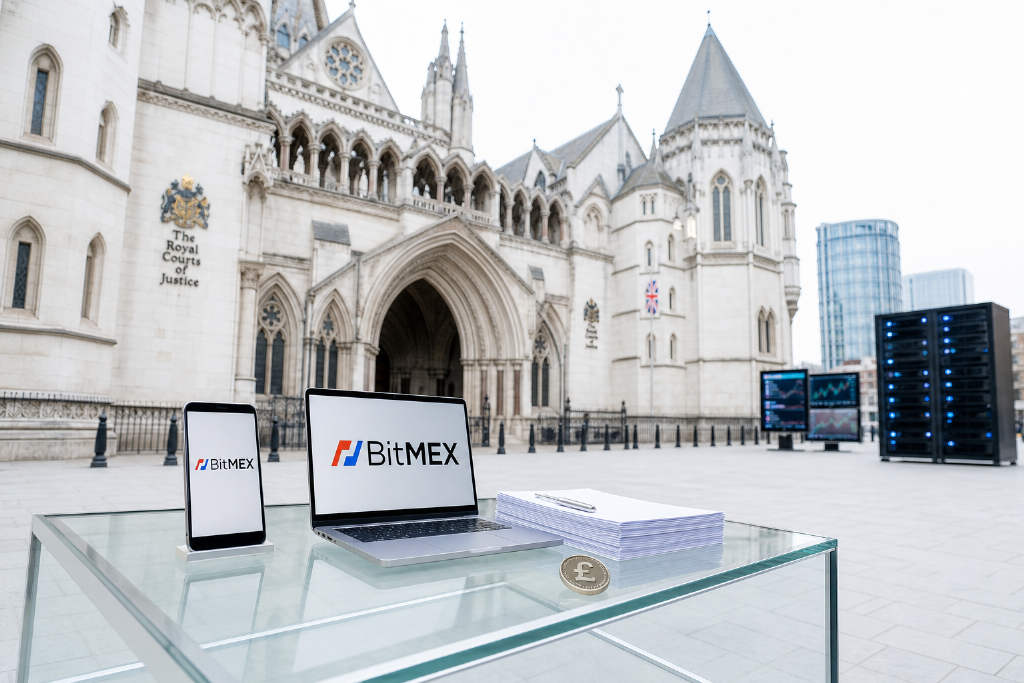
BitMEX faces £20 million claim from former investor
According to The Guardian, former BitMEX investor Lewis Barber has filed suit in the UK High Court seeking £20 million, alleging that the exchange offered crypto derivatives to British investors without authorization from the Financial Conduct Authority.
Barber said he traded derivatives offered by BitMEX between 2018 and 2022 and lost bitcoin worth about £20 million. He is seeking the return of that bitcoin or equivalent compensation.
Metaplanet plans 52 billion yen zero-coupon convertible bond sale
According to Metaplanet CEO Simon Gerovich, the company plans to issue 52 billion yen of zero-coupon yen-denominated convertible bonds due in 2031 and launch a share buyback at the same time.
Of the proceeds, as much as 28.3 billion yen will be used to repurchase shares at a discount. Another 23.6 billion yen will be used to repay borrowings and release bitcoin that had been locked as collateral, removing interest costs and increasing financial flexibility for additional bitcoin purchases.
Gerovich will also lend up to 55 million of his personal shares at an annual rate of 0.75% to reduce stock-borrowing costs for institutional investors hedging the bonds and to improve the offering terms.
NFT Limited open-sources RWAIX with pilot targeted for Q1 2027
According to PR Newswire, NYSE American-listed NFT Limited, stock code MI and formerly Takung Art, released its proposed RWAIX technical protocol in Hong Kong on Oct. 13 and open-sourced a reference implementation on GitHub under the MIT license.
The company runs an international online marketplace for art and collectibles. It said the protocol is designed to let buyers, sellers, AI agents and robots verify identity, agreed terms and whether delivery actually took place, with its existing digital art platform intended to serve as the first real-world use case. The company said internally managed test records show 50 tests passed with no failures, and after an independent security review and other conditions are met, it plans to begin a limited live pilot within 90 days, targeting the first quarter of 2027.
The reference implementation includes Node.js core protocol logic, 50 automated test cases with expected outputs, schema and API documentation, and a browser demo using synthetic data. The company also said RWAIX has not yet been integrated into a production environment and the timeline may still change. The existing digital art trading platform is operated by wholly owned Hong Kong subsidiary Metaverse Digital Payment Co., Limited.
The pilot is expected to first upgrade the consent-to-buy, delivery, independent verification, payment and dispute handling process for one existing NFT order, using current banking channels. CEO Yanying Wang said the company already has customers, orders and payments, and will use the next 90 days to test whether the protocol can support real customer orders.
Robinhood Social opens to eligible U.S. users
Robinhood said its social trading network is now open to all eligible U.S. users. CEO Vlad Tenev said on Oct. 13 that the feature is an in-app feed built around users’ trades and performance. Users can follow other traders, view shared account activity and place eligible trades directly from posts through Quick Trade.
Tenev said Robinhood Social is now live for everyone, allowing users to share charts, profit and loss, and portfolio allocations, while also receiving news and company updates. The feature entered testing on March 18 with an initial 1,000 customers who attended HOOD Summit, followed by another 10,000 in the following weeks.
The early version already included verified trade posts, one-day and one-year P&L statistics, and manual order placement from the feed. A news feed is planned later. Sharing is selective: trades are not posted automatically, users can choose which eligible trades to publish, and they can disable trading statistics in their profile.
Social is available only in the United States. Robinhood excludes licensed securities professionals, people affiliated with regulated financial institutions, and its own employees. Its help page says futures and multi-leg options trades are not currently eligible for posting. Tenev said Social will arrive on Robinhood’s desktop trading platform Legend in the coming weeks.
Ondo says tokenized U.S. Treasury exposure tops $3 billion
Ondo Finance said in a post on X that its tokenized U.S. Treasury exposure has reached $3 billion across USDY, OUSG and tokenized Treasury ETFs, making it the largest platform on RWA.xyz’s tokenized Treasury rankings. It added that USDY has grown past $2.3 billion, overtaking BlackRock’s BUIDL.
RWA.xyz data showed USDY at about $2.328 billion, BUIDL at about $2.204 billion and OUSG at about $319 million. The total tokenized U.S. Treasury market stood at about $14.91 billion, while Circle’s USYC ranked first among individual products at about $2.384 billion.
Meme token leaderboard
According to market data from meme token tracking and analytics platform GMGN, as of 08:00 on Oct. 15, the top five ETH meme tokens over the past 24 hours were ZC, CLAUS, Temo, DOPE and cirBTC. On Solana they were VEIL, DOPE, Altai, SAINDRA and Coca Cola. On Base they were XDP, Basecat, VVV, PROS and DRV.
Further reading listed in the roundup
The roundup also pointed readers to additional articles, including pieces on Williams saying another rate hike this year remains possible while he sees no need for hikes in 2027, Fed Governor Michelle Bowman saying the central bank is not under pressure to raise rates immediately, Ray Dalio warning that the U.S. Treasury bear market is “far from over,” Stripe’s push to build payment rails for AI, Story’s sale to Sui, the economics of stablecoin cards, and Paul Tudor Jones’s broader warning that U.S. stocks look like they did before the dot-com crash.


