
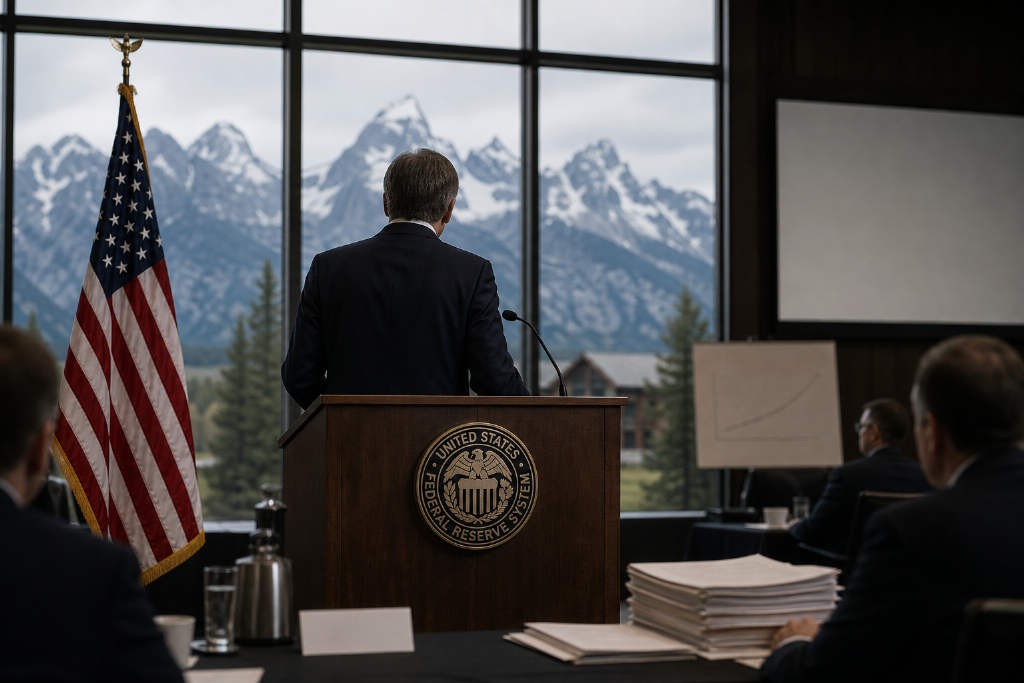
BlockBeats reported on Aug. 31 that Bitunix said Federal Reserve Chair Kevin Warsh, in his first speech as chair at the Jackson Hole global central banking conference, stopped short of giving a direct signal on the September rate decision but framed his remarks clearly around inflation control.
Inflation remains the main policy focus
According to the analysis, Warsh said U.S. consumption, business capital expenditure and financial markets still show resilience, while the unemployment rate is about 4.1%. At the same time, progress on disinflation has been limited, with the PCE inflation rate still running at 3.7% year over year, well above the Federal Reserve’s 2% target.
He said that even if recent inflation data came in better than expected, that alone is not enough to prove that underlying inflation has entered a lasting improvement trend. For policymakers, the immediate task remains making sure prices move lower at a sufficient pace.
Less emphasis on forward guidance
Warsh also downplayed the importance of traditional forward guidance. In his view, overcommitting to a rate path could weaken the Fed’s flexibility in responding to changes in the economy and create a “hall of mirrors” effect between markets and the central bank.
That suggests the Fed may provide less explicit guidance on future rate moves and leave markets to price assets more on the basis of inflation, employment, credit conditions, the U.S. dollar and the bond market. A result of that shift could be greater volatility in rate expectations.
AI spending seen as a pillar of economic resilience
Warsh also pointed to AI capital expenditure as an important support for the economy. He said large-scale investment in AI infrastructure is lifting business spending and productivity, indicating that the current backdrop does not fit a typical demand-slump environment.
At the same time, strong investment could keep demand and inflation pressure in place over the short term, leaving the Fed in a policy bind where the economy is not weak but inflation is still elevated.
Market reaction and implications for crypto
Bitunix said the post-speech market reaction showed the dollar strengthening and U.S. Treasury yields rising, while gold and high-valuation stocks came under pressure, a sign that rate risk was being priced back into assets.
The firm added that crypto markets face the same constraints from liquidity conditions and real rates. The next key variable is whether employment and inflation move in the same direction. If labor conditions remain resilient and inflation slows only modestly, the Fed lacks a sufficient reason to loosen policy immediately, and pressure from the dollar and bond yields on risk assets could remain in place.