
BlackRock has started limiting withdrawals from a private credit fund with about $26 billion in assets after investor redemption requests climbed. The move has been read as a clear sign of strain in private credit, with concern spreading beyond that market to equities, bonds, and crypto-linked risk assets.
Redemption pressure forces a gate on withdrawals
The fund sits under BlackRock, the world’s largest asset manager. Private credit funds typically earn returns by making direct loans to companies, while investors access that yield through fund interests. When redemption requests rise sharply, managers may need to sell assets to meet liquidity demands. Withdrawal limits are not unusual in this corner of finance, but the market tends to react more sharply when a major institution takes that step.
Stress is showing up across private credit
BlackRock is not the only firm facing pressure. Blue Owl Capital recently sold about $1.4 billion in loan assets to handle investor redemptions. Public markets also reflected the shift in sentiment. Shares of BlackRock, Apollo Global Management, Ares Management, and KKR fell by about 4% to 6% in a single day, pointing to wider concern around the asset class.
The source cites market estimates putting the global private credit market at roughly $3.5 trillion in 2025. If large funds keep selling assets to satisfy withdrawals, deleveraging could spread well beyond individual portfolios. At first, that looks like a liquidity issue. Soon after, it can turn into tighter valuations and funding conditions across markets.
Banks and other risk assets are part of the chain
Market experts cited in the report said private credit is closely linked to the banking system. US banks have extended hundreds of billions of dollars in loans to private credit firms and also provide substantial financing to private equity funds. If credit risks rise, pressure may not stay contained. The report also points to broader asset price volatility, shifting rate-cut expectations, and energy market uncertainty as factors that could amplify any disorderly deleveraging event.
Crypto is part of that discussion as well. The logic is straightforward: when liquidity tightens in traditional markets, appetite for risk usually contracts first, and more volatile assets often feel the effect quickly.
Tokenized private credit and DeFi could transmit the shock
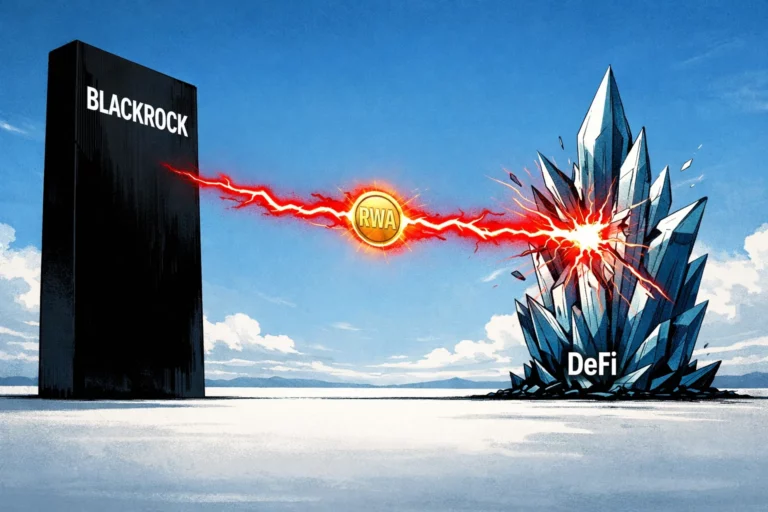
The report highlights the fast-growing RWA market as another possible transmission channel. Tokenized private credit converts traditional loans or credit fund exposure into blockchain-based tokens that can circulate in DeFi or be posted as collateral. If the underlying credit assets come under stress, the risk may move from fund structures into on-chain lending relationships.
On-chain private credit is still small at around $5 billion, far below the multi-trillion-dollar traditional market. Even so, the link matters more as institutional capital enters blockchain networks. For DeFi, the key issue is not headline size. It is whether a shift in the value or quality of underlying credit can trigger wider pressure through collateral, borrowing, and liquidation mechanisms on-chain.