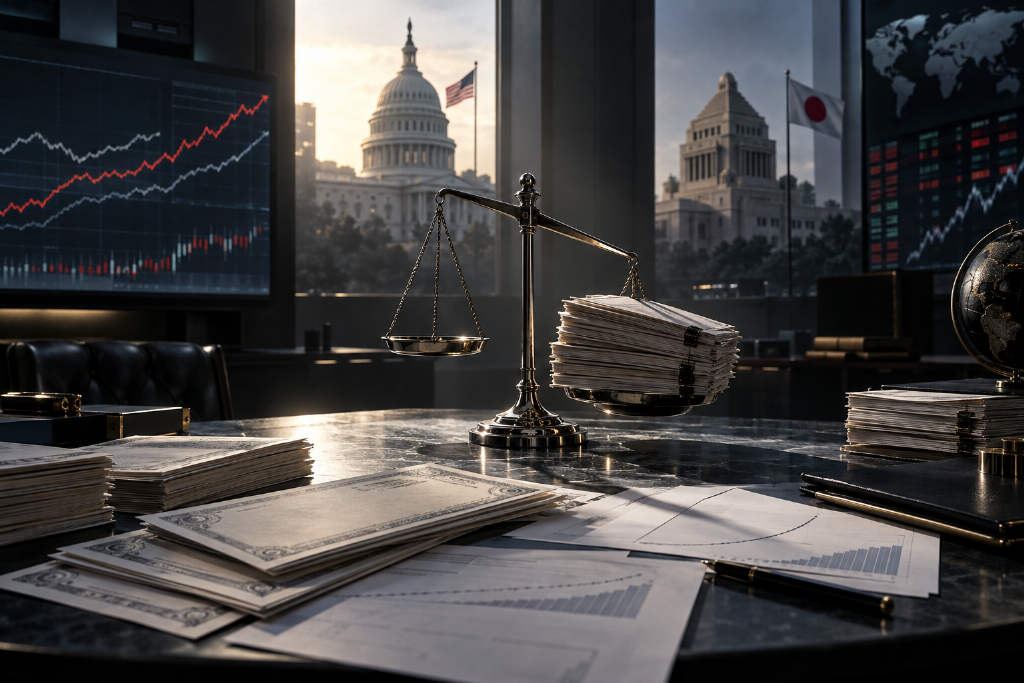
Bloomberg columnist John Authers said the global economy’s underlying structure is shifting as long-term government bond yields in major economies climb to levels not seen in decades. Japan’s 10-year government bond yield has reached a more than 30-year high, while government borrowing costs in the U.S. and other major markets have risen to levels last seen before the global financial crisis. Even so, the rise in yields has not yet delivered a clear hit to equities or the real economy, with the Nasdaq 100 still posting a record high this week. Authers wrote that the latest violent move in bond markets is more likely tied to economic data that has continued to come in stronger than expected, along with a policy stance from Federal Reserve Chair Warsh that was more hawkish than markets had anticipated. Markets now expect the U.S. overnight rate to reach 4.75% a year from now, compared with an earlier expectation of 3% before the outbreak of the Iran war. He added that if the 10-year U.S. Treasury yield holds near 5%, bonds could become more attractive relative to stocks, though a faster rise in yields could increase fiscal pressure and strain non-bank financial institutions and highly leveraged companies.
On Sept. 26, Bloomberg columnist John Authers said the global economy’s underlying "tectonic plates" are shifting, with long-term government bond yields in major economies rising to their highest levels in decades.
Japan’s 10-year government bond yield has climbed to a more than 30-year high. In the U.S. and other major markets, government borrowing costs have also risen to levels last seen before the global financial crisis. So far, however, the rise in bond yields has not clearly hit equities or the real economy, and the Nasdaq 100 still reached a record high this week.
What is driving the latest bond-market move
According to the column, the latest sharp swings in the bond market are more likely the result of economic data that has continued to come in stronger than expected, as well as a policy stance from Federal Reserve Chair Warsh that was tougher than markets had previously expected.
Markets now expect the U.S. overnight rate to reach 4.75% one year from now. Before the outbreak of the Iran war, that same rate had at one point been expected to fall to 3%.
What higher yields could mean
Authers said that if the 10-year U.S. Treasury yield stays around 5%, the higher risk-free return would make bonds more attractive relative to stocks and would also help long-term capital managers such as pension funds.
He also said that if yields continue to rise rapidly, that could add to fiscal pressure and put stress on non-bank financial institutions and highly leveraged companies.
This article was originally published by Bit.Fan. For more cryptocurrency news and market insights, visit www.bit.fan. Disclaimer:
The market information, project data, and third-party content displayed on this platform are for industry information sharing only and do not constitute any form of investment advice or return commitment.
Cryptocurrency trading carries high risks. Users should fully assess their risk tolerance and make independent decisions. All profits, losses, and legal responsibilities are borne by the users themselves.