

Bonk Guy, a prominent on-chain trader who turned a string of low-cap token bets into a breakout run this cycle, is now under heavy community scrutiny as questions grow around the market impact of his public calls. According to the source article by Nancy for PANews, his recent endorsements of low-cap names such as EMBER and Arc-related tokens have triggered accusations that his influence may be amplifying returns and attracting copy-trading flows.
As his profile rose, some traders began tracking his wallets and mirroring his trades. That attention also brought a different line of criticism: whether public calls on thinly traded tokens amount to influence-driven promotion, and whether any of those trades involved undisclosed ties or access to privileged information. The article says those suspicions have become more pronounced as Bonk Guy kept hitting trades in names including PONS, MarsCoin, USELESS, MEME, and EMBER.
EMBER trade draws scrutiny over influence and token concentration
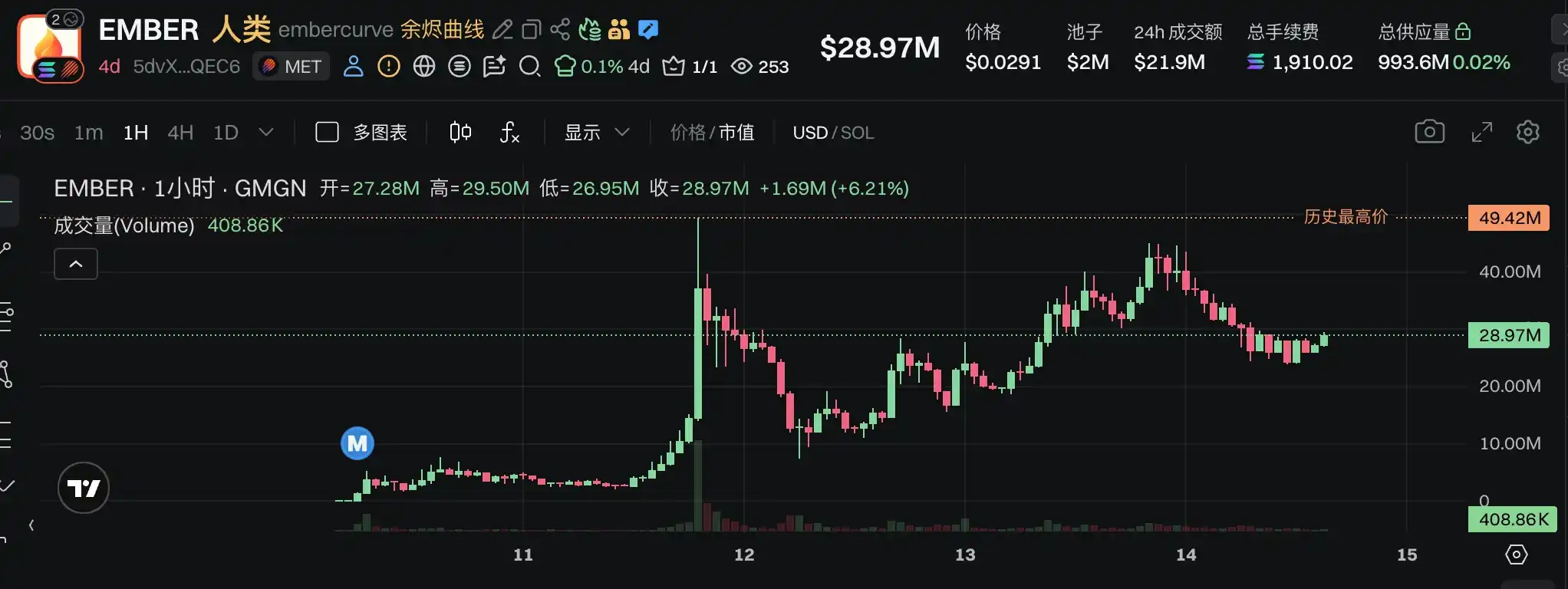
Last week, Bonk Guy publicly turned bullish on Solana ecosystem token EMBER. He said he had been watching the project when its market capitalization was around $3 million, later bought at a higher valuation, and believed the token could still grow because of its link to Meteora. He also said EMBER’s market cap could break $100 million. After that, EMBER quickly climbed into the tens of millions of dollars in market value.
Community members pushed back soon after. The article notes that STONK had already built stronger market attention and a larger valuation through its integration with Raydium LaunchLab, its stock-token pairing narrative, and a platform fee buyback-and-burn mechanism. Against that backdrop, Bonk Guy’s decision to buy lower-cap rival EMBER was interpreted by some users as an attempt to open a second table in the same sector and redirect liquidity through his own influence, intensifying on-chain PVP.
Bonk Guy rejected that framing and said the reaction was 「非常夸张」. He argued that STONK’s second-largest holder had also bought EMBER at a lower valuation and held it for several days without drawing similar criticism. By contrast, he said, he entered EMBER at roughly six times that valuation and was still cast as the villain, which he described as a clear double standard.
He added that he has long focused on low-cap projects because he sees a better risk-reward setup there, not because he is targeting any single project. He said he rarely trades large-cap tokens and usually does not change that preference even when he likes their long-term outlook. In his view, the idea that only one winner can exist in a sector runs against the nature of crypto.
Market suspicion deepened after Bubblemaps published an EMBER address cluster graphic. Some users read the chart as showing that more than 50% of EMBER supply was linked to the same cluster of addresses. A number of users then suggested that cluster might be tied to Bonk Guy and questioned his motive for buying the token.
Bonk Guy denied any such connection. He said the grouping was largely the result of EMBER using an externally owned account, or EOA, for token distribution, which caused the distribution wallet and all recipient wallets to appear within the same related network. According to him, the addresses receiving tokens in the chart belonged to normal participants rather than insiders. Bubblemaps later suggested that the project replace the EOA with a smart contract.
Arc-chain call triggers a second controversy around Long.supply
A separate dispute emerged over Bonk Guy’s public bet on Arc. On Sept. 14, he said he was bullish on launchpad activity on Arc and bought tokens including LONG on Long.supply.
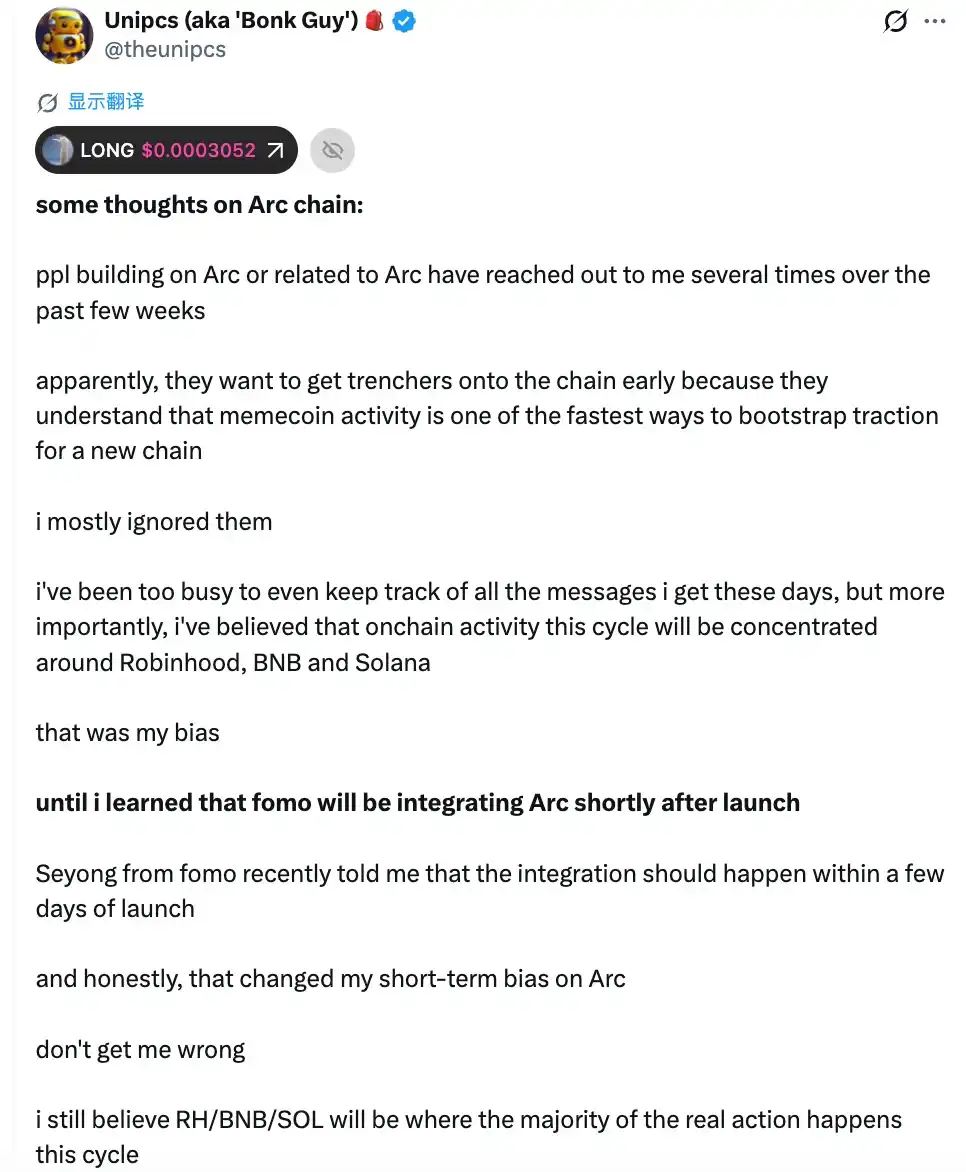
His thesis was that Fomo APP was becoming an important crypto trading app for retail users in this cycle, and that its planned integration with Arc could create a visible short-term opportunity for traders. He also said Arc was borrowing from Robinhood’s early strategy of building traffic through active trading and warned participants that the trade was a high-risk, short-term speculative attempt. LONG’s market cap then surged by several dozen times in a short period.
That move was followed by criticism of Long.supply, centered on asset authenticity and cross-chain bridge security. Crypto KOL 0xShawn said the platform carried rug-pull authority risk and the possibility of issuing fake USDT.
According to 0xShawn’s description in the article, Long.supply used its own bridge to map stock tokens from Robinhood Chain onto Arc, but the stock tokens on Arc were not officially issued and were instead minted by the platform itself. He also said the bridge did not rely on more established infrastructure such as Wormhole or LayerZero. Under that argument, the project team could theoretically shut down the bridge and withdraw funds locked on Robinhood Chain, leaving users to exchange real assets for fake assets on Arc.
That fed a broader complaint from the community: Bonk Guy should not have publicly called those tokens before the mainnet launch, because endorsement from a top trader could bring in capital from users who lacked the ability to assess the risks on their own.
Bonk Guy later apologized. He said his research into the project had not been thorough enough and added that he had not received any promotional payment. Long.supply responded by saying the stock tokens issued on Arc were backed 1:1 by real stocks held on Robinhood, could be verified on-chain through a cross-chain vault, and were redeemable 1:1 in both directions with Robinhood Chain.
The platform also said the lower stock prices on Arc were due to native USDC trading at roughly a 2x premium on-chain, and that the premium would normalize after Arc mainnet and USDC bridging opened on Sept. 16. The article notes, however, that Long.supply did not answer other concerns, including the risks tied to its bridge infrastructure.
Not everyone dismissed the Arc thesis outright. DeFi researcher CM said Fomo integration could bring traffic and that the examples of Solana and Robinhood Chain showed meme tokens can serve as an effective cold-start tool for a new chain.
Fomo data shows a sharp drawdown as concentrated positions raise risk
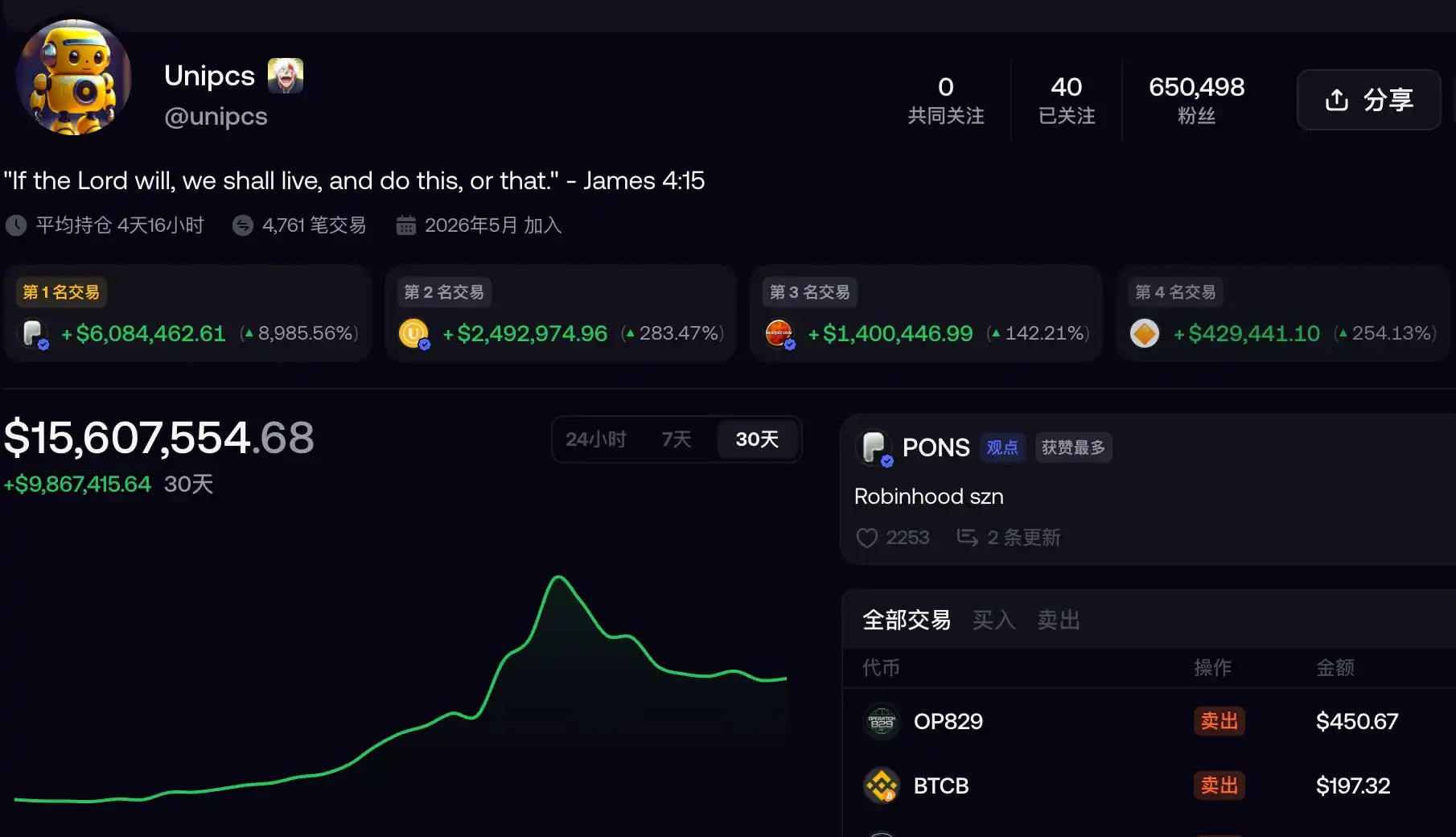
Even with strong gains from a diamond-hands approach, Bonk Guy has not been spared by reversals. Fomo data cited in the article shows his portfolio value climbed above $27 million over the past 30 days before falling back to about $15 million. In the last seven days alone, the drawdown exceeded $6.35 million.
As the portfolio shrank, Bonk Guy was overtaken in Fomo’s rankings by several other on-chain traders. Over the past seven days, Point Farm Capital ranked first on the platform’s profit leaderboard with about $10 million in assets, including roughly $7.1 million concentrated in STONK, for a position return of 677.4%.
TheS◎lstice ranked second with about $5 million in assets and was also heavily exposed to STONK. Its position return reached 2760.5%, and the current holding value was about $4.4 million. DumbCrayonEater ranked third, with most of the gains coming from AI tokens; the reported position return was 4397.6%, and the current holding value exceeded $7.38 million.
The speed of those leaderboard changes illustrates what the article describes as the core nature of the meme market: a contest for attention and liquidity. Once a hot narrative starts to fade, capital can move quickly toward the next trade that offers more upside imagination. In that kind of market, durable winners are rare. Traders who catch the next theme early tend to dominate, even if only for a short stretch.
Over a longer period, though, Bonk Guy still leads in absolute profit scale. Based on Fomo’s historical trading records, his portfolio remains the largest on the platform.
That lead comes with concentrated risk. His current holdings are focused on PONS, USELESS, and MarsCoin, and together those three positions account for 75.3% of the portfolio. Concentration can magnify gains in a favorable tape. It can also hit net asset value hard when one or two core positions reverse sharply, which the article identifies as a main reason for the recent drawdown.
The problem is not only mark-to-market volatility. These assets are meme tokens with high price swings and relatively limited liquidity, so unrealized gains visible on-chain do not guarantee that profits can actually be locked in. Buying a meme coin in an uptrend may be straightforward. Exiting after the position becomes very large is much harder.
If a trader tries to reduce size aggressively, the sell order itself can create direct market pressure and push the token lower. That drop then erodes book profits even more. The article says this risk is amplified by the broader pullback now underway across the on-chain ecosystem.
It also argues that the challenge facing Bonk Guy goes beyond one trader. Once a trader’s buys become market signals, personal positions, public views, and trading cadence can all become part of a wider liquidity game. Influence can attract liquidity, but it also brings greater scrutiny, larger exposure, and a more difficult exit.
The article closes by saying Bonk Guy’s real test may not be whether he can endure the market’s most violent swings, but whether he can turn large paper gains into realized profit before those gains fade. It points to Murad, who in the previous meme cycle became one of the most influential on-chain traders through the "Meme Supercycle" thesis and earlier trading results, yet still could not avoid the washout that came with the cycle. For ordinary investors, the easiest thing to copy from a top trader is the position list. The hardest things to copy are capital size, risk tolerance, and exit strategy.