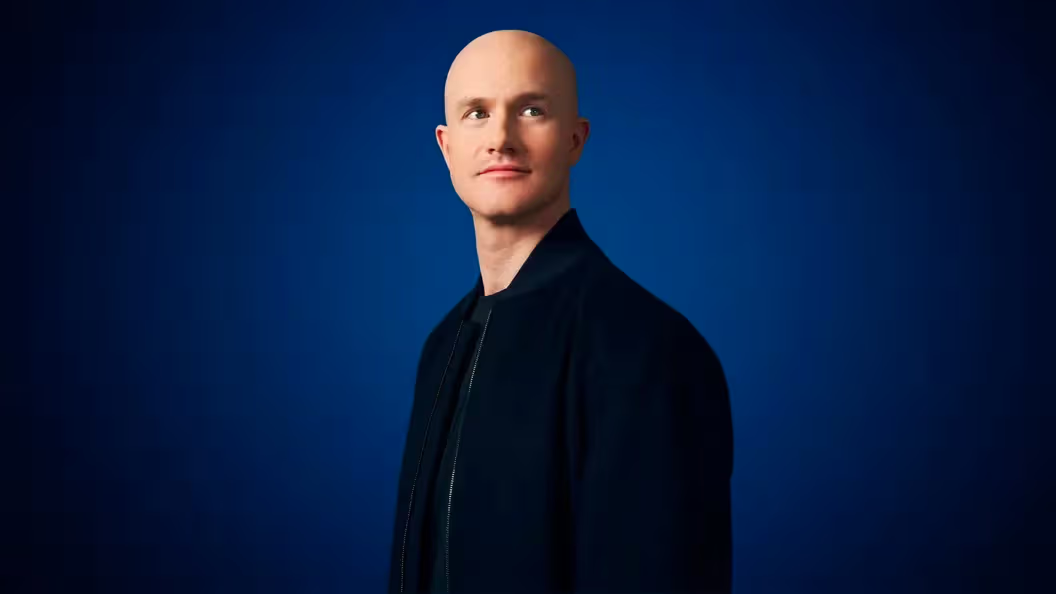
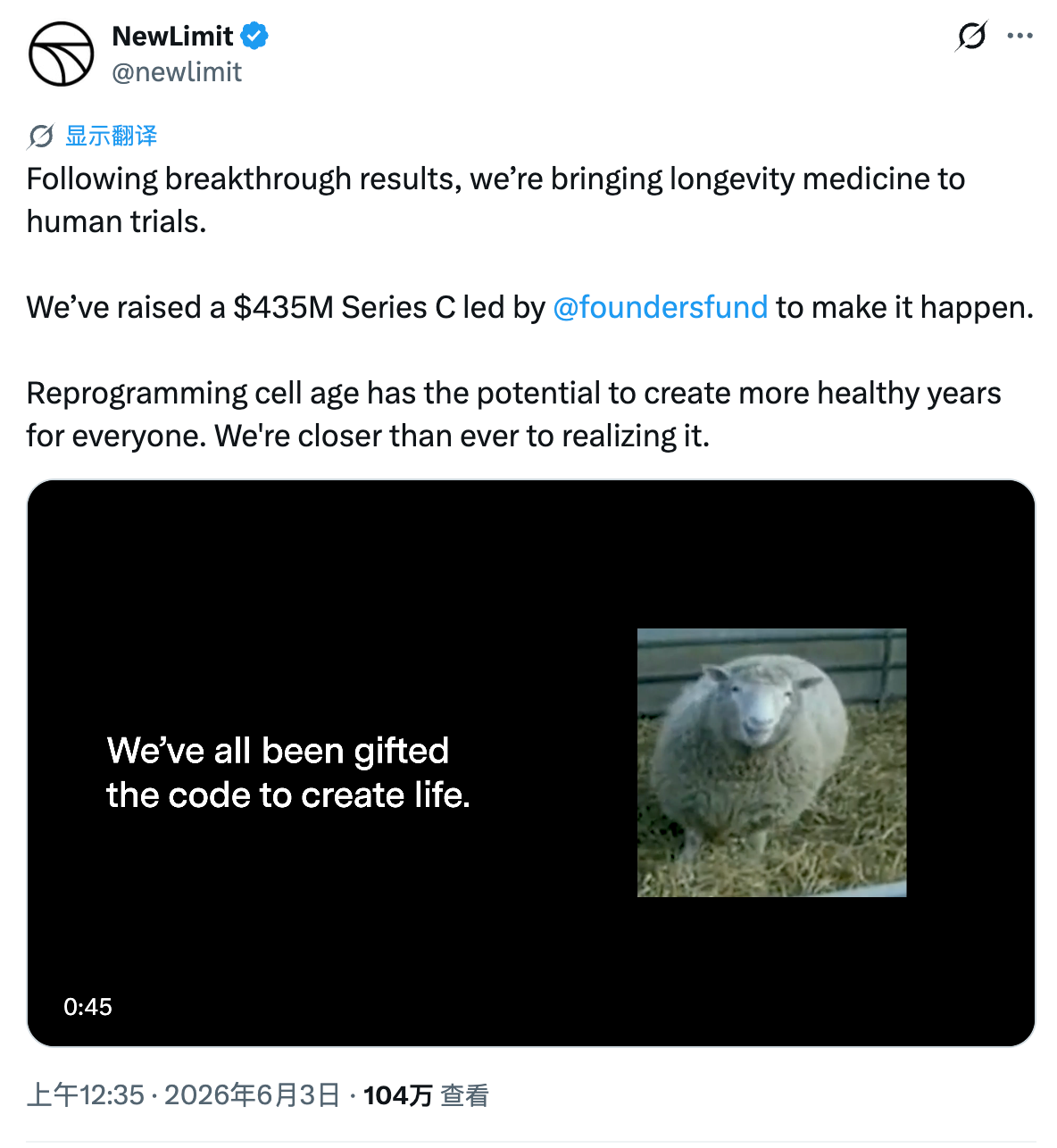
In the early hours of June 3 Beijing time, longevity biotech startup NewLimit announced a $435 million Series C funding round led by Peter Thiel's Founders Fund, with continued participation from existing backers including Abstract Ventures, Kleiner Perkins, NFDG, Eli Lilly Ventures, and Valor Equity Partners, as well as new investors Thrive Capital, Greenoaks, and Quiet Capital. The Wall Street Journal reported that NewLimit's post-money valuation reached $3.1 billion, more than tripling over the past year. In its funding announcement, NewLimit revealed that following breakthrough research, it is advancing longevity medicine into human clinical trials, with its first drug candidate for alcohol-related liver disease expected to enter the clinic next year. Notably, NewLimit's co-founder is Coinbase founder and CEO Brian Armstrong.
Brian Armstrong's Cross-Disciplinary Venture
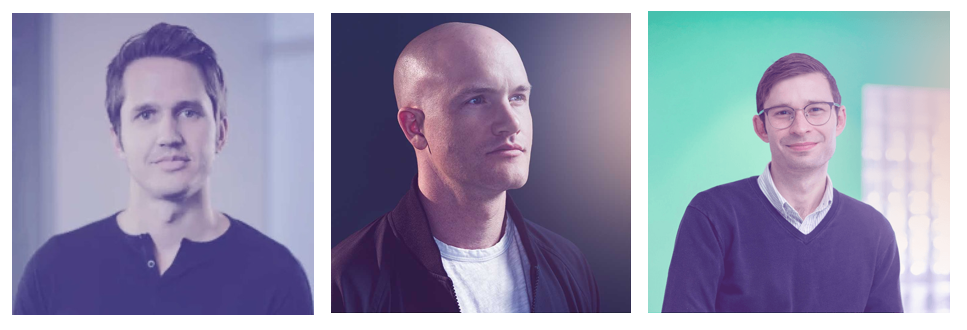
In 2021, Armstrong, together with former GV partner and bioengineer Blake Byers and stem cell biologist Jacob Kimmel, invested $110 million to launch NewLimit in South San Francisco. The founding team spans technology, biology, and investment expertise. Prior to this round, NewLimit had completed three earlier financings. According to its official description, the company is dedicated to developing drugs that extend healthy human lifespan, stating explicitly: "By reprogramming cell age, humanity can gain longer healthspans. We are now closer than ever to the goal of slowing or even reversing aging."
Yamanaka Factors and Cellular Reprogramming
For decades, scientists understood the link between aging and declining cellular function but could not reliably reverse it. The breakthrough came in 2006 when Japanese researcher Shinya Yamanaka discovered that activating just a few specific transcription factors could reprogram adult cells into a youthful, embryonic-stem-cell-like state. These factors were later named Yamanaka Factors, and the discovery earned Yamanaka the 2012 Nobel Prize in Physiology or Medicine. It proved for the first time that cellular age is not irreversible.

NewLimit's entire thesis rests on this discovery. The company writes on its website: "Our medicines activate specific transcription factor genes to reprogram the epigenome back to a younger state. We know reversal is possible, but for different cell types, which exact combinations of transcription factors are needed to restore youthful function remains unknown. Finding these effective payloads is the core challenge of our work." In simpler terms, NewLimit is pursuing longevity through rigorous science.

Liver Disease as an Accelerated Aging Model
The company's strategy is to first target a specific disease, secure regulatory approval, and then expand into broader applications. Its lead drug for alcohol-related liver disease is expected to begin clinical trials next year. Co-founder and CEO Jacob Kimmel explained that liver disease can be viewed as an "accelerated version of aging," presenting the same processes everyone goes through, just faster and more aggressively. Successfully intervening in liver disease could thus open the door to reversing overall aging.

The Billionaires' Anti-Aging Race
NewLimit is not the only company chasing longevity. In 2022, Sam Altman invested $180 million in Retro Biosciences, which is developing drugs to rejuvenate aging cells and recently disclosed a valuation of $1.8 billion. Also in 2022, Altos Labs launched with a reported $3 billion in backing from Jeff Bezos, and its total funding has since nearly doubled.

From Peter Thiel to Sam Altman to Jeff Bezos, those most drawn to this sector are invariably ultra-wealthy individuals atop the pyramid of tech and capital. Thiel has openly expressed a profound aversion to death and repeatedly argued that "death is humanity's greatest enemy, yet we treat it as a law of nature." The logic behind these tech moguls' billion-dollar bets is straightforward: when wealth and power reach their peak, time becomes the only enemy, and the ultimate luxury money cannot buy.