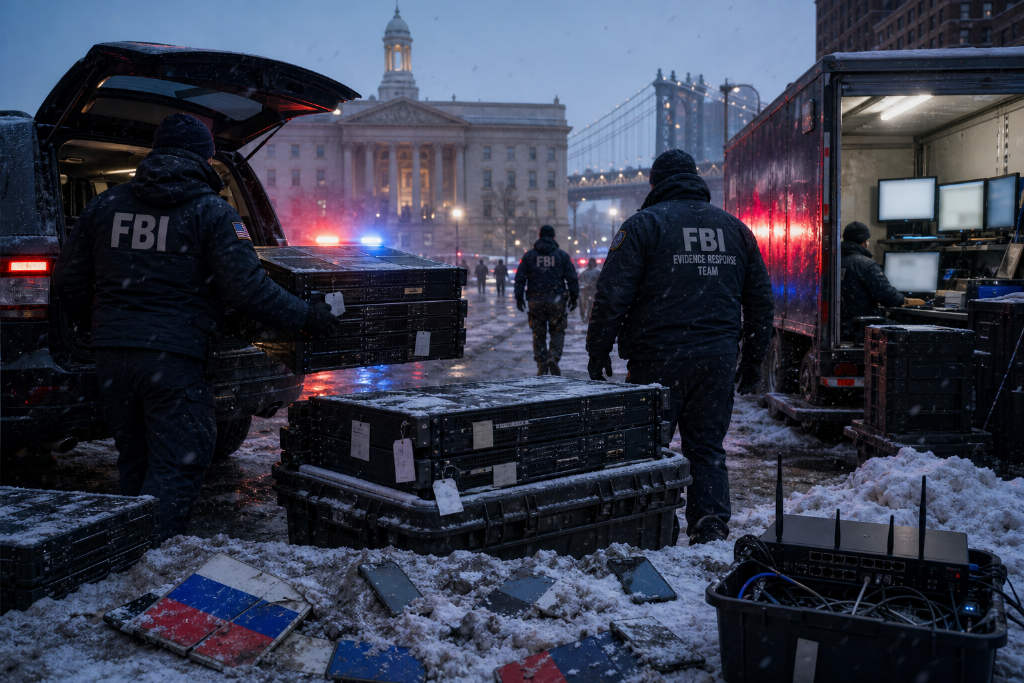
Brooklyn prosecutors said they have dismantled the online infrastructure behind a multinational crypto investment scam that targeted Russian speakers in the United States, seizing and disrupting 241 web domains and 112 servers.
District Attorney Eric Gonzalez announced the action on Wednesday. His office said its Virtual Currency Unit worked with the FBI last week to execute search warrants and other enforcement actions across three time zones.
According to the release, the servers were hosted by Eastern European and American companies, and the scammers relied on infrastructure and IP addresses in Ukraine and other Eastern European countries.
"These criminals stole many millions of dollars from Russian-speaking victims through an elaborate investment scheme, then tried to exploit them again with false promises to recover their money," Gonzalez said.
How the alleged scheme worked
The DA's office said a large cluster of victims in Brooklyn had responded to Russian-language Facebook ads promoting investment opportunities. They were then contacted by an "investment advisor" who coached them into opening an account on a crypto investment website.
With help from that advisor, victims bought crypto and sent it to addresses linked to the platforms. After weeks or months of supposed investing, they tried to withdraw funds but were either locked out or told they had to pay additional fees and taxes.
Server data pointed to a second scam
Data recovered from the seized servers showed that the operators also ran a recovery scam, prosecutors said. A few weeks after the original fraud, victims were contacted again and promised help recovering stolen assets.
A three-year investigation
Brooklyn's Virtual Currency Unit had been investigating the operation for three years. The office said Brooklyn's large Russian-speaking population meant residents of the borough were hit disproportionately.
Before last week's action, the unit had already seized or disrupted 400 domains linked to the fraud. New scam websites kept appearing, according to the release. By taking down the servers, prosecutors said, the operators lost the ability to quickly spin up new sites and contact existing victims.
Estimated losses reached tens of millions
Prosecutors estimate that tens of millions of dollars were stolen in the scheme. The office said it has seized about $300,000 so far and is working to claw back more.
The takedown is not the Brooklyn DA's only recent crypto fraud case. Prosecutors previously charged a local man who stole $16 million from nearly 100 Coinbase users through a phishing scheme. He was later sentenced to up to 12 years in prison.