Analyst says BTC is nearing a violent directional move as 5% spot supply concentration rises to 12%

Analyst says BTC is nearing a violent directional move as 5% spot supply concentration rises to 12%

N
News Editor
2026-07-28 10:16:56
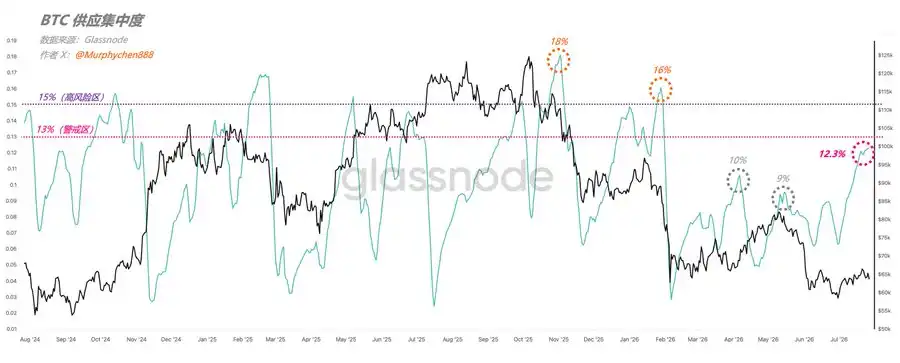
Crypto analyst Murphy said Bitcoin’s spot supply concentration within a 5% price range has continued to climb, rising from 10% in May to 12% now. While the reading is still below the 15% threshold he highlighted as a key line for larger market moves, it has already exceeded the level seen in May, when BTC experienced sharp volatility. Murphy’s logic is that when too much supply clusters in a narrow price band, even small price swings can trigger faster turnover in sensitive holdings and amplify volatility. He pointed to past cases in which concentration above 15% was associated with a greater chance of a major move, including readings of 18% in November 2025 and 16% in January 2026. He also said market structure has changed since February this year. After a price decline, the supply side saw a diminishing marginal effect, and prolonged low circulation and low turnover made concentration less pronounced than in earlier periods. Even so, May’s move showed that a 10% reading was enough to produce a large swing, which he said reflects a more fragile and unstable market mood. If BTC continues to trade sideways between $62,000 and $66,000, Murphy expects concentration to rise further before a forceful breakout higher or lower redistributes supply.
BitcoinBTCsupply concentrationon-chain analysismarket volatilityMurphy

Crypto analyst Murphy said on July 28 that Bitcoin’s spot supply concentration within a 5% price range has kept rising, moving from 10% in May to 12% at present. The figure remains below the 15% threshold he flagged as critical, but it is already above the level that preceded a sharp bout of volatility in May.

Higher concentration can make price moves more explosive

Murphy said the mechanism is straightforward: when too much supply is packed into a narrow price band, even a small move can accelerate turnover among more sensitive holders, which can then produce larger volatility.

Historical data cited by Murphy shows that when concentration rises above 15%, the probability of a major move increases. He pointed to two past readings: 18% in November 2025 and 16% in January 2026.

Post-February market conditions look different

According to Murphy, the price drop after February this year triggered a diminishing marginal effect on the supply side. A long stretch of low circulation and low turnover meant supply concentration no longer stood out as strongly as it had in previous periods.

Still, the market saw a large swing in May with concentration at only 10%. In Murphy’s view, that suggests market sentiment has become more fragile and less stable than before.

Sideways trading in the $62,000-$66,000 range could set up the next break

Murphy said that if BTC continues to move sideways between $62,000 and $66,000 for some time, supply concentration will keep building. He expects that process to end with a forceful breakout either upward or downward, allowing the overly concentrated supply to be redistributed.

He added that this could mark an important directional decision near the end of the current bear market cycle. Murphy also said the 5% spot supply concentration metric has helped identify volatility direction at several key moments in the past, and the current rebound in the indicator suggests the market is moving closer to its next window for a sharp repricing.

This article was originally published by Bit.Fan. For more cryptocurrency news and market insights, visit www.bit.fan.
100

Disclaimer:

The market information, project data, and third-party content displayed on this platform are for industry information sharing only and do not constitute any form of investment advice or return commitment.

Cryptocurrency trading carries high risks. Users should fully assess their risk tolerance and make independent decisions. All profits, losses, and legal responsibilities are borne by the users themselves.