
A Caixin report published on Aug. 6 said tax authorities are now able to obtain complete data on dividends and cash value from offshore insurance policies as information exchange under the Common Reporting Standard, or CRS, becomes routine. The report said gaps in administration are being filled and that tax collection on insurance-related overseas income has already begun.
CRS 2.0 expands the scope of reportable financial assets
According to Caixin, CRS 2.0 is a major update by the Organisation for Economic Co-operation and Development, or OECD, to the Common Reporting Standard. In practice, the updated version is commonly referred to as “CRS 2.0.” One of its central changes is the inclusion of crypto assets, central bank digital currencies, or CBDCs, and certain electronic money products within the definition of financial assets.
The report said the change reflects the growing integration of digital assets with mainstream finance.
Tax enforcement is tightening across several offshore income channels
Caixin said the rollout of CRS 2.0 and stricter tax administration of overseas income are reinforcing each other across several channels, including offshore stock trading, offshore insurance, and offshore trusts. In the report’s framing, those developments are working together to tighten supervision over cross-border tax sources.
Hong Kong is moving toward CRS 2.0 and CARF before 2028
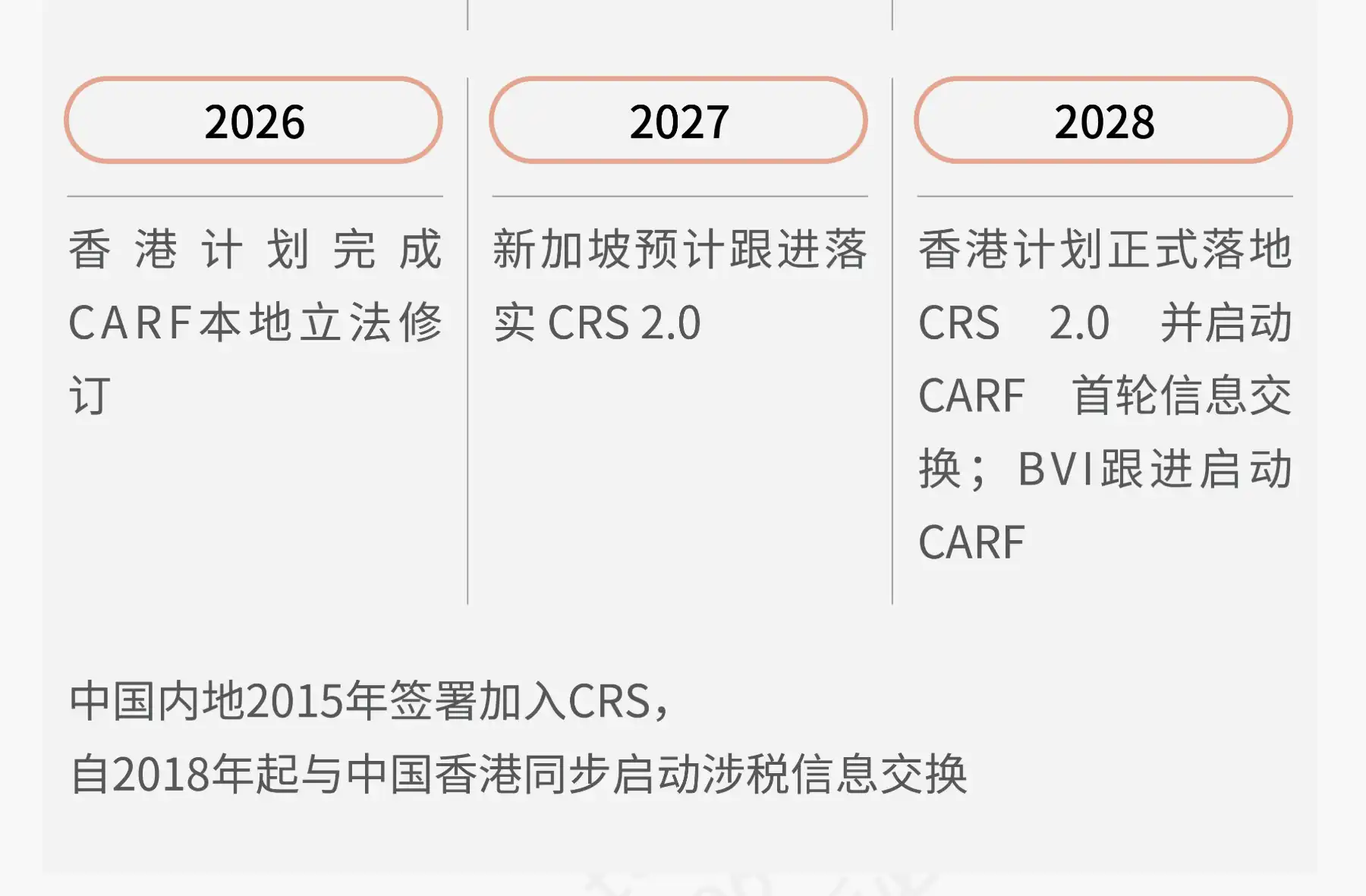
The report also referred to an earlier development in Hong Kong, where authorities are planning to implement CRS 2.0 before 2028 while also advancing the Crypto-Asset Reporting Framework, or CARF. Under that arrangement, crypto trading platforms, brokers, and crypto ATM operators would be required to report crypto-to-fiat conversions, swaps between different crypto assets, and transfers of crypto assets across domestic and overseas jurisdictions.
Reporting would need to identify the full name of each asset, including examples such as Bitcoin (BTC), Ethereum (ETH), and Tether (USDT). It would also need to record total market value, total holdings, and the number of transactions by trading category. For retail payment transactions, any single transfer of more than $50,000 would need to be reported on an item-by-item basis.
Mainland China has not announced a timeline, but self-reporting notices have been sent since 2025
While mainland China has not officially announced a timetable for implementing CRS 2.0, Caixin said tax departments in multiple regions have, since 2025, contacted taxpayers by phone calls and text messages, asking them to self-check and report overseas income for the 2022 to 2024 tax years and pay the relevant taxes according to law.
Caixin added that CRS 2.0 would not only place offshore crypto holdings fully within the field of tax supervision, but could also lead to coordinated reviews by other regulators.