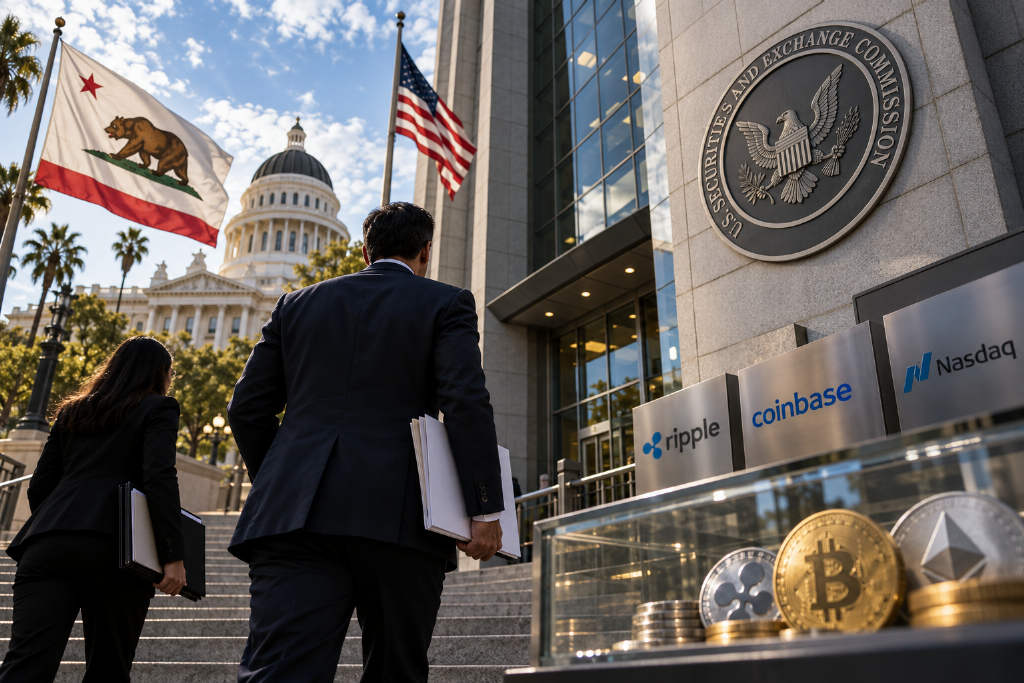
California’s Department of Financial Protection and Innovation, or DFPI, has submitted a comment letter to the U.S. Securities and Exchange Commission opposing the agency’s proposed “Regulation Crypto Assets” framework. The state regulator said the plan could weaken investor protections and limit the ability of state authorities to review token issuance projects. KC Mohseni, a DFPI commissioner, said California opposes efforts by federal regulators to reduce state-level oversight powers and related safeguards. The proposal would let eligible issuers raise up to $5 million over four years under a startup exemption, while a separate crypto fundraising exemption would allow up to $75 million over a 12-month period. Issuers would need to disclose project details, risks, and other information investors need for evaluation, and some offerings would also require financial statements and ongoing reporting. DFPI added that federal securities law still preserves state authority to investigate securities fraud, deceptive conduct, and unlawful broker or dealer activity. Ripple, Coinbase, and Nasdaq have backed changes to the proposal. DFPI also said its scam tracker list added nearly 200 crypto-related scams, up 30% from a year earlier.
California’s Department of Financial Protection and Innovation (DFPI) has submitted a comment letter to the U.S. Securities and Exchange Commission (SEC), opposing the agency’s proposed “Regulation Crypto Assets” rule. DFPI said the proposal could weaken investor protections and restrict the ability of state governments to review issuance projects.
KC Mohseni, a DFPI commissioner, said California opposes moves by federal regulators to weaken state-level regulatory authority and investor safeguards.
Two fundraising exemptions in the proposal
Under the proposal, eligible issuers could raise as much as $5 million over four years through a startup exemption. A separate cryptocurrency fundraising exemption would allow issuers to raise up to $75 million within 12 months.
Those offerings would be required to disclose project details, risks, and other information needed for investor evaluation. Some fundraising activity would also need to include financial statements and ongoing reporting.
State enforcement powers remain in place
Federal securities law would still preserve state authority to investigate securities fraud, deceptive conduct, and unlawful broker or dealer activity.
Blockchain payments company Ripple, cryptocurrency exchange Coinbase, and exchange operator Nasdaq have all supported changes to the proposal.
DFPI also said its scam tracker list added nearly 200 crypto-related scams, a 30% increase from the previous year.
This article was originally published by Bit.Fan. For more cryptocurrency news and market insights, visit www.bit.fan. Disclaimer:
The market information, project data, and third-party content displayed on this platform are for industry information sharing only and do not constitute any form of investment advice or return commitment.
Cryptocurrency trading carries high risks. Users should fully assess their risk tolerance and make independent decisions. All profits, losses, and legal responsibilities are borne by the users themselves.