

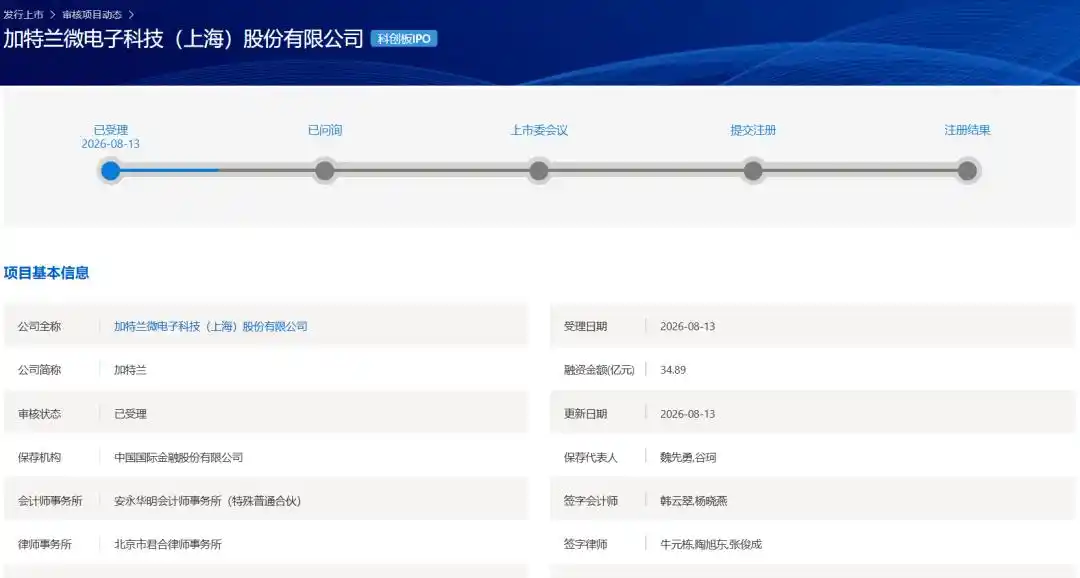
Calterah Microelectronics (Shanghai) Co., Ltd. has had its IPO filing formally accepted by the Shanghai Stock Exchange, putting the automotive radar chip maker one step closer to a listing on the STAR Market. The exchange disclosed the company’s draft prospectus after more than four months of IPO tutoring, clearing the way for the next review stage.
Founded in 2014, Calterah is one of the companies that brought domestically developed automotive-grade millimeter-wave radar RF front-end chips from zero to mass production in China. According to the company’s website and public data cited in the report, Calterah held a 31.1% share of China’s automotive millimeter-wave radar market in 2025, second only to Texas Instruments. In the 4D millimeter-wave radar 4-transmit, 4-receive SoC chip segment, its market share reached 66%, ranking first.
A domestic chip supplier that entered a market once dominated by imports
A decade ago, domestic SoC chips had a 0 share in China’s millimeter-wave radar market. The segment was dominated by overseas companies including Texas Instruments, NXP, and Infineon, and Chinese carmakers largely relied on imported chips or complete radar modules.
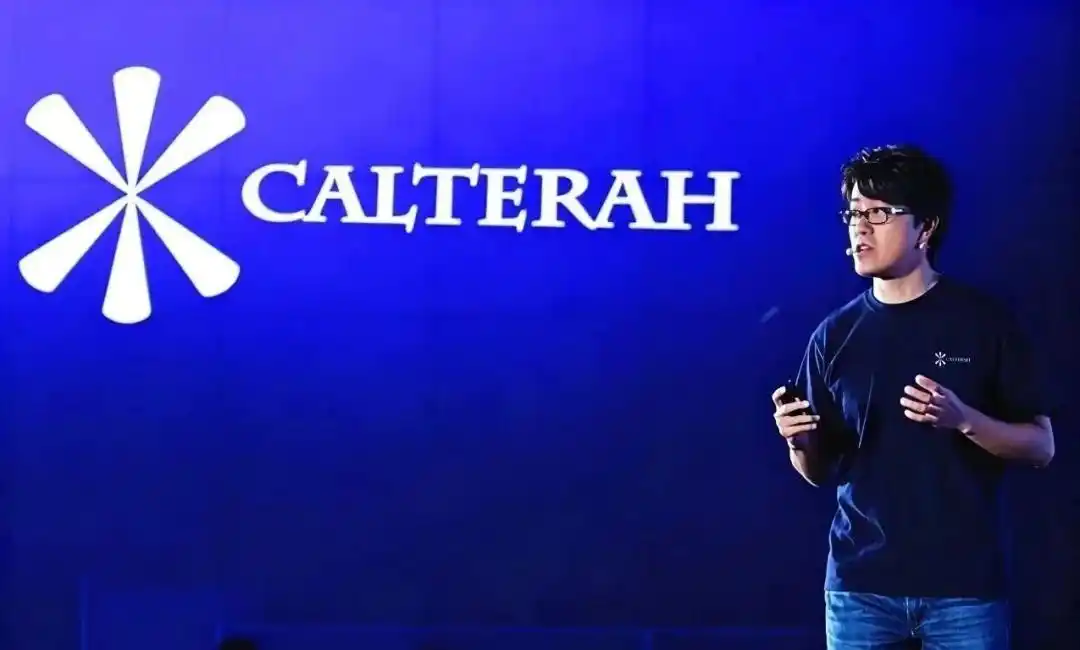
The company’s founding team is a major part of that story. Founder Chen Jiashu is an electrical engineering Ph.D. from the University of California, Berkeley. He worked on CMOS RF and millimeter-wave integrated circuits at the Berkeley Wireless Research Center. His advisor, Ali Niknejad, is now listed as Calterah’s co-founder and technical advisor. During his doctoral studies, Chen led a team in the U.S. that developed what the report described as the world’s first 60GHz WiGig CMOS SoC chip, making him one of the early figures in CMOS millimeter-wave integrated circuit design.
Calterah was founded in Shanghai in February 2014. In its second year, it completed tape-out for what the report called the world’s first fully integrated 77GHz radar transceiver single chip. A turning point came in 2017, when the company mass-produced the world’s first automotive-grade 77GHz millimeter-wave radar RF front-end chip built on a CMOS process. That marked a break from the industry’s long reliance on GaAs and SiGe processes and, according to the report, helped end a period of technology lockup by major foreign suppliers.
Before that, millimeter-wave radar chips had largely been built on gallium arsenide (GaAs) and silicon germanium (SiGe), which carried higher costs and lower integration. Calterah integrated RF front-end functions, digital signal processing, and even antennas into a single SoC, reducing module costs and lowering development barriers. The report said that BYD, Geely, and XPeng later adopted the company’s solutions.
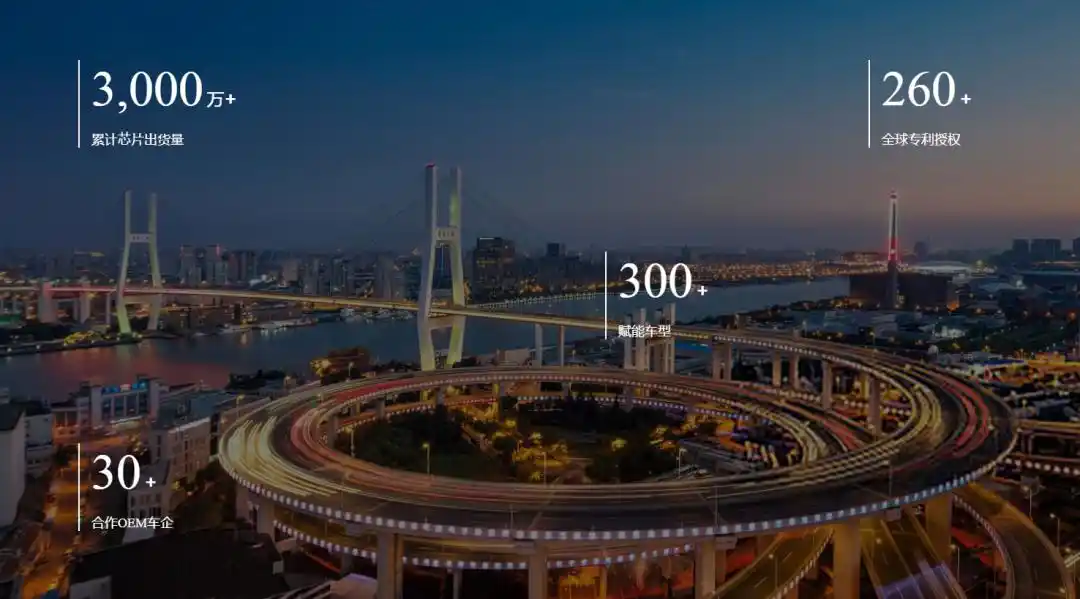
In 2019, Calterah launched what the report described as the world’s first 77/60GHz millimeter-wave radar AiP SoC chip, pushing integration higher again. As of the first quarter of 2026, its cumulative shipments of automotive-grade millimeter-wave radar chips had topped 30 million units. Those chips have been used by domestic automakers including BYD, Geely, Changan, Chery, SAIC, FAW, Dongfeng, Leapmotor, Seres, and NIO, and have entered more than 300 mass-produced vehicle models.
Calterah has also expanded abroad. The report said it became the first Chinese millimeter-wave radar chip supplier for two well-known European Tier 1 global platforms and entered major vehicle programs at Volvo in Sweden and Rivian in the U.S. Based on Yole statistics cited in the article, the company ranked fourth globally in the automotive millimeter-wave radar chip market in 2025, including advanced driver-assistance and child-presence detection applications, with about 4% market share.
Backed by 11 financing rounds before its A-share push
Calterah attracted investors early. After the successful tape-out of its first chip in 2015, it raised angel funding from Silergy in November of that year. The latest draft prospectus shows Silergy still holds a 10.6405% stake.
To date, the company has completed 11 funding rounds. Investors include the second phase of the China Integrated Circuit Industry Investment Fund, CICC Capital, Walden International, Gopher Asset, GAC Capital, and Pudong Venture Capital Group. Its latest round came in March 2026, when it raised RMB 1.2 billion in Series E funding at a post-money valuation above RMB 10 billion. It then filed IPO tutoring documents with the Shanghai Securities Regulatory Bureau and started its A-share listing process.
RMB 3.49 billion fundraising plan and a high R&D bill
The draft prospectus shows Calterah plans to issue no more than 9,424,550 shares, representing no less than 25% of its total share capital after the offering. It intends to list on the STAR Market, with CICC serving as sponsor.
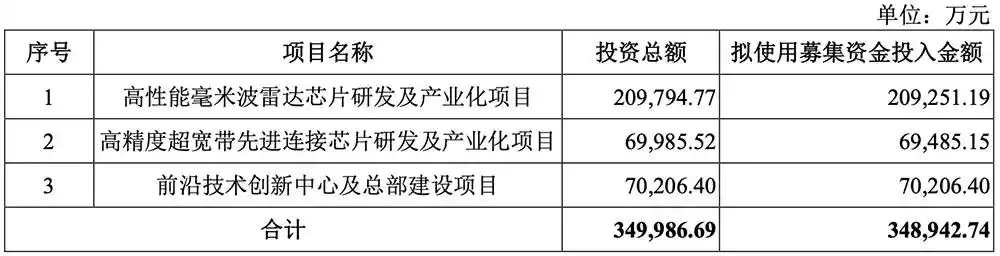
The company plans to raise RMB 3.4894274 billion. The proceeds are earmarked for a high-performance millimeter-wave radar chip R&D and industrialization project, a high-precision ultra-wideband advanced connectivity chip R&D and industrialization project, and a frontier technology innovation center and headquarters construction project.
Its financial profile follows a familiar pattern for hard-tech chip companies: fast revenue growth paired with continuing losses. Revenue came in at RMB 206 million in 2023, RMB 303 million in 2024, and RMB 632 million in 2025. Revenue in 2025 rose 108.44% from a year earlier, and the three-year compound growth rate exceeded 75%. Still, net profit attributable to shareholders was RMB -323 million, RMB -334 million, and RMB -193 million over those three years. The company remained loss-making in the first quarter of 2026, posting an additional loss of roughly RMB -60.2866 million.
The main reason is research spending. Calterah’s R&D expenses totaled RMB 304 million, RMB 365 million, and RMB 370 million from 2023 to 2025, equal to 147.75%, 120.17%, and 58.55% of revenue, respectively. In the first quarter of 2026, R&D spending approached RMB 100 million and accounted for 63.67% of revenue in the same period. As of the end of March 2026, the company’s accumulated uncovered losses stood at RMB 172 million.
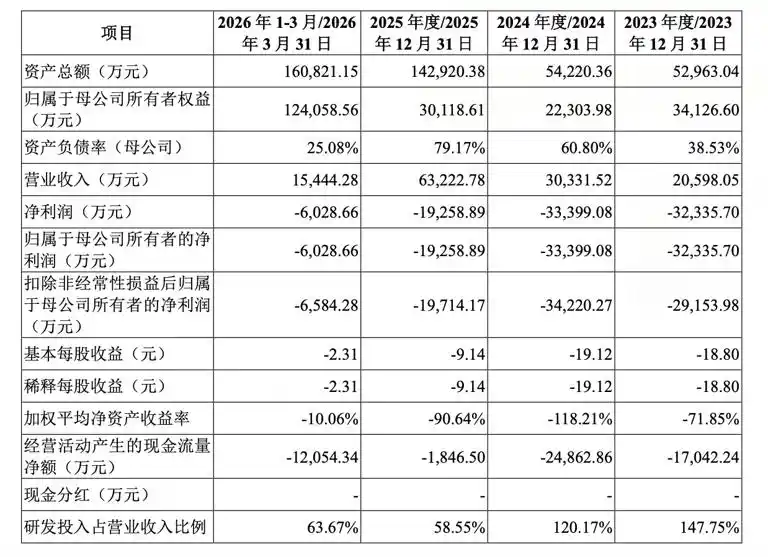
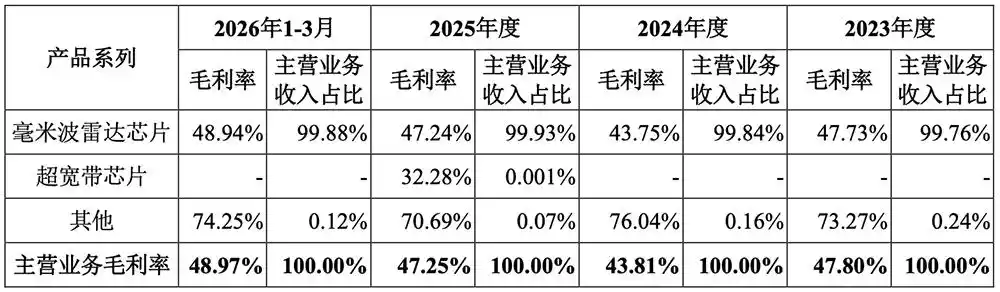
Gross margin, however, remained relatively strong. The gross margin of its core business was 47.80%, 43.81%, 47.25%, and 48.97% during the reporting periods cited in the filing, notably above the average for comparable listed peers. Net operating cash flow improved as well, moving from RMB -170 million in 2023 and RMB -249 million in 2024 to RMB -18.46 million in 2025. The company also said share-based compensation expense will peak in 2026 and fall significantly in 2027 and 2028.
Customer pressure is disclosed, while market demand keeps growing
Calterah also disclosed pressure on its sales mix. In the prospectus, it said revenue from its largest end customer has remained under pressure since 2026, partly because downstream automakers have introduced second suppliers.
Even so, the addressable market continues to expand. According to founder Chen Jiashu, global demand for automotive millimeter-wave radar was about 200 million units in 2025 and is expected to exceed 300 million units by 2029. Research from QYResearch cited in the article put the global automotive radar millimeter-wave chip market at $7.845 billion in 2025, with that figure projected to reach $19.7 billion by 2032.
Calterah enters the IPO review process holding a 31.1% share of China’s automotive millimeter-wave radar market and a global ranking of fourth in the segment cited in the report. For a company built around domestic automotive-grade millimeter-wave radar SoC chips, the capital market door is now open, though profitability remains unresolved.
This report is based on a MarsBit article that cited the WeChat public account SuperEV-Lab, written by Wang Lei, along with Calterah’s draft prospectus and the public data referenced in the source text.