

Calterah Microelectronics Technology (Shanghai) Co. has had its STAR Market IPO application accepted by the Shanghai Stock Exchange, according to information posted on the exchange’s website. The company plans to issue no more than 9.42455 million shares and raise 3.489 billion yuan for three projects: millimeter-wave radar chip research and industrialization, ultra-wideband chip research and industrialization, and headquarters construction.
The prospectus lays out a mixed picture. In 2025, Calterah generated 632 million yuan in revenue, up 108.44% from a year earlier. Its shipment-based share of China’s automotive millimeter-wave radar chip market reached 31.1%, trailing only Texas Instruments. In the same year, though, the company posted a net loss of 193 million yuan. From 2023 through the first quarter of 2026, cumulative losses exceeded 910 million yuan, while net cash flow from operating activities stayed negative throughout the 3.5-year reporting period.
Calterah chose the fourth listing standard on the STAR Market, which requires an expected market capitalization of at least 3 billion yuan and revenue of at least 300 million yuan in the most recent year. The standard does not require profitability and is designed for hard-tech companies that are still loss-making.
The industry backdrop cuts both ways. Intelligent driving functions are moving from premium vehicles into models priced around 100,000 yuan, and millimeter-wave radar is expected to see broader adoption as a standard sensor. At the same time, automakers’ price competition is being pushed up the supply chain. That leaves several questions at the center of the filing: why losses remain despite a doubling in annual revenue, how durable growth can be when a large share of sales is tied to one end customer, and whether the planned 3.489 billion yuan raise will move the company toward break-even or extend its investment cycle.
Core business remains concentrated in millimeter-wave radar chips
Founded in February 2014, Calterah runs a Fabless model. It does not own wafer fabrication plants and instead focuses on the design and development of millimeter-wave radar chips and ultra-wideband, or UWB, chips. Wafer manufacturing and packaging and testing are outsourced. Finished chips are sold through authorized distributors to radar module makers, and then installed in vehicles supplied to automakers.
Under that model, the company’s economics are straightforward: shipment volume multiplied by selling price, minus wafer and packaging and testing procurement costs, with the remainder needing to cover heavy research spending before any profit can emerge. Shipment volume depends on radar installation demand downstream, pricing depends on customer negotiations, and R&D intensity determines how high the break-even threshold sits.
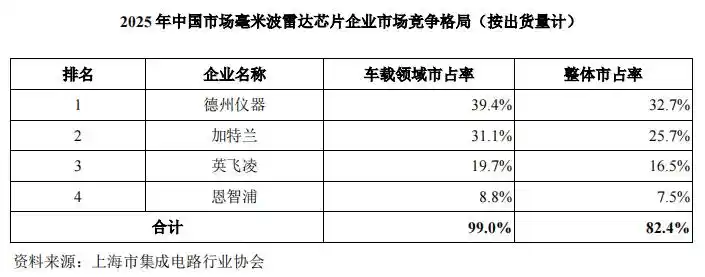
Its product mix is still narrow. During the reporting period, millimeter-wave radar chips accounted for more than 99% of core operating revenue. In 2025, automotive-grade chips used for advanced driver assistance systems were the flagship product, contributing 573 million yuan, or 90.64% of revenue. Unit sales reached 13.1302 million chips that year, mainly for forward radar and corner radar. Other automotive application chips used in door radar and in-cabin sensing generated 48 million yuan, or 7.59%, and remained in the commercialization stage. Industrial-grade application chips contributed less than 2%, which the company itself does not describe as a strategic focus.
The second growth line, UWB chips, has barely started contributing. The prospectus says samples were first shipped in the fourth quarter of 2025, and full-year sample sales totaled only 5,400 yuan. Gradual mass production is scheduled for the fourth quarter of 2026. For now, Calterah is still, in substance, a single-category company.
Global No. 4, domestic No. 2 by shipment share
Market position is one of the strongest parts of the filing. According to Yole, Calterah ranked fourth in the global automotive millimeter-wave radar chip market in 2025 with about 4% share, behind Texas Instruments, Infineon, and NXP.
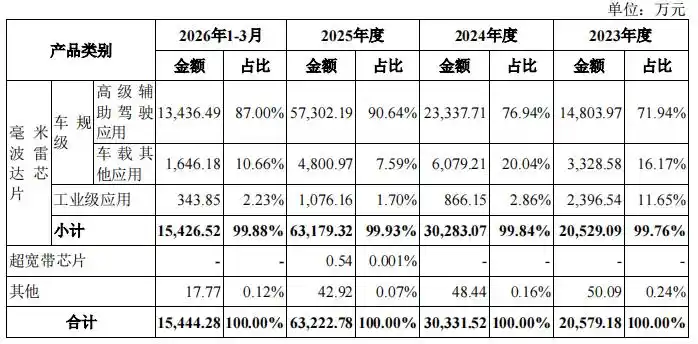
The domestic picture is stronger. Based on shipment data from the Shanghai Integrated Circuit Industry Association, Texas Instruments held 39.4% of China’s automotive millimeter-wave radar chip market in 2025, while Calterah held 31.1%. Infineon and NXP followed with 19.7% and 8.8%, respectively. The company says cumulative chip shipments have exceeded 30 million units.
Its shareholder roster is also notable. Calterah has no controlling shareholder. Its actual controller, Chen Jiashu, was born in 1984, received his undergraduate degree from City University of Hong Kong, and earned a doctorate from the Department of Electrical Engineering and Computer Sciences at the University of California, Berkeley. His research was published four times at the International Solid-State Circuits Conference, or ISSCC. He directly holds 12.14% of the company and indirectly controls 20.87% through the shareholding platform Nanchang Xichuang, giving him 33.01% of voting rights in total.
Institutional shareholders number more than 20. They include Hong Kong Zitong under Walden International with 8.51%, Silergy with 7.86%, two Fosun-affiliated funds with a combined 5.30%, and two China Renaissance-affiliated funds with a combined 5.36%. In May 2024, the second phase of the National Integrated Circuit Industry Investment Fund invested 50 million yuan and now holds 0.71%.
The broad shareholder base also means dispersed ownership. The prospectus warns that after the offering, the actual controller’s voting power could fall below 30%, creating a risk to control stability.
Revenue surged, but losses still reached 910 million yuan over 3.5 years
Financials are where the filing needs the closest reading. Calterah reported revenue of 206 million yuan in 2023, 303 million yuan in 2024, 632 million yuan in 2025, and 154 million yuan in the first quarter of 2026.
Revenue growth in 2024 was 47.39%, which the company linked to higher penetration of L2+ advanced driver assistance and volume growth in its Alps-Pro series chips. In 2025, revenue rose 108.44%. The prospectus points to BYD’s February 2025 launch of its “intelligent driving for all” strategy as a direct catalyst that drove concentrated procurement demand for intelligent-driving sensors.
Profitability has not arrived. Net profit for the same periods was negative 323 million yuan, negative 334 million yuan, negative 193 million yuan, and negative 60 million yuan. Cumulative losses over the 3.5-year period reached 910 million yuan. The loss trend has improved: the 2025 loss was down by more than 40% from 2024, and the first quarter of 2026 showed further year-over-year narrowing. Based on that, management said it expects the company to achieve sustained profitability within the next two to three years.
R&D and share-based compensation remain the main drag on earnings
The largest expense item is research and development. R&D spending was 304 million yuan, 365 million yuan, 370 million yuan, and 98 million yuan across the reporting periods. As a share of revenue, it reached as high as 147.75% and was still 58.55% in 2025. Put differently, nearly 0.6 yuan of every 1 yuan in 2025 revenue was reinvested into R&D.
That intensity is tied to the nature of automotive-grade chips. Validation cycles are long, and supply-chain qualification with automakers usually takes three to four years, leaving little room for a sharp near-term drop in development spending.
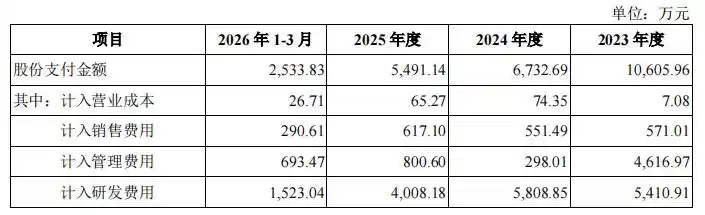
The second major item is equity incentives. Share-based payment expenses recognized during the reporting periods were 106 million yuan, 67 million yuan, 55 million yuan, and 25 million yuan. These are accounting charges rather than cash outflows, but they still weigh on reported profit.
Gross margin is one of the few clear bright spots. Core business gross margin came in at 47.80%, 43.81%, 47.25%, and 48.97% over the reporting periods. That level was about 12 percentage points above the average of comparable companies selected in the prospectus, including Nano Micro, 3Peak, and Rockchip.
In a period when chip pricing pressure has been widespread, Calterah kept gross margin above 47%, which the filing attributes to design optimization and yield improvement that lowered unit costs.
Still, lower costs did not fully translate into stronger earnings because part of the benefit was passed on to customers. The average selling price of the company’s advanced driver assistance chips fell from 49.56 yuan per unit in 2023 to 43.64 yuan in 2025, then to 41.62 yuan in the first quarter of 2026. The prospectus calls this a “strategic adjustment”: using cost improvements as a base and then giving up some pricing to gain share. That helped Calterah reach 31.1% domestic market share, but it also meant part of the revenue growth was offset by lower unit prices.
Operating cash flow stayed negative, while inventory and supplier concentration rose
Cash flow may be even more important than the income statement here. Net cash flow from operating activities was negative 170 million yuan, negative 249 million yuan, negative 18 million yuan, and negative 121 million yuan across the reporting periods, for a cumulative net outflow of about 558 million yuan.
Operating cash flow came close to break-even in 2025, but the first quarter of 2026 alone saw a 121 million yuan outflow, more than six times the full-year 2025 level. The company has been able to maintain liquidity largely through private-market financing. Cash and cash equivalents rose from 177 million yuan at the end of 2024 to 1.025 billion yuan at the end of 2025, then to 1.183 billion yuan at the end of the first quarter of 2026. Two large capital increases were completed during the reporting period before the IPO filing.
Inventory trends also stand out. Book value of inventory at period-end rose from 93 million yuan to 105 million yuan, 178 million yuan, and 220 million yuan. Inventory grew by nearly 70% in 2025, and by the end of the first quarter of 2026 it had already exceeded that quarter’s revenue of 154 million yuan.
The company said the increase reflected proactive production preparation. In the first quarter of 2026, it purchased 88 million yuan of wafers from its largest supplier, accounting for 58.68% of total procurement in the period. But revenue growth in the same quarter had already slowed sharply, dropping from 108% in 2025 to 8.10%. The figures suggest a mismatch between production preparation and demand timing. Whether those wafers convert into revenue will depend on downstream production schedules in the second half. If end demand weakens further, inventory write-down pressure could rise.
Supplier concentration is also increasing. Purchases from the top five suppliers rose from 54.50% of total procurement in 2023 to 80.16% in the first quarter of 2026. Supplier A in wafer foundry services alone accounted for nearly 60% of procurement in that quarter.

In a Fabless model, foundry capacity and pricing are among the biggest cost variables. Calterah says in the prospectus that international political frictions could affect wafer foundry services, EDA tools, and IP interfaces. Supply-chain localization is presented as a hedge, but switching takes time and requires validation.
Growth opportunities remain, but pressure is coming from customers, pricing, and rivals
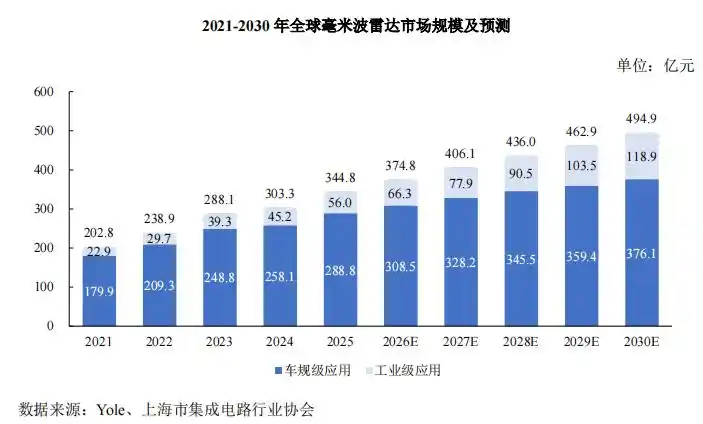
On market size, data from the Shanghai Integrated Circuit Industry Association show the global automotive millimeter-wave radar market is expected to grow from 28.88 billion yuan in 2025 to 37.61 billion yuan in 2030, a compound annual growth rate of 5.42%. That points to a market with moderate, steady expansion rather than explosive growth.
The sharper structural opportunity lies in 4D imaging radar. China Insights Consultancy expects China’s automotive 4D millimeter-wave radar market to grow from 1.2 billion yuan in 2024 to 10.7 billion yuan in 2029, with a 55.7% compound annual growth rate. Penetration is projected to rise from 14.3% to 49.4%. New use cases driven by regulation, including in-cabin child detection, and a move toward more than eight radar units per vehicle could push chip demand faster than vehicle sales growth.
Domestic substitution is another part of the story. Against a geopolitical backdrop, Chinese automakers’ demand for controllable local automotive-grade chips is described in the filing as both real and urgent.
But the squeeze is just as real, and it is already visible in the numbers. The first pressure point is customer concentration. In 2025, Calterah’s largest end customer, BYD, contributed more than 50% of revenue. The company’s revenue doubling that year was, in essence, tied to the gains from being linked to an automaker aggressively pushing intelligent-driving adoption. Since 2026, BYD has introduced a second supplier for millimeter-wave radar chips. The prospectus explicitly states that sales to the largest end customer are “under continued pressure and are being transmitted to the company.” The 8.10% revenue growth rate in the first quarter of this year is presented as the direct result of that chain.
Because it usually takes three to four years to qualify an automotive-grade chip with a new automaker, rebalancing the customer mix is unlikely to happen quickly.
The second pressure point is pricing. As automakers push cost cuts upstream, annual chip price declines have become a common procurement term across the industry. Calterah’s response has been to trade price for volume. In 2025, the average selling price of its main chip products fell 9.3%, while sales volume rose 170%. That trade-off works during a penetration phase, but only if cost reductions keep pace with price cuts. If wafer prices move higher or competitors follow with lower pricing, the gross-margin cushion could narrow quickly.
The third pressure point is competition. Texas Instruments, Infineon, and NXP reported 2025 fiscal-year revenue of $17.682 billion, 14.662 billion euros, and $12.269 billion, respectively. Millimeter-wave radar is only one part of those businesses, but their broader scale gives them room to sustain competition in a single category. The prospectus notes that Infineon has long built radar chips on SiGe processes and has also been moving into CMOS in recent years.
The UWB business faces an even tougher setup. According to Global Growth Insights, Qorvo and NXP together held more than 50% of the global UWB chip market in 2024, while Calterah’s product is not scheduled for mass production until the end of 2026, several years behind those rivals.
Technology, margins, and supply-chain positioning are the company’s main cards
The filing also highlights what Calterah believes are its strengths. It says the company was the first in the world to mass-produce an automotive-grade 77GHz millimeter-wave radar RF front-end chip based on a CMOS process, and that it holds an edge in CMOS integration.
Gross margin above 47% also suggests the business is not built purely on low pricing. Accounts receivable fell from 80 million yuan at the end of 2024 to 19 million yuan at the end of 2025, while distributors were operating on terms close to payment before delivery. That points to stronger bargaining power in the supply chain.
On supply chains, the company says it has launched its domestic Kunlun platform. In the current geopolitical environment, the prospectus treats supply security as a positive factor.
Its response to current pressure is organized around four lines. On the business side, Calterah is pushing customer validation for 4D imaging radar chips and a new generation of highly integrated SoCs in an effort to offset annual price declines through a richer product mix. On product innovation, its Dubhe UWB platform is described as the world’s first product compliant with the new IEEE 802.15.4ab standard, targeting digital keys and in-cabin sensing, with mass production planned for the fourth quarter of 2026. On channels and customers, the company is using a system of no more than six authorized distributors to reach more automaker supply chains beyond BYD. On supply chains, it is maintaining long-term cooperation with foundries and packaging and testing partners while also advancing a domestic supply-chain platform.
After the filing, the key issue is still when profitability can arrive
Overall, Calterah looks like a hard-tech company in the later part of a heavy investment phase. It has built a leading position in China’s domestic millimeter-wave radar chip segment, delivered two consecutive years of strong revenue growth, narrowed losses, maintained gross margin above peers, and held 1.183 billion yuan in cash at the end of the first quarter of 2026.
The pressure points are just as clear. Cumulative losses reached 910 million yuan over 3.5 years. Operating cash flow remained negative. More than half of revenue came from one end customer that is now bringing in a second supplier. Production preparation has moved ahead of demand, and the second growth curve will not face a real market test until the end of 2026.
Calterah’s chosen STAR Market listing standard does not require profit, but the market will still focus on one question: whether the market position built through high R&D spending can hold long enough for customer diversification to catch up. Over the next two to three years, three variables are likely to matter most in the company’s own framework: how much share it can keep with BYD, how quickly new automakers complete qualification, and whether UWB chips can scale. Those factors will shape whether the planned 3.489 billion yuan raise becomes a moat or extends the loss-making cycle.
This article originated from the WeChat public account Hension, by Hension.