
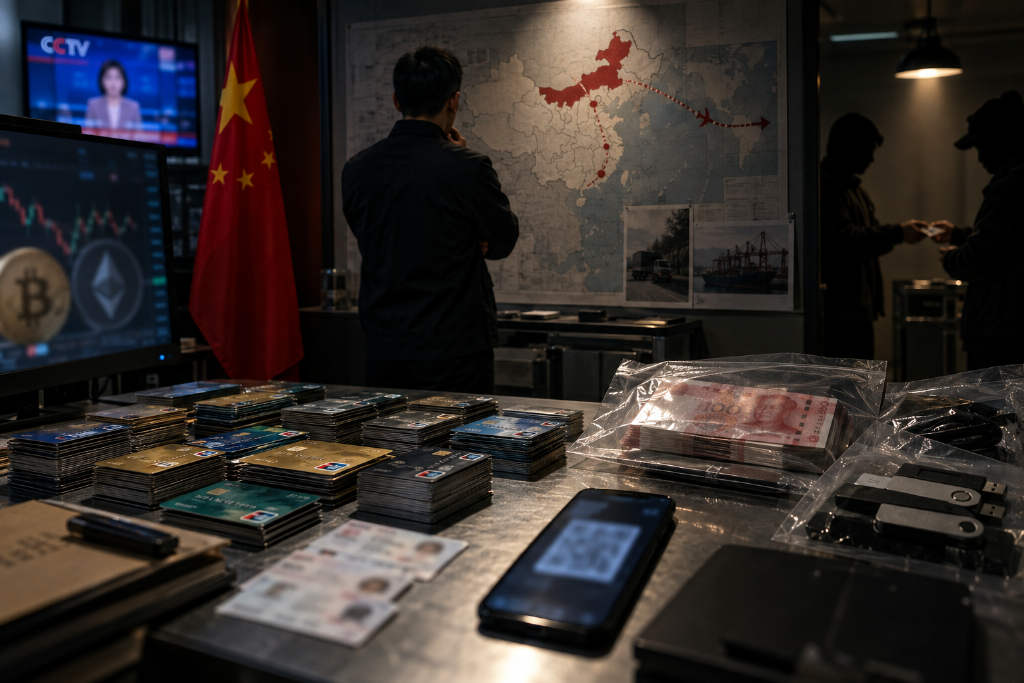
BlockBeats reported on Sept. 10 that CCTV Finance had highlighted a newly surfaced laundering scheme in which cryptocurrency was used to move illicit funds.
According to the report, the criminal group used "free credit card repayment" as bait, recruited agents, and relied on referrals to attract ordinary members of the public. Participants were offered rewards of only tens of yuan to hand over credit cards and identification information. Some were drawn into the laundering chain without knowing their role.
Baotou case involved nearly 1,000 accounts
CCTV Finance cited a case in Baotou. The group had been linked since October 2023 to upstream black-market operations including overseas online gambling and telecom fraud. It allegedly disguised illicit proceeds through fabricated consumption, then contacted crypto dealers to exchange the funds into cryptocurrency and eventually sent the assets to virtual currency addresses designated by upstream operators, moving the money overseas.
The case involved nearly 1,000 accounts. People tied to the case were spread across Inner Mongolia, Shandong, Jiangsu, Hebei, Chongqing and other regions.
Police and PBOC institute used account and on-chain analysis
Police, working with the Digital Currency Research Institute of the People’s Bank of China, conducted joint analysis using financial account records and on-chain data. That process, the report said, allowed investigators to penetrate the structure of the operation, identify the full criminal network, and launch a coordinated nationwide takedown.
Seven members of the group were sentenced for illegally engaging in payment and settlement services without approval. They were convicted of the crime of illegal business operations and received prison terms ranging from one year and two months to two years and six months, along with fines.
PBOC says crypto-based laundering has emerged in recent years
China’s central bank said laundering through cryptocurrency is a newer form of money-laundering crime seen in recent years. It also said it has continued using large-model tools and on-chain data analysis to trace fund flows and identify criminal groups.
In recent years, relevant authorities have dismantled more than 10 money-laundering and commission-running dens, and seized about 130 million yuan in illegal proceeds.
Regulators warned that offers such as "free credit card repayment," "transaction volume boosting," and "earning commissions through running scores" may conceal laundering risks. They said ordinary people who provide personal accounts or take part in illegal crypto transactions may also end up being used as tools by criminal groups.