
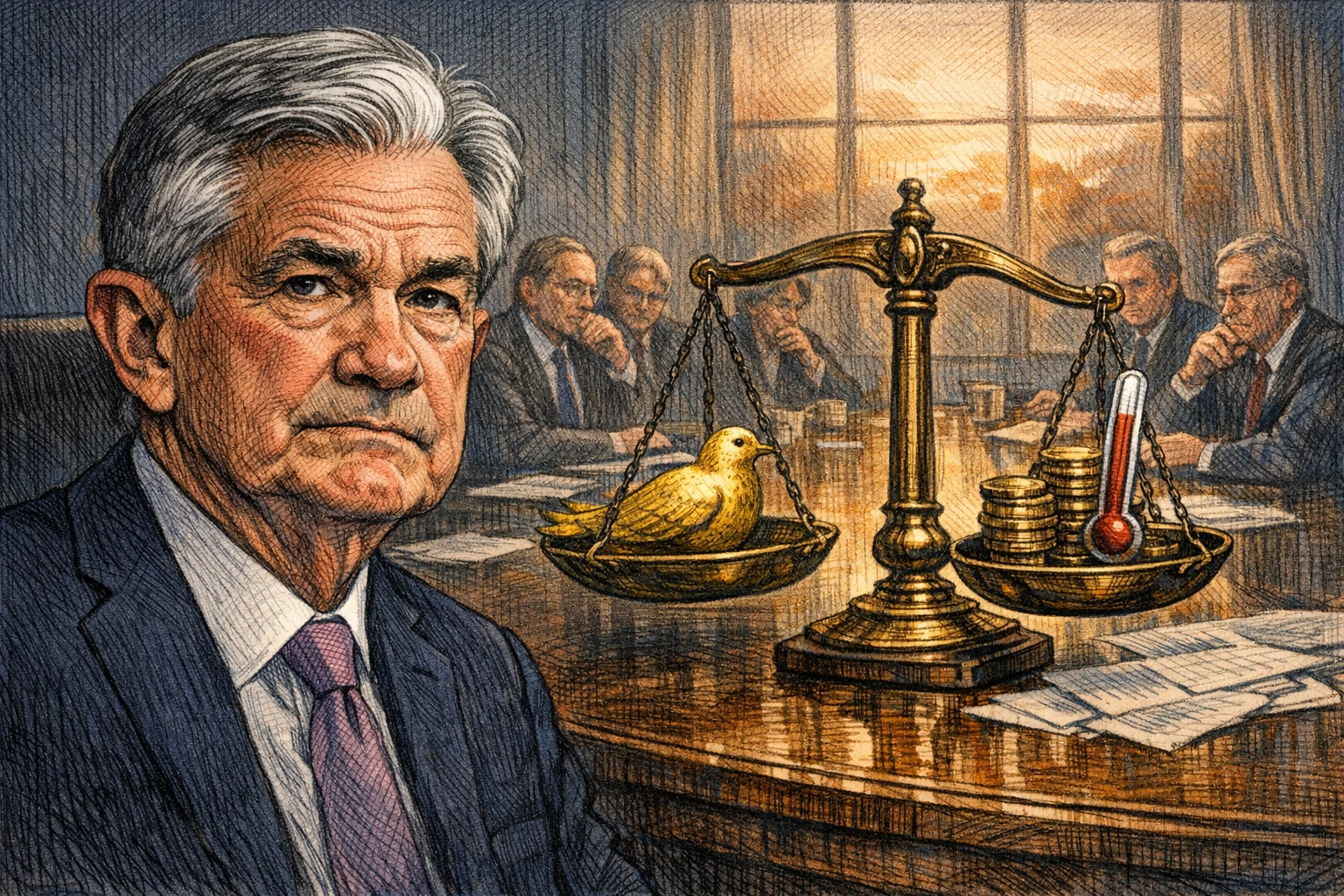
The market welcomed reports of a ceasefire between the US and Iran, but Wall Street Journal reporter Nick Timiraos argued that the development does not make Federal Reserve rate cuts easier. His point was blunt: the ceasefire removes the most severe recession scenario tied to war, yet it leaves behind inflation pressures that may prove harder for policymakers to ignore. Energy and commodity prices may not fully retrace their conflict-driven gains, while improving risk sentiment could also loosen financial conditions.
In Timiraos’ framing, the Fed has not escaped the problem. It has inherited a different one. The most extreme disinflationary danger has faded, but a milder and more persistent supply shock remains, one that can keep inflation elevated without doing enough damage to demand to justify easier policy.
March minutes showed broad concern over sticky inflation
Timiraos said minutes from the Fed’s March 17-18 meeting showed that “almost all” officials believed inflation could take longer than expected to cool. The concerns overlapped in three areas: tariffs may keep pushing goods prices higher for longer, rising oil prices could filter into core inflation measures, and years of inflation running above target may be raising public tolerance for further price increases.
At that meeting, the Fed kept its benchmark rate unchanged at 3.5% to 3.75%. That marked a second straight hold following three cuts at the end of 2025. Timiraos wrote that most officials still expect at least one rate cut this year, but only if inflation resumes a clearer downward trend. Two officials have already pushed their expected timeline for cuts further out because recent inflation progress has stalled.
Powell warned of a fourth supply shock in recent years
Timiraos also cited comments from Fed Chair Jerome Powell, who said the central bank is now dealing with a fourth supply shock in recent years after the pandemic, Russia’s invasion of Ukraine and last year’s tariff shock. Powell warned that repeated “one-off” shocks can erode confidence that inflation will return to normal.
That matters because inflation expectations can become self-reinforcing. Timiraos noted that the minutes also pointed to a growing number of officials who no longer think the Fed needs to keep signaling that its next move is more likely to be a cut. If that guidance is formally removed, markets would need to accept a tougher message: if inflation stays high, rate hikes cannot be ruled out.
Why the ceasefire can weaken the case for easing
Marc Sumerlin, managing partner at Evenflow Macro, offered a simple version of the same logic in Timiraos’ report. If recession odds fall, inflation odds can rise, because price pressures remain while demand is not damaged enough to suppress them.
That is the core of the ceasefire paradox. The worst-case demand collapse is taken off the table, but supply-side strain is still present. The Fed loses one of its clearest arguments for cutting rates quickly, while inflation pressure remains stubborn enough to narrow its room for action.
Hormuz risk may stay embedded in energy pricing
Timiraos wrote that current and former Fed officials do not see a ceasefire as a clean return to normal conditions. The vulnerability of the Strait of Hormuz has been exposed, and that risk may remain embedded in energy prices and corporate planning for years.
He also cited geopolitical analysts who said energy prices may not fully retreat after the ceasefire. Iran may have reasons to keep oil prices relatively high, including funding reconstruction and preserving leverage over Gulf neighbors. St. Louis Fed President Alberto Musalem added that even if fighting ends quickly, damaged production capacity will still take time to recover.
Markets raised cut bets, but forecasts remain divided
After the ceasefire news, CNBC data showed the implied probability of a rate cut by year-end jumped from 14% to 43%, with the implied December rate at 3.5%. Institutional forecasts, though, remain far apart. Wells Fargo kept its view of no rate cuts throughout 2026, while Citi pushed its first expected cut back from June to September.
Timiraos’ conclusion was that the ceasefire may have removed the harshest tail risk, but it did not resolve the Fed’s core problem set: inflation still above target, repeated supply shocks and the risk of softer inflation expectations. Those pressures remain in place, and the path to rate cuts looks narrower, not wider.