
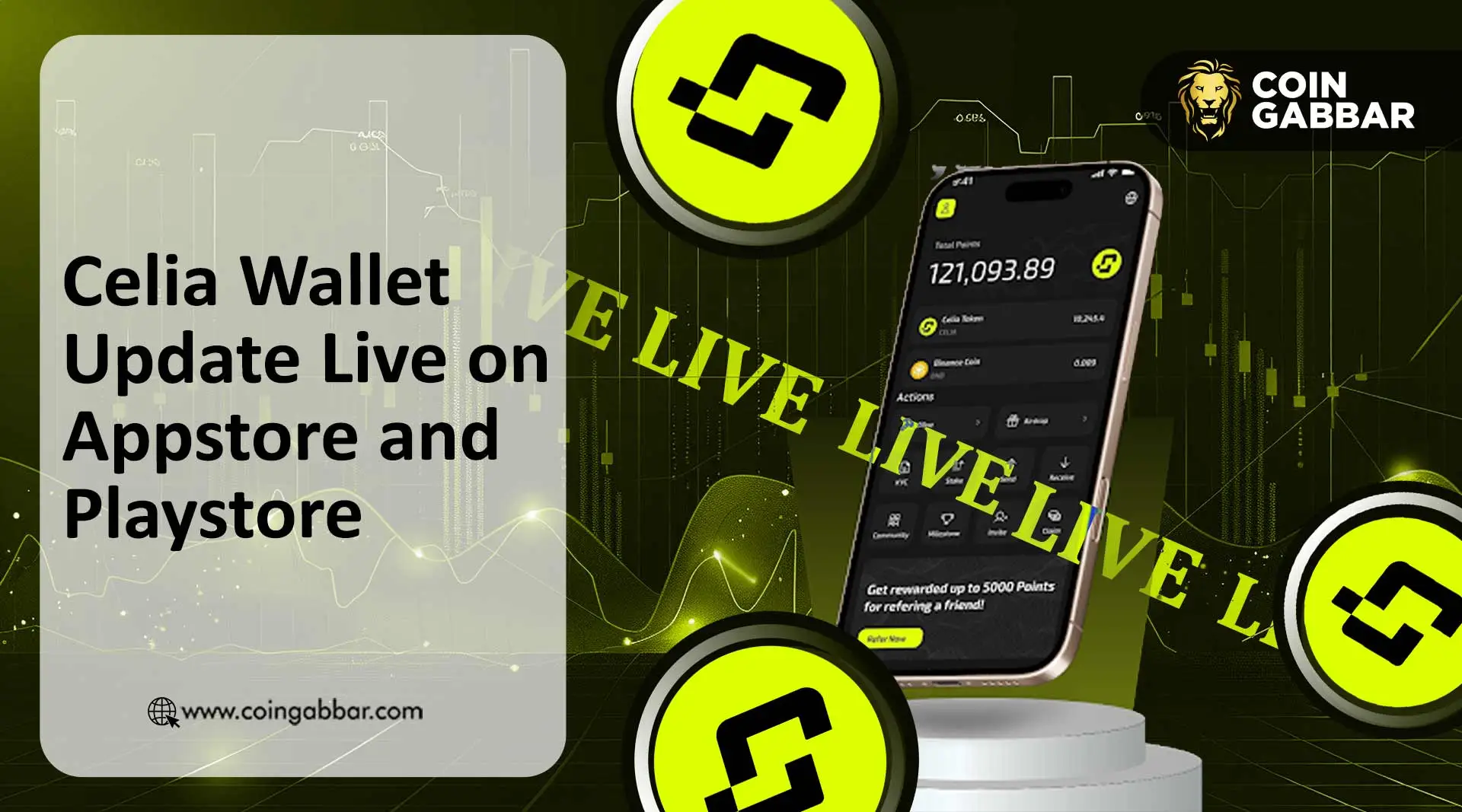
Celia Wallet’s latest update went live on May 9, 2026 across the App Store and Play Store. The release expands the wallet to five blockchains — Base, Ethereum, Solana, BSC, and Polygon — and raises the number of tradable crypto assets to 15,000. The app also adds multichain trading, bill payments, and gaming features. According to the source material, the rollout is being made available to supported mobile users in supported regions.
Five-chain support and broader asset access
The main product change is the move to a multichain wallet interface. Users can now manage assets from several networks within one app, rather than across separate environments. The update also includes performance changes: faster transaction processing, smoother UI flow, reduced loading delays, and bug fixes aimed at improving stability during high-volume trading. The release is presented as an infrastructure and user-experience upgrade, with broader crypto access as the central pitch.
Payments and global reach become part of the wallet push
The update also extends beyond trading. In Nigeria, users can now pay for airtime, data, electricity, and cable TV directly with crypto through the wallet’s payment system. That adds a consumer spending use case to a product that was previously framed more around saving and trading. The source also says the App Store version will enable trading access in more than 180 countries and support over 25 payment options. Celia Wallet Games was introduced as another new feature inside the app, adding interactive functions to the wallet environment.
CELIA migration concerns dominate community discussion
Even with the feature expansion, much of the user conversation has centered on the CELIA mainnet migration. Reports cited in the source say tokens were allocated for migration claims, which triggered heavy debate across the community. Users raised questions about claim deductions and gas costs during transfers, with some saying the fees were higher than the token value involved. Others tied the frustration to earlier expectations around launch timing. Token burn speculation also became a popular topic, but the update did not include official confirmation on how any burn mechanism would work.
Mixed reception as new utility meets trust questions
User response has been mixed across platforms. Some welcomed the added utility from multichain support, payments, and gaming. Others focused on migration expenses, allocation handling, and delays in claim processing. The source notes that transparency around allocation handling became a key point of criticism. That leaves the wallet in a two-track story: the product is expanding quickly, but execution around migration remains under pressure. Attention around CELIA’s price and a possible listing date is still active in the community, though no additional confirmed details were provided in the source.
Based on the published information, Celia Wallet has widened its scope with multichain infrastructure, payment tools, and in-app interactive features. Complaints tied to migration fees, deductions, and claim processing are still shaping user sentiment at the same time.