Three market threads led ChainFeeds’ Sept. 12 briefing
ChainFeeds’ daily research briefing on Sept. 12 put the spotlight on three separate stories: Uniswap’s revised value-capture model for UNI, Robinhood’s new on-chain platform CME, and old ZEC disputes that resurfaced after the token climbed into the top 10 by market capitalization.
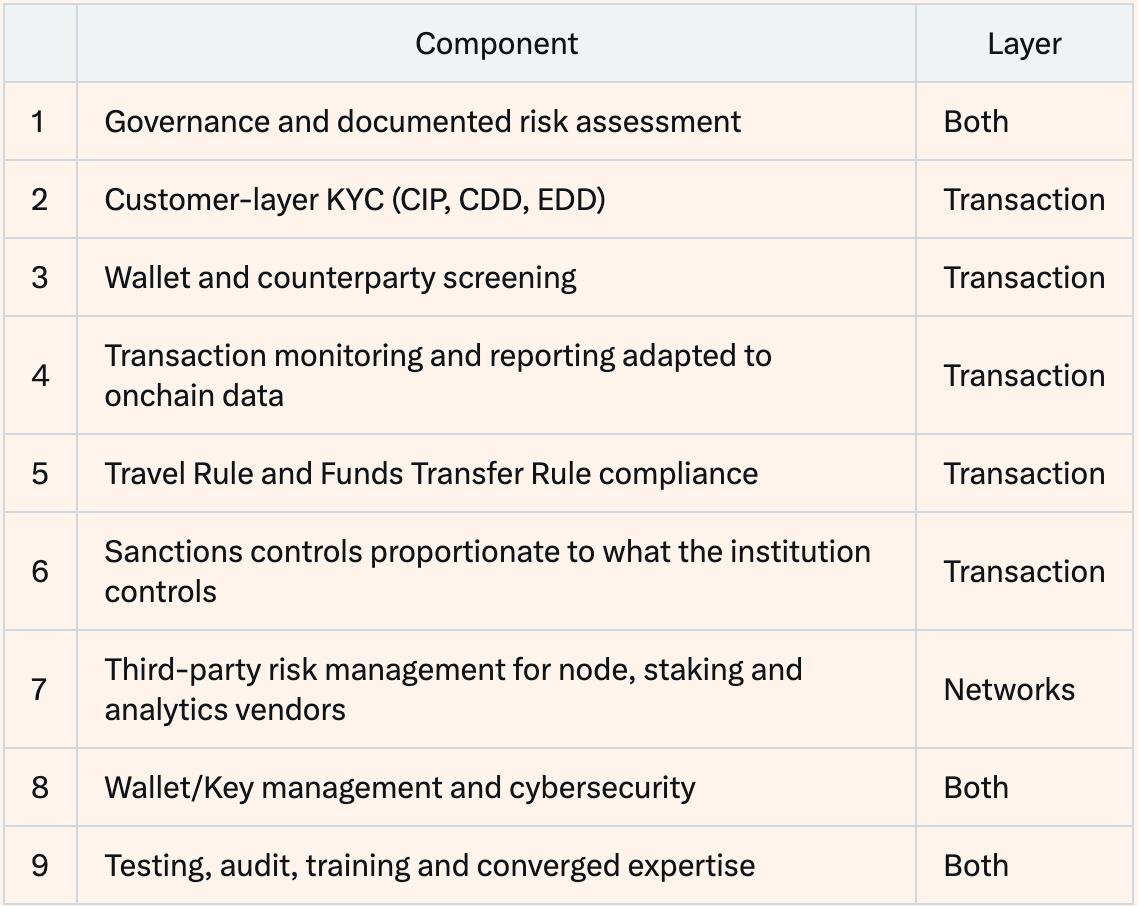
The roundup also included an a16z note on compliance frameworks for permissionless networks and an Odaily piece on trader loracle’s positions after heavy losses from shorting HYPE.
a16z says permissionless networks can fit within existing compliance obligations
In the long English thread cited by ChainFeeds, a16z argued that regulators have already made clear that financial institutions can adapt their financial integrity compliance systems to work with technical innovations such as permissionless networks.
The post pointed to several examples. Franklin Templeton has kept the official share registry for its on-chain U.S. government money fund on a permissionless blockchain since 2021 and connected that product to Solana in February 2025. BlackRock has issued shares of its tokenized money market fund on Ethereum since March 2024. Apollo, starting in January 2025, made tokenized access to its Diversified Credit Fund available across six permissionless networks.
According to the piece, some traditional financial institutions still assume that only a network with known and vetted participants can satisfy Bank Secrecy Act AML/CFT requirements and U.S. sanctions law. a16z disputed that premise. It said institutions can build products and transact on permissionless blockchains while applying risk-based controls at the business layer they actually control, allowing them to meet existing legal duties.
The note framed permissionless networks as infrastructure, drawing a comparison to the public internet and telephone networks. In those systems, financial institutions do not know every user and do not screen every infrastructure operator.
On sanctions concerns, the post said institutions worry they may unknowingly interact with sanctioned or illicit actors, whether by paying network fees to a validator run by a sanctioned party, transacting with a sanctioned counterparty without realizing it, or receiving crypto assets that were previously linked to illicit activity. a16z said contact of that kind, mediated by protocol rules rather than affirmative choice, is not the main target of sanctions law. When an institution submits a transaction, protocol rules such as stake weighting usually determine in pseudo-random fashion which validator includes it, leaving the institution unable to choose that validator or negotiate the fee with it.
The article also cited Interpretive Letter 1186 from the U.S. Office of the Comptroller of the Currency in November 2025. That letter, it said, confirmed that banks may pay network fees on blockchain networks and may hold the digital assets needed to do so. The interpretation used Ethereum, a permissionless network, as an example and did not distinguish between permissioned and permissionless systems.
Privacy was another major issue in the piece. a16z argued that financial integrity does not require every detail to be public. What matters is that the necessary information can be verified by institutions, counterparties, and regulators. The post said current cryptographic tools can already prove compliance-relevant facts without revealing underlying data, such as showing that a counterparty is not on the SDN List or that reserves exceed liabilities without disclosing the full ledger or counterparty identities. Provenance tools can show that an asset did not come from a specified illicit set without exposing the entire transaction graph. Confidential transfer systems can hide transaction amounts and balances on-chain while preserving viewing keys for regulators.
The note added that address rotation, account abstraction, tiered custody, and messaging protocols that transmit Travel Rule data alongside on-chain transfers are already in use. Confidential transfers with audit keys have also launched. Proofs of non-sanctioned status and asset-origin proofs tied to specific sets remain in pilot programs or research.
Uniswap’s new setup puts protocol revenue and UNI burn in the same frame
Token Terminal’s English thread focused on how UNIfication changed both organizational responsibilities inside Uniswap and the economic link between protocol activity and UNI.
The write-up said UNIfication moved most ecosystem development and growth work that had previously sat with the Uniswap Foundation over to Uniswap Labs. That included ecosystem support and grants, governance support, and developer relations. Most Foundation staff also moved to Labs. Under the revised setup, Labs handles broader ecosystem growth in addition to protocol and product development. The Foundation keeps a smaller team, continues to manage grants and incentives in defined areas, and remains the Ministerial Agent for DUNI.
A new annual growth budget of 20 million UNI was introduced to fund those services from Labs, with payments coming from the existing governance treasury on a quarterly basis. UNIfication approved two years of that budget. The funds can be used for protocol development, integrations, grants, incentives, partnerships, developer programs, and other growth initiatives. The change was formally implemented in late December 2025, and the first quarterly disbursement of 5 million UNI was transferred to Labs in January 2026.
The article reduced the new operating structure to three functions: UNI Governance makes decisions, DUNI provides legal capacity for governance, and Uniswap Labs executes, while the Foundation retains a narrower set of defined duties.
On the economics, the piece started with traders, trading activity, and fees. Monthly active traders measure engagement. Volume tracks the value of assets swapped through the protocol. Trading fees reflect the economic value produced by that activity. Protocol revenue is the portion of those trading fees captured at the protocol layer.
The element that ties protocol revenue to UNI is the burn mechanism. When accumulated protocol fees are released, UNI must be permanently burned. Token Terminal said this sits on top of an already large economic base. As of Aug. 8, 2026, Uniswap had processed about $3.7 trillion in cumulative volume and generated roughly $5.1 billion in trading fees, according to its data.
The post stressed that these fees historically went entirely to liquidity providers. With protocol fees turned on, what changes is the allocation of part of the existing fee stream, not the creation of new trading activity. In Uniswap v2, total swap fees remain 0.30%, with 0.25% going to liquidity providers and 0.05% to the protocol. In v3, the setup is more flexible, and UNI governance can set protocol fees on a pool-by-pool basis.
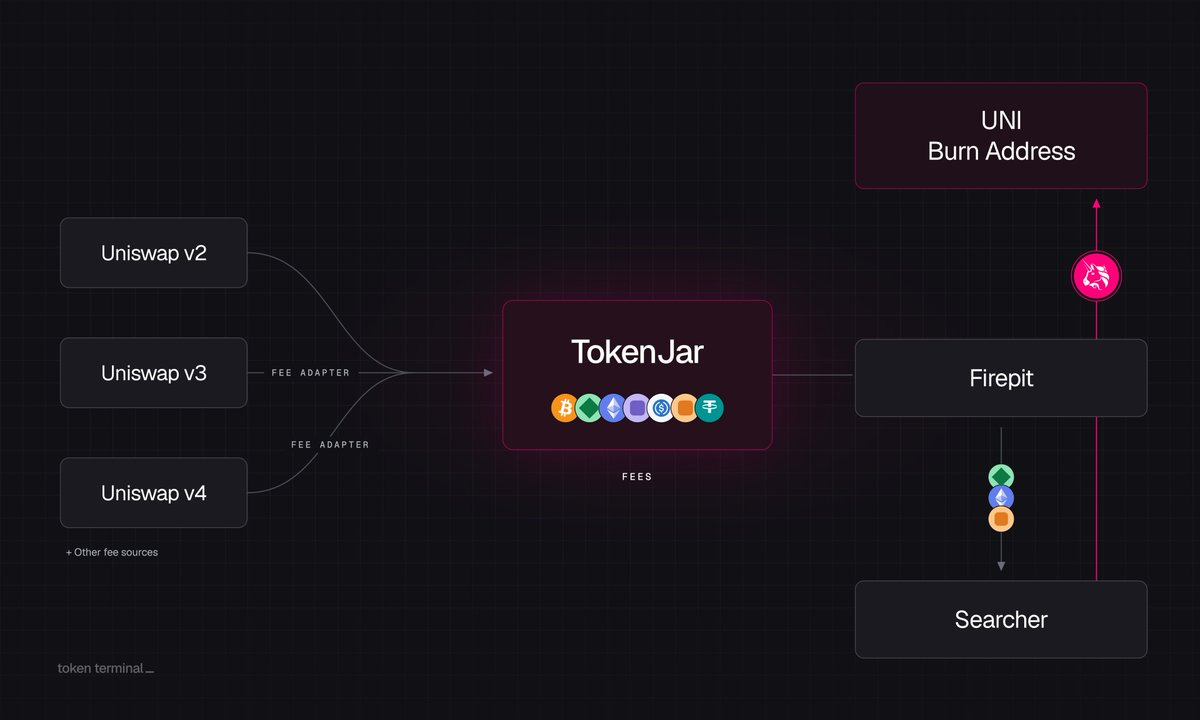
The link between protocol revenue and UNI burn runs through two smart contracts, TokenJar and Firepit. Protocol fees collected in multiple assets accumulate in the immutable TokenJar contract. Firepit releases those assets: market participants pay a certain amount of UNI to receive assets accumulated in TokenJar, and the UNI used in the exchange is permanently burned. That means the protocol itself does not have to actively sell fee assets in order to buy UNI.
Token Terminal said that mechanism is fundamentally different from directly distributing protocol revenue to UNI holders. UNI holders do not receive fee assets in the way shareholders receive dividends or cash distributions. Instead, protocol revenue provides the economic basis for a continuing reduction in UNI supply.
For the period from January through July 2026, Uniswap generated about $28.2 million in protocol revenue and roughly $297.9 million in trading fees, the post said. That puts protocol revenue at about 9.5% of trading fees. Put differently, for every $100 of trading fees produced in that stretch, around $9.50 was captured by the protocol layer. The note said the emergence of protocol revenue and continuous UNI burns gives investors a more direct way to observe the connection between Uniswap’s economic activity, protocol-level value capture, and shrinking UNI supply.
loracle’s HYPE reversal erased months of derivatives gains
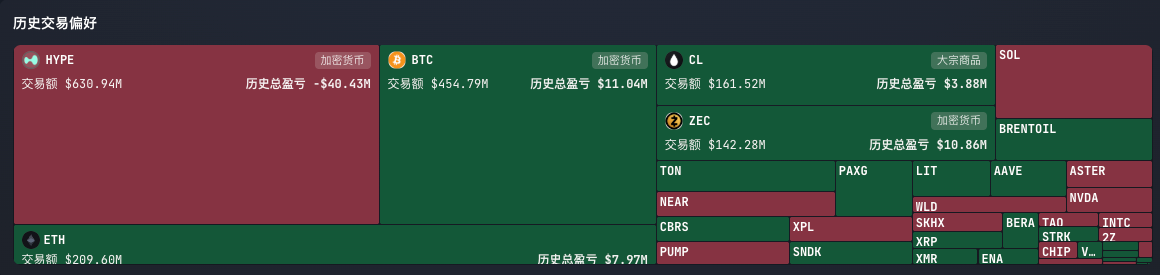
Odaily’s contribution tracked on-chain trader loracle, described in the article as the best-known meme short seller of the current cycle. While meme markets have produced a long list of tokens worth more than $100 million over the past one to two months, the report said loracle has taken the other side by leaning into short positions.
Using on-chain data, the article said loracle currently holds a 3x leveraged short in PONS on Hyperliquid, with a position of 27.75 million PONS worth more than $16.5 million and an average entry price of $0.665. Because meme tokens have collectively pulled back, that position was showing about $1 million in unrealized profit at press time. The report also called loracle the top CASHCAT short seller, holding a 3x leveraged short in 36.3 million CASHCAT worth more than $6.2 million at an average entry of $0.2, with unrealized profit of about $1.3 million at press time.
When PONS hit an all-time high, the article said, loracle’s unrealized loss on that short had at one point exceeded $6.9 million. Overseas KOL MLM had discussed forming a group to target loracle and posted on X that eight-figure capital had been lined up, but no action followed. The report added that loracle appeared unconcerned about his positions being public and even called on Robinhood CEO Vlad Tenev to coordinate with market makers to add liquidity to the PONS/USDG market.
The article traced loracle’s rise back to an initial capital base of about $7.44 million. By going long HYPE and trading swings in BTC and ETH, the report said, he built account profits to about $42 million by early 2026 after more than 10 months of trading. In one week alone he reportedly made about $11.5 million, becoming at one point the largest HYPE long holder on-chain.
Later, his trading expanded to positions in NVDA, PAXG, crude oil, ZEC, TON, and LIT, with both longs and shorts. The article said some had described him as a crypto-native macro trader, and around May this year his cumulative profit still stood near $37 million.
The reversal came after he turned against HYPE. The report said the former Hyperliquid ecosystem contributor and biggest HYPE bull became HYPE’s largest short seller, with notional exposure at one point reaching more than $100 million. In late April, loracle opened his first HYPE short, a roughly $11 million 5x leveraged position, when HYPE was around $40. As HYPE kept rising through May, he kept adding. By the end of May, his HYPE short had reached $103 million. In early June, HYPE hit an all-time high of $75, and loracle began to close out. The article said that in roughly one month, more than $40 million in perpetual futures profit built over more than 10 months was wiped out. After fully closing the position on June 2, he had lost more than $46 million on HYPE. At press time, his total derivatives loss stood at about $25 million.
The report also noted that some on-chain analysts had argued loracle was not running a naked HYPE short. As an early Hyperliquid contributor, he held a large spot position in HYPE, worth more than several hundred million dollars, with most of it staked. That is why some analysts viewed the HYPE short as a hedge.
Several on-chain analysts tracked two staking addresses associated with him that at their peak held 4.948 million HYPE in stake. At current HYPE prices, the article said, that stack would be worth $385 million. Now, however, the 3.35 million HYPE originally staked in one of those addresses has been fully withdrawn, and the second address has only 96,940 HYPE still staked. Adding another 240,000 HYPE in a trading address, loracle currently holds about 336,000 HYPE with a total value of around $26.2 million.
From April onward, the article said, loracle had been steadily selling HYPE. In early April he sold about 450,000 HYPE at an average price of $35 for a total of around $15 million. In May, he unlocked a cumulative 2.008 million HYPE across three events. In on-chain records that can be clearly traced, he sold 557,000 HYPE worth about $33.35 million on May 21, the day HYPE first broke to a new high.
Robinhood’s CME expands meme pairing from tokenized stocks to almost anything
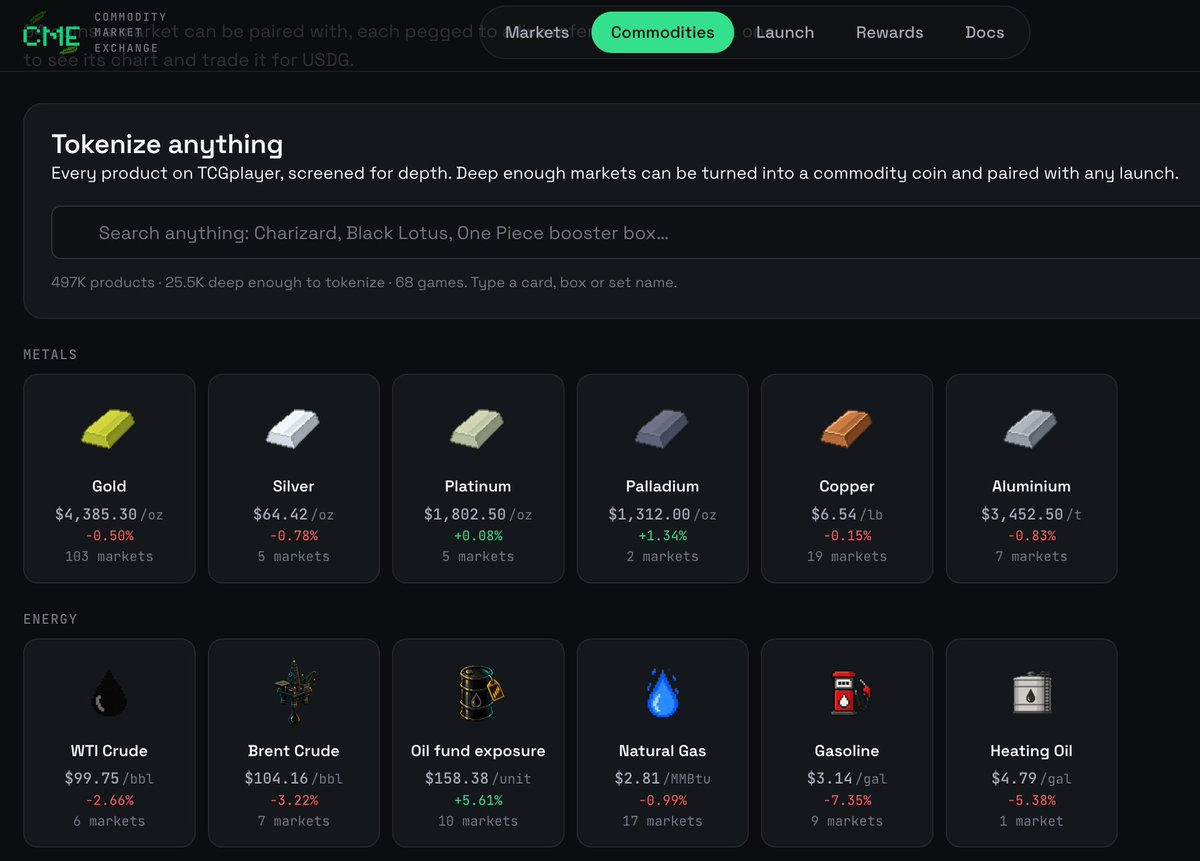
TechFlow’s article examined CME, a new on-chain platform associated with Robinhood in the report. It said standard DEX meme pairs are usually built against stablecoins, ETH, or, in newer stock-token formats, tokenized equities. CME pushes the base asset set much further by extending it to 94 real-world commodities and non-standard reference assets.
The examples in the article were intentionally eclectic. A joke token called FART can pair against a natural gas token. MILKERS can reference milk prices. Other meme assets can be paired with crude oil or corn. The platform also allows pools tied to non-standard consumer items such as McDonald’s Big Mac, the Dragon Lore skin in CS2, and a first-generation Charizard card from Pokémon. The report said a token called WEN references Lamborghini in a self-mocking play on the meme question of when someone will finally be able to buy one.
The article warned against a common misunderstanding. Buying a meme token paired with gold does not mean the buyer indirectly owns physical gold. Unlike tokenized U.S. stocks or precious-metals ETFs inside Robinhood’s regulated brokerage system, commodities on CME do not involve off-chain physical delivery or warehouse receipts.
To make meme pools possible against real-world items, the platform built a lightweight synthetic asset system, according to the report. It mints 94 ERC-20 commodity tokens, including representations of gold, oil, and milk. Each token maps to the price of a corresponding unit, such as one bushel of corn or one ounce of gold.
Reference prices are pulled from several sources, including front-month commodity futures, fast-food menu prices, and TCGplayer card listings, and are updated roughly every 60 seconds. The protocol creates one-sided Uniswap pools between the commodity token and USDG. Protocol sell orders sit one tick above the reference price, while buy orders sit one tick below it. When the real-world reference price moves or one side of liquidity is exhausted, an off-chain keeper bot removes orders and migrates the pool to the latest price.
In plain terms, the article said, users are not dealing with deliverable physical assets. They are interacting with a synthetic commodity instrument whose price exposure is maintained through algorithms and oracles.
The report listed several key features:
- 40% of commodity trading fees are distributed automatically in the corresponding commodity token to holders based on position weight, with one settlement every 15 minutes and no manual claim needed.
- 30% of fees are converted into ETH and used to buy and permanently burn the platform token CME in the secondary market.
- Creator revenue share is set at 0%. Unlike many launchpads that reserve a significant fee split for developers, CME’s secondary market removes the developer cut.
- The V6 architecture puts assets directly into a live Uniswap v4 pool from genesis, instead of relying on a bonding-curve stage and later migration. That allows DEX aggregators and trading terminals to route orders from the first trade onward.
The article said synthetic assets are not a new idea by themselves. What changed here is the combination of stock-token pairing, meme distribution, and a narrative in which almost anything can be turned into a pool.
ZEC’s rally back into the top 10 revived old arguments around supply, privacy, and security
A Conflux article in the roundup revisited long-standing questions around Zcash after ZEC surged back into the top 10 by market capitalization. Its summary said ZEC had jumped more than 150% in less than a month, bringing privacy-coin narratives back into focus while also reviving criticism over continuing non-miner allocations, privacy that is not on by default, governance turmoil, and a major security flaw.
The article began with block reward distribution. During the first four years after mainnet launch, 20% of each block reward was carved out as a “Founders Reward” for founders, employees, advisers, and early investors. That added up to about 2.1 million ZEC over four years, or 10% of the 21 million maximum supply. Under the original design, that diversion was supposed to end in 2020, after which Zcash would become a cleaner Bitcoin-like asset in the sense that all newly issued block rewards would go to miners.
Instead, the article said, the community passed ZIP 1014 when that cutoff arrived. The same 20% block subsidy was extended under the name of a “development fund” through 2024, with allocations going to Bootstrap, the Zcash Foundation, and several major grant programs. In other words, the mechanism that diverts 20% of block subsidy away from miners did not disappear when the Founders Reward expired. The recipients changed, and the label changed, but the 20% carveout remained.
The report then turned to privacy. Zcash’s strongest technical claim rests on zero-knowledge proofs, which in theory can fully hide transaction details. But the protocol does not force privacy on users. They can choose between shielded addresses and transparent addresses, and some wallets and exchanges still support only transparent addresses for compatibility reasons. Zcash itself, the article noted, has acknowledged that real transaction privacy requires services that default to shielded transactions.
That distinction matters. Optional privacy and default privacy are not the same thing. The article described the former as a feature toggle and the latter as a protocol commitment, arguing that Zcash has offered the first model, not the second, for the past decade.
Governance tensions intensified in 2026. The article said the entire Electric Coin Company team, which had been responsible for core Zcash development, left in January 2026. ECC said it had been pushed out because of deep disagreements with Bootstrap’s board. Bootstrap attributed the conflict to governance arrangements and legal constraints tied to nonprofit structures. Two months later, the sides reached an agreement under which ECC would wind down operations over time while technical assets moved to a newly formed team. The project itself did not stop.
Security concerns then pushed the debate further. Security researcher Taylor Hornby discovered on May 29 that the zero-knowledge proof circuit for the Orchard shielded pool contained a flaw that had lain dormant for about four years. In theory, the article said, it could have allowed counterfeit ZEC to be created without leaving on-chain traces. The team moved into emergency repair mode: Orchard-related transactions were temporarily shut down on June 2 and restored through NU6.2 on June 3. During the same period, ZEC rebounded from $544 to $624.
On June 5, however, investor Arthur Hayes publicly said he had exited his entire ZEC position. The article said his reasoning was simple: even if the circuit had been fixed, there was no cryptographic way to prove that nobody had already exploited the flaw to mint counterfeit coins during the previous four years. In the article’s framing, “fixed” and “proven never exploited” are two different claims.
ZEC then dropped sharply, at one point falling to around $309, close to halving from its rebound level. The article argued that the episode cut directly into one of Zcash’s central narratives. ZEC, like BTC, has a hard cap of 21 million coins and has long been presented as an even more complete form of digital hard money. But Bitcoin’s issuance can be checked by anyone on a public ledger. Zcash hides part of that ledger in the name of privacy, and that leaves outsiders unable to prove whether the circulating supply has in fact remained within the 21 million cap over the last four years.