ChainFeeds rolls out its Sept. 9 research brief
ChainFeeds published a new Daily research brief on Sept. 9, combining a short list of market headlines with a wider roundup of research pieces dated Sept. 8. The package centered on five areas: privacy-sector performance, a group of non-Meme projects worth tracking, the LAPTOP token tied to Hunter Biden, a Robinhood ecosystem tool guide, and a trading note on the early stage of a bull cycle.
The headline section said LAPTOP’s airdrop claim window would open at 20:00 and remain available for 30 days. It also noted that Polymarket launched an in-app social feature called Squads, Circle acquired Singapore cross-border payments platform Tazapay, Four.meme started a daily buyback-and-burn mechanism for BNC4, and Wang Chun said Zcash’s rise was driven by narrative and was hard to place alongside Solana and Hyperliquid.
Privacy outperformed other major sectors, with ZEC at the center
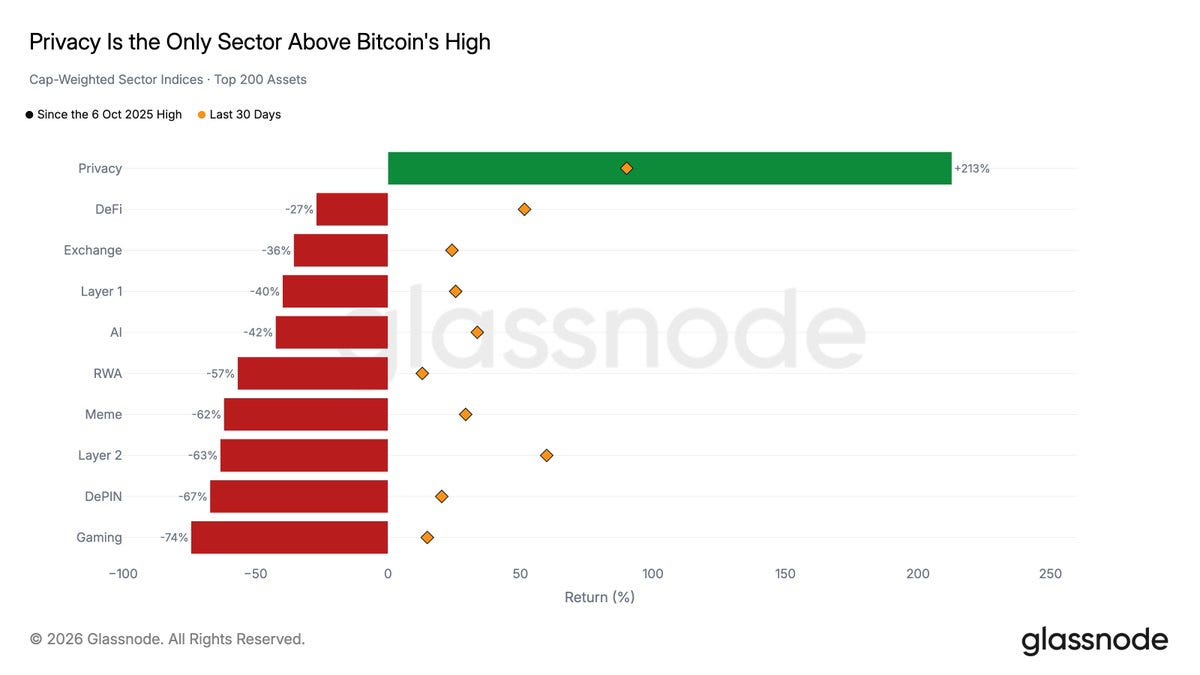
In a section titled “The privacy sector stands alone: ZEC leads while other major sectors remain below prior highs,” ChainFeeds cited glassnode data showing Bitcoin is down 36% from its October 2025 top, 335 days after that peak. The median asset among the top 200 by market capitalization is down 58% from the same point.
By sector, privacy is the only group trading above its level from Bitcoin’s peak period, up 213% on a cumulative basis. All other sectors remain below those levels, including DeFi at -27% and Gaming at -74%. Over the past 30 days, all 10 major sectors posted gains, with privacy still in front at 90%.
The brief argued that the last month brought a broad market rebound, but not a change in the bigger structure. Privacy has already moved past its prior high, while other major sectors have yet to recover to those levels. Over a one-year view, the report said privacy remains the only segment to have produced positive returns relative to the period around Bitcoin’s top.
One year ago, the combined market value of privacy coins within the top 200 assets stood at $7.1 billion. It has since climbed to $33.6 billion, roughly the size of Tron, and nearly half of that increase came in the last 30 days, according to the digest. ZEC was identified as the main driver, with its market-cap rank rising from 82nd to seventh. XMR’s market value also doubled over the same stretch.
ZEC is up 2,496% over the past year and now makes up 62% of the privacy sector’s total market capitalization, giving it a decisive weight in the index’s performance. Still, ChainFeeds said the move has not been limited to ZEC alone. All eight privacy tokens with one year of trading history are up over that period, while only about one-eighth of the top 200 assets can say the same.
Even excluding ZEC, a market-cap-weighted basket of privacy tokens is still up 85% over the past year and 56% above its level at Bitcoin’s Oct. 6, 2025 benchmark point. Over the last 90 days, DASH, XMR, and ZEN all outperformed Bitcoin. Among the 25 largest assets by market value, only ZEC, HYPE, XMR, and WBT are priced above their Oct. 6, 2025 levels, and two of those are privacy coins.
The note described HYPE as more of an isolated token move. Excluding HYPE, DeFi is actually down 46% over the past year. Major crypto assets including ETH and DOGE are still below their prior highs.
On breadth, 91.5% of the top 200 assets rose over the last 30 days, the widest monthly advance in the history of this data series. Over a one-year horizon, though, only 25 out of 200 assets are up, and the median token return is still -55%. The spread in 30-day returns across the 10 major sectors has also widened to its largest level since Nov. 20, 2025.
blocmates highlights non-Meme projects worth watching
In a separate piece titled “Not just Meme: five projects worth watching,” blocmates said current signals look constructive, whether that is because Claude Code has already taken on much of the work or because people want to build “something cool” again.
DeepState
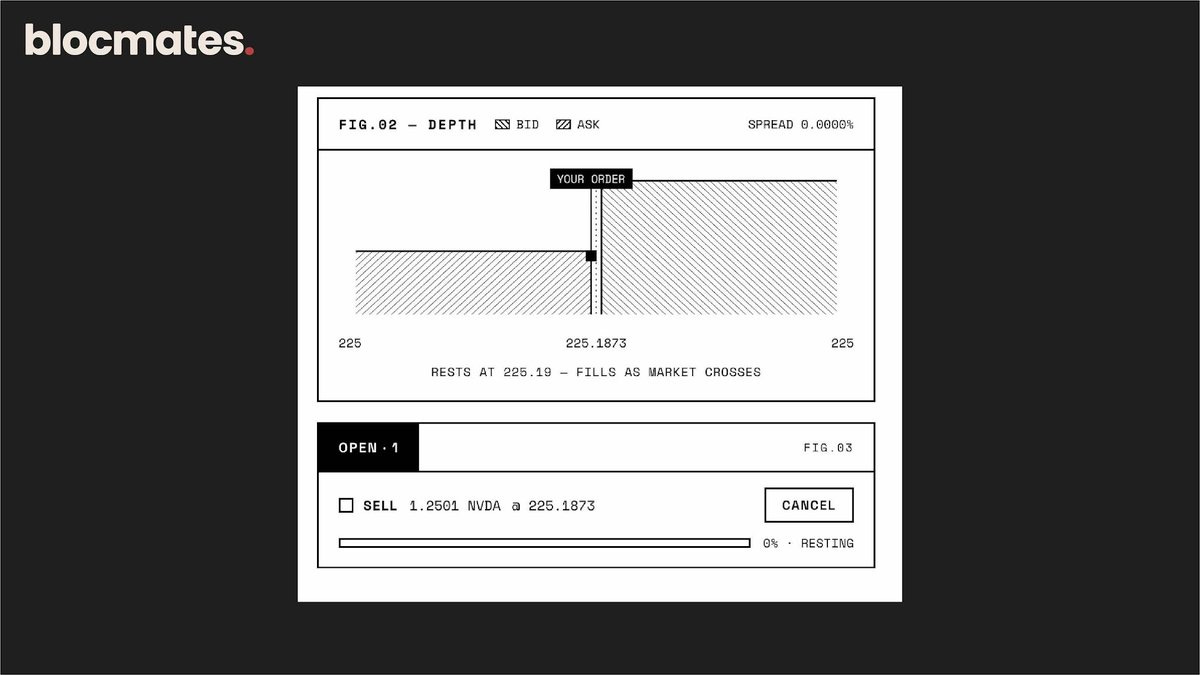
DeepState is a fully on-chain spot order book deployed on Robinhood Network. Its mechanism is built to reward participants that quote better prices. Users are incentivized to post more competitive bids or asks, and those offering the tightest quotes can earn rewards from the liquidity pool, with the stated goal of improving execution prices for traders.
DeepState has already listed the NVDA/USDG market and has processed more than 10 million USDG in cumulative volume. Users can provide liquidity for each epoch to earn DEEP, then burn DEEP and convert it into the protocol governance token STATE to gain exposure to protocol fees. The write-up framed DeepState as one of the more recent on-chain experiments on Robinhood Network, distinct from standard AMM trading because it centers on an order book and quote competition.
Chimpers
Chimpers has applied ERC-6551, the token-bound account standard, to its NFT collection. Under ERC-6551, an NFT is no longer just an asset held by a wallet. It can control a smart contract account that itself can hold assets and interact with other smart contracts.
That means every Chimper NFT now has its own on-chain wallet, called an Adventure Pouch. A Chimper’s value can change depending on what is held in that pouch, including assets, tokens, seasonal items, rewards, and CHMPSTR tokens. blocmates described Chimpers as one of the more durable and consistently inventive NFT brands in crypto, and said Adventure Pouch adds another layer of composability and on-chain function to the base NFT.
TapeOut
TapeOut was described as one of the first projects attempting to build an “on-chain CPU,” and the project was said to be developed by an eighth-grade student. Its basic idea is to turn the most fundamental components of a computer into objects that live on a blockchain.
TapeOut starts with NAND, the simplest general-purpose logic gate, and represents each transistor as an ERC-1155 token. When a design is “taped out,” the underlying transistor tokens are consumed, and the resulting circuit becomes an ERC-721 NFT that stores how the logic gates connect. In that setup, the circuit itself becomes a computational object that can exist on-chain permanently.
Its processor advances one clock cycle each time BNB Chain produces a block, effectively using blockchain consensus as the processor clock. The current prototype is very small and very slow, modeled on Intel’s 1971 4004 design as a 4-bit processor, but blocmates said the architecture allows developers to build increasingly complex circuits on the same base layer.
LAPTOP documents show timeline, allocation, and legal structure
In “Hunter Biden, $17 million in debt, and a token launch,” Foresight News laid out a document-driven timeline for the Meme token LAPTOP, which it said was launched with the participation of Hunter Biden.
According to the report, The Wall Street Journal first disclosed on Sept. 7 that LAPTOP, a Meme coin involving Hunter Biden, son of former U.S. President Joe Biden, would go live on Base on Sept. 9. Four minutes later, Hunter Biden posted a teaser video on X.
Public information showed that the official contract, 0xB095274743941e953c746F9C228DA9c18Bb6ec29, had already been deployed on Base in late April. The entity set up to receive project profits was registered on April 9. Foresight News traced the preparation timeline as follows: Phoenix Veritas Foundation was incorporated in the Cayman Islands on March 23; Phoenix Veritas Ventures Ltd was formed in the British Virgin Islands on March 26; TTM Media Group LLC was registered in Wyoming on April 9; the domain laptoptoken.com was registered on April 23, the same day the Hacken audit report was dated, with the contract going on-chain five days later; in June, an LEI was issued and the @Laptoptoken X account was created; on Aug. 30, there was a MiCAR white paper notice; on Sept. 3, the terms of service and privacy policy were finalized; on Sept. 7, the press report appeared; and on Sept. 9, the token launched. The piece also noted that the domain was purchased for only one year.
The disclosure documents stated that LAPTOP “has no utility, and no utility is planned in the future.” The cover page of the MiCA white paper said it had “not been approved by the competent authority of any member state of the European Union.” The company had registered capital of $1, early expenses were funded by a private loan of about $1.4 million, and there were no outside investors.
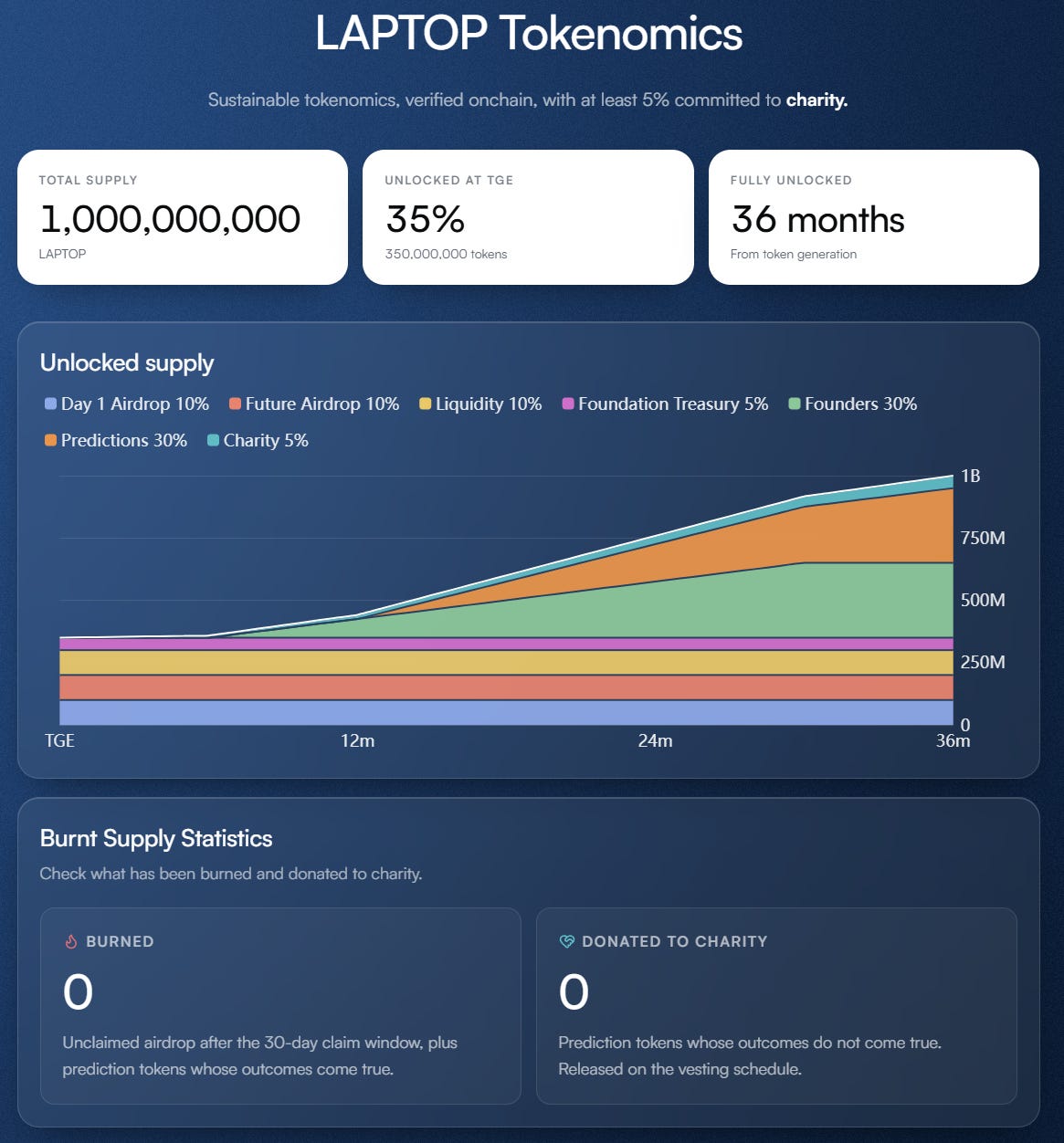
Total supply is 1 billion tokens, allocated as 30% to the founding team, 30% to prediction events, 10% to the first-day airdrop, 10% to future airdrops, 10% to liquidity, 5% to charity, and 5% to the foundation treasury.
The last four categories, totaling 35%, unlock in full on TGE day, implying an initial circulating supply of 350 million tokens. Within that amount, the 100 million tokens set aside for future airdrops are to be distributed at the foundation’s discretion. The team allocation is locked for six months and then released linearly over 24 months, which would add about 12.5 million tokens to circulation each month, equal to 3.6% of the first-day float. The prediction-events allocation is locked for 12 months and then released over another 24 months. Foresight News said 65% of total supply is therefore tied to a multi-year unlock schedule.
The 30% earmarked for prediction markets is the core of the structure. It maps to 30 binary-outcome events. If an event comes true before the deadline, the associated token amount is burned permanently; if it does not, the amount moves to charity. If all events fail to materialize, as much as 35% of total supply could ultimately flow to 501(c) nonprofit organizations. The four highest-weighted items are tied to whether Donald Trump is impeached, whether Democrats can win both chambers in 2026, and whether they can take the White House in 2028.
The first-day retail-facing airdrop of 10% is split into three buckets: 4% for Hunter Biden’s Substack subscribers, 4% for Andrew Callaghan’s Channel 5 mailing list, and the remaining 2% for loss-making TRUMP addresses.
Foresight News also focused on the terms of service. Those terms group the events, odds, and token allocations shown on the website under “prediction market information,” stating that such information is “for reference and entertainment only,” does not constitute an offer, and does not create any right to receive tokens. A separate event resolution standards document says that if there is any conflict, the terms govern.
The terms also say the company can define standards for events without public markets and has final discretion in disputes; total liability for the company and its affiliates is capped at $100; disputes must be submitted to individual arbitration at the British Virgin Islands International Arbitration Centre; token holders waive jury trial and class action rights; and any fiduciary duty is disclaimed.
On cash flow, the disclosure documents say all net project profits remaining after the foundation’s routine expenses will be transferred to TTM Media Group LLC, which is controlled by the founding team. Wyoming Secretary of State records show the company was registered on April 9, operates out of San Francisco, and lists Hervé Larren as organizer. He is also named in the white paper among the people involved in project execution.
Foresight News added a final warning: Meme coins do not have intrinsic value support, the project documents themselves say the token has no utility, the price could fall to zero, and several copycat tokens with the same name have already appeared on-chain. Traders were told to verify the contract address before transacting.
Robinhood ecosystem tools for trading, monitoring, and research
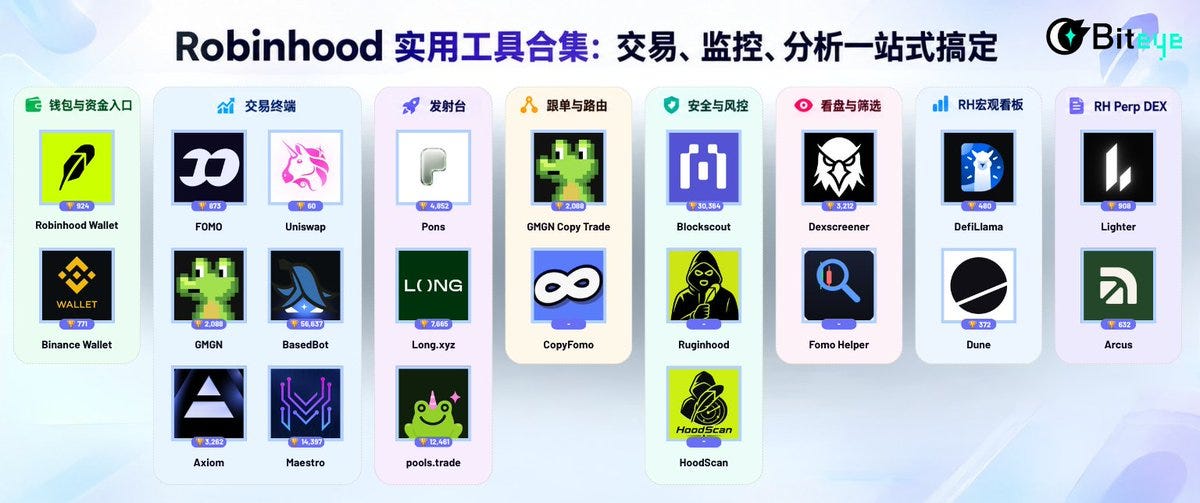
In “A practical Robinhood toolkit,” Biteye grouped a range of products across execution, discovery, copy trading, risk checks, and data analysis.
On the trading side, FOMO combines social activity with order placement, letting users see what others are buying and execute trades directly while supporting multiple deposit routes. Biteye said FOMO became one of the main entry points during the latest Meme run, with social trading as a defining feature and TikTok among the channels used to bring in large numbers of new users from the U.S. and Europe.
GMGN bundles token discovery, trend tracking, position checks, wallet tracking, security scanning, and trading, making it a main interface for research and execution on RH Chain. Axiom is more focused on order-book operations, fast order entry, and wallet monitoring, which makes it more suitable for users who have already chosen what they want to trade and need to keep adjusting positions.
Uniswap is described as the main DEX on RH Chain and the direct trading venue for RH tokens. After finding a token in a terminal, users can verify which Uniswap pool it trades in, what asset it is paired against, and whether liquidity depth is enough for the intended order size.
BasedBot uses Discover and Pulse to surface new coins, then routes users into buy and sell actions on RH Chain, functioning more like a new-launch trading pipeline. PONS handles issuance and trading for new coins, with attention on curve stage, graduation mechanics, and quote assets. Biteye described it as a Pump.fun-style launchpad within the Robinhood ecosystem.
Long is focused on issuance and trading around Meme and stock-token pairings and is presented as one of the more active stock-Meme launch venues on Robinhood, where tokens such as $AI have seen large moves. pools.trade, by contrast, launches and trades tokens directly inside Uniswap pools. That gives RH tokens another issuance route and differs from standard bonding-curve launchpads because there is no graduation stage, making initial liquidity and pool parameters the key points to inspect.
For copy trading, GMGN Copy Trade allows users to select a target RH Chain wallet and automatically mirror buys and sells after setting position size and execution conditions. CopyFomo uses FOMO accounts as its starting point and turns “following a trader” into direct trade mirroring. Biteye said users should evaluate what kinds of tokens a target address typically trades, how long positions are usually held, and whether order sizes are realistic to follow.
For on-chain verification and risk checks, Blockscout can be used to inspect transactions, contracts, deployers, and token transfers on RH Chain. When suspicious buying, selling, or position changes appear in a trading terminal, users can return to the browser with the transaction hash and contract address for confirmation. Ruginhood is a token risk scanner built for RH Chain that checks simulated trades, permissions, liquidity, and holder concentration after a contract address is entered. HoodScan focuses on RH Chain assets and activity, helping users separate stock tokens, stock-related Meme tokens, and protocol activity so that look-alike assets are not mistaken for the same setup.
For charting and wider data, Dexscreener is used for candlesticks, trading pairs, liquidity, and buy-sell flow in RH tokens. DefiLlama and Dune cover the broader picture: DefiLlama can be used to track RH Chain TVL, capital distribution across protocols, volume, and fees, while Dune dashboards can break down active traders, launchpad performance, and volume concentration with community-built SQL panels.
XinGPT says traders need to separate long-term and short-term positions
In a long post titled “Reflections at the start of a bull phase,” XinGPT said that after discussing the market with several experienced traders, he realized he had overlooked a basic but important issue: the time horizon and purpose of each trade. In his view, every position should first be defined as either long-term or short-term, with a separate information system, analytical framework, position plan, and risk-control method for each.
For long-term positions, he said the core is cost control. A low entry cost makes a position easier to hold, so the main task is to judge whether the market is near a cycle bottom or whether an asset has been wrongly punished. The information system for long-term positions should focus on whether the fundamental thesis remains intact, ideally where fundamentals are still solid but price is pressured by weak capital preference or macro conditions.
On the technical side, he looks for support after a break of key levels, sideways action at the bottom, and low-volatility consolidation, and compares those patterns with bottoms from prior cycles. On the sentiment side, he watches whether the market has shifted from pessimism to apathy or even despair, and whether an asset has come to be seen as “dead,” “outdated,” or firmly in a “bear market.” For selection, he favors industry leaders with lasting investment value, citing Nvidia and Bitcoin as examples, and said assets that have made fresh highs through multiple bull-bear cycles are stronger candidates than those that have not.
Short-term positions operate differently. He described the current short-term framework as trend trading. Unlike long-term positions, which can keep adding on weakness and may not use a stop loss on spot holdings, short-term positions should follow momentum on either the long or short side, with a clear stop set before entry and strict execution if the thesis fails.
He said the distinction matters mainly because it forces traders to manage attention. The best long-term opportunities often appear when the market has stopped caring, so a separate observation list and tracking routine are needed. If the two styles are mixed up, he wrote, traders may panic out of long-term holdings near value lows or keep averaging into broken short-term trades, ending in deep losses. Long-term positions also require profit-taking, which means continuing to judge where the market is in the cycle, how much room may remain, and what share of participation is coming from new entrants.
On market phase, XinGPT said he still sees crypto in a pre-bull market. That view has not changed. Looking through a four-year cycle lens and reading price action, he said this pre-bull stage is still in place and he remains constructive through the midterm election period. If narrative and liquidity line up, he said next year could bring a larger bull market.
He added that in previous early-bull phases, the first leg up was often followed by a pullback toward SMA200. On a larger timeframe, he still sees room for swing trades. For short-term positions, he said he would place a stop around 75,500 and exit if price breaks that level and does not reclaim it. For long-term positions, he would keep watching for either sideways action after a break below SMA200 or a test of SMA200 that does not break lower as possible accumulation conditions.
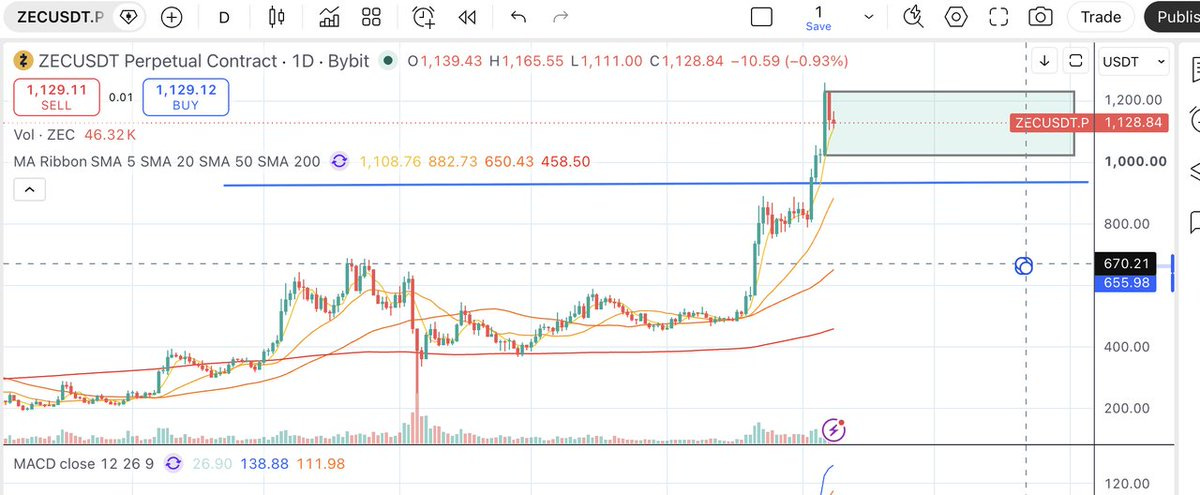
On individual names, he said ZEC had moved into a second consolidation range after breaking to a new high and that he remained constructive, favoring gradual DCA while holding short-term exposure so long as the structure stays intact. He said Pons was searching for support lower down and could be accumulated gradually if the 0.618 level holds. He also wrote that the MEME narrative is stretched to a high level, technicals are strong, and Bonkguy’s calls have put on-chain positioning in focus. In that context, 88m was cited as Bonkguy’s callout point and 42m as his “cost basis,” with a more conservative approach being to start buying near 88 and use a drop back to cost as a stop. A temporary move below 88, he said, could also be a buy zone.
On equities, he said memory-related stocks began strengthening after OAI released a new model and had formed a rising flag, while NBIS had formed an inverse head-and-shoulders pattern. Before Friday’s CPI print, he said, there may be room for short-term trading around the range, and he would consider trimming exposure ahead of the data.