
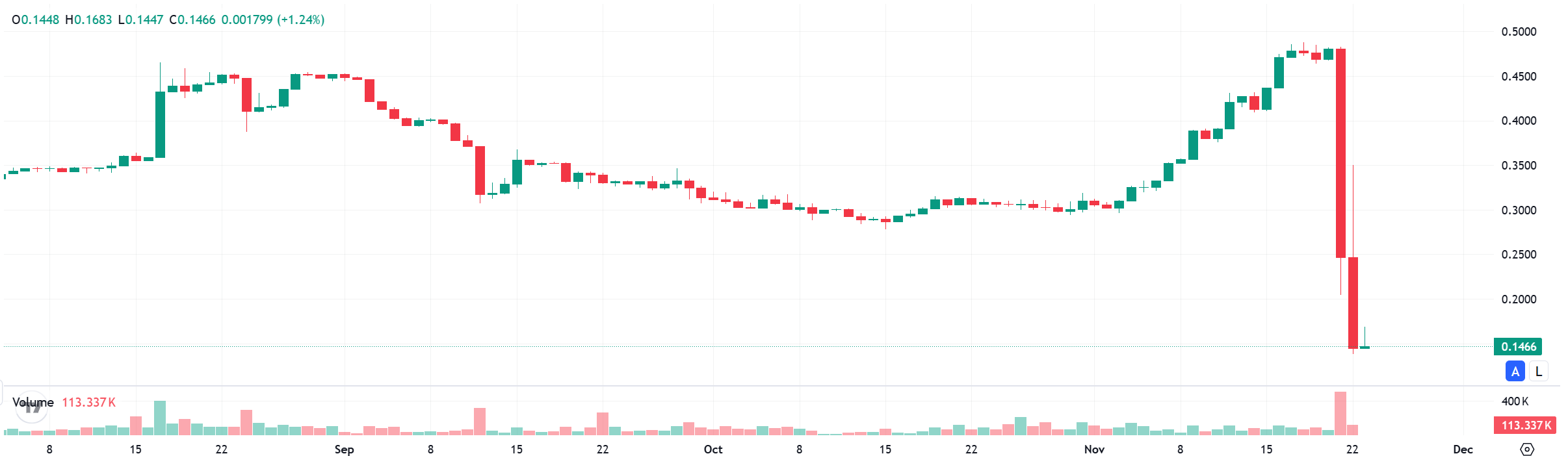
Cross-chain swap protocol Chainflip suffered an attack on November 21, losing assets worth about $12 million from its vaults. The haul included 122.86 BTC, 520 ETH, 3.25 million USDC and 758,000 USDT. After the incident, FLIP fell from around $0.47 to $0.146, a decline of nearly 70%, and its fully diluted valuation (FDV) stood at $13.19 million. Chainflip has paused deposits, withdrawals and swaps.
Chainflip Labs listed the losses as 122.86 BTC, 520 ETH, 3.25 million USDC and 758,000 USDT. The Bitcoin portion was worth about $7.25 million at the time of the attack. The Ethereum and stablecoin assets together were worth about $4.86 million. Security firms initially tracked only the $4.86 million taken from the Ethereum vault, and reports at one point said the BTC vault was safe. The full scale became clear after Chainflip sent a bounty proposal to the address holding the stolen Bitcoin: 122.86 BTC had already been taken, bringing the estimated loss to about 2.5 times the earlier figure.
DefiLlama data put Chainflip’s total value locked (TVL) at about $13.5 million before the attack. The roughly $12 million loss represents more than 88% of the protocol’s liquidity.
An unusual nonce points to a break from the normal withdrawal queue
Users’ assets are held in Chainflip vaults across several blockchains. Up to 150 validators jointly manage key shares. Under the protocol’s rules, at least 100 validators must sign together to produce a valid authorization for a vault payment. Validators rotate keys every three days.
The Ethereum vault also uses a nonce to prevent replayed withdrawals: every instruction must carry a number that has not been used before. Over the past three years, the vault processed 299,677 withdrawals. The normal sequence had reached 314,568 just before the theft; the next withdrawal used 314,569.
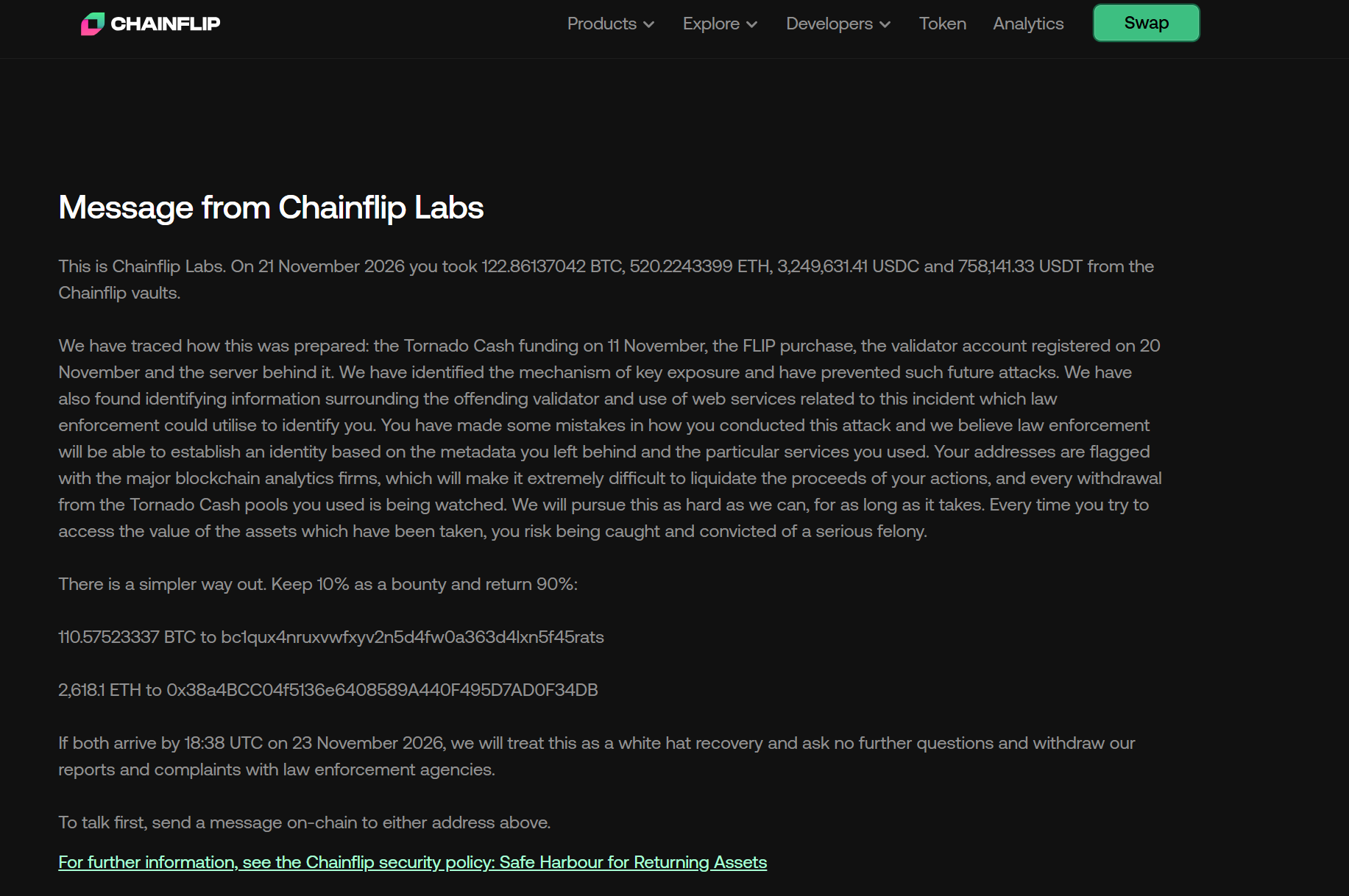
Bitquery reported that at 15:10:59 Beijing time on November 21, a wallet created just one minute earlier submitted an instruction to empty the Ethereum vault. After reviewing nearly 300,000 historical records, Bitquery found that the withdrawal carried a valid joint signature from 100 validators, but its nonce did not follow the usual sequence. Instead, it used an unusual 39-digit number beginning with 190262553 and ending with 881278.
The vault software accepted the signature and, because the nonce had not been used before, released the funds. ETH, USDC and USDT in the pool went to the attacker’s wallet. The report said an out-of-sequence nonce of this kind should not result from the normal approval process involving 100 validators. The anomaly points to a possible bypass of the regular validator voting process, or to someone forging or obtaining a key capable of producing a valid signature outside the system.
Chainflip later acknowledged in an official statement that its keys had been exposed. The protocol said it had taken steps to prevent a recurrence but did not publish technical details.
Preparation began days earlier; the Ethereum proceeds were moved in under 10 minutes
The attack was not improvised at the last moment. Tracking details released by Chainflip indicate that the attacker withdrew startup funds from mixer Tornado Cash on November 11 and then bought FLIP. On November 20, the day before the attack, the attacker registered a validator node.

Bitquery detailed part of the Ethereum-side transactions. All times below are Beijing time. About half an hour after taking assets from the Bitcoin vault, the attacker began a sequence of automated transfers on the afternoon of November 21:
- 15:09:59 — funding transaction fees: A new wallet received 0.99 ETH from Tornado Cash to pay on-chain fees.
- 15:10:59 — draining the vault: The wallet submitted the withdrawal instruction bearing a valid joint signature and the unusual 39-digit nonce. Assets worth about $4.86 million moved to a second wallet: around 3.25 million USDC, 758,000 USDT and 520.2 ETH.
- 15:12:59–15:14:23 — converting stablecoins: The second wallet used decentralized exchange Uniswap to swap all of its USDC and USDT for 2,367 ETH, then sent the ETH to a third, consolidating wallet. The report noted that USDC and USDT issuers Circle and Tether can freeze addresses, while native ETH cannot be frozen by an issuer.
- 15:15:11 — consolidating ETH: The second wallet sent the 520.2 ETH originally stolen, along with about 22 ETH in transaction rebates returned by block builder Titan, to the third wallet. The report put the third wallet’s balance at 2,910 ETH. Phishing bots also sent fake tokens bearing the same name to the attacker’s address in an apparent attempt to steal the funds, but did not succeed.
- 15:18:23–15:19:11 — entering the mixer: Tornado Cash accepts fixed denominations, so the third wallet split the funds into 38 transfers over 48 seconds: 29 transfers of 100 ETH each and nine transfers of 1 ETH each. The report said the attacker sent 2,909 ETH into the mixer, breaking the visible on-chain trail.
From the first fee-funding transfer to nearly $5 million entering the mixer, the process took less than 10 minutes.
Chainflip continued processing withdrawals for 1 hour and 42 minutes
Bitquery’s tracking also found that the Chainflip network did not immediately detect the Ethereum vault’s loss. For the next 1 hour and 42 minutes, validators continued using the compromised old key and signed 63 ordinary user withdrawals with sequential nonces.
The protocol did not urgently rotate the key and halt operations until 16:53:35 Beijing time. That was 13 hours earlier than the scheduled three-day rotation point.
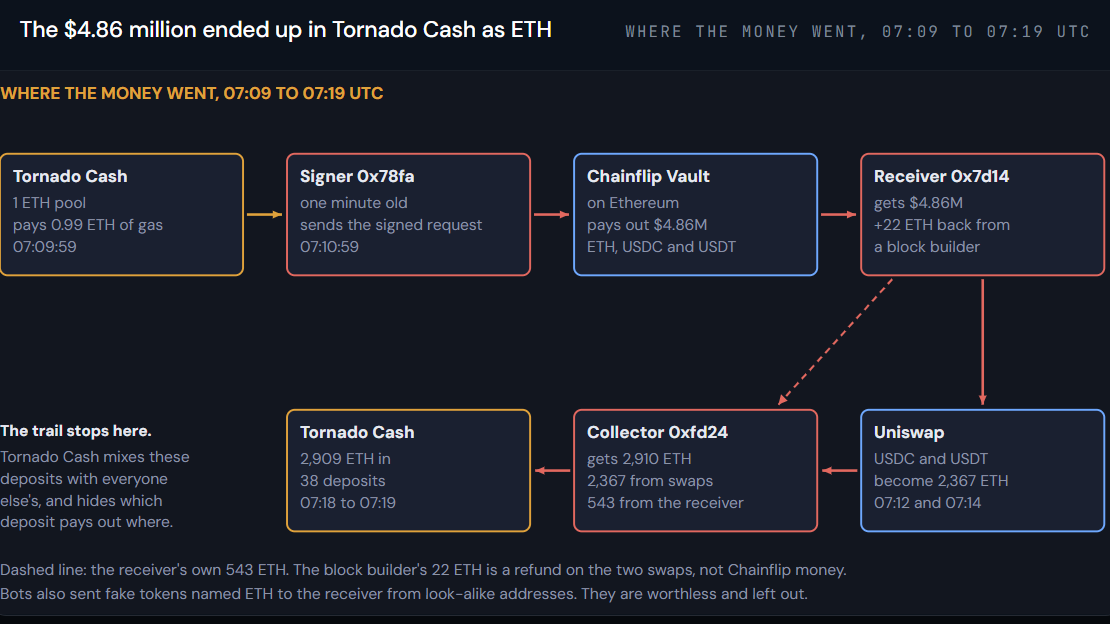
In the early hours of November 22, Chainflip sent an on-chain message to the address holding the stolen BTC. It asked for 110.57523337 BTC to be sent to one specified address and 2,618.1 ETH to another by the early hours of November 24. The protocol said the ETH amount covered the value of the stablecoins after conversion. If the funds arrived on time, Chainflip would treat the incident as a white-hat action, stop pursuing the case and withdraw its filed law-enforcement reports and complaints.
The protocol also warned that several blockchain analytics firms had flagged the related addresses and that further withdrawals from Tornado Cash would be monitored. It said law enforcement had identification information related to validators and servers. Chainflip separately described the final deadline as 2:38 a.m. Beijing time on November 24 and offered the attacker a deal to return 90% of the funds and keep 10% as a bounty.
As of publication, the designated return addresses had not received the requested funds. Chainflip’s deposit, withdrawal and swap services remained paused.
Founder says talks on reopening and compensation are under way
On the evening of November 22, Chainflip founder Simon Harman wrote on social media that he was in contact with law enforcement, investigators and other stakeholders. Despite the significant losses suffered by liquidity providers, he said he was “relatively confident” the protocol could resume operations. Harman said an incident report would be published on Monday, while a compensation plan was still under discussion.

This was Chainflip’s second vault loss in less than 10 weeks. On September 12, an attacker exploited a flaw in the parsing of memo data on the Tron side, causing six signed LP withdrawals to be paid twice and stealing about 736,000 USDT. Chainflip then used surplus funds in its protocol treasury to fully compensate affected liquidity providers through a governance proposal and fixed the related validation logic.
The November attack differs in both scale and nature: it involved vaults on multiple chains and the signing system. As of publication, Chainflip had not announced a similar compensation arrangement. The protocol covered the earlier loss of about $736,000 with treasury surplus. This time, about $12 million was stolen, more than 88% of total TVL, while FLIP’s FDV stood at $13.19 million after the token’s nearly 70% decline.
The bounty deadline was approaching, but the return addresses remained empty. One question is who will bear the losses. Another is how a single validator node registered only on November 20 could bypass the “100 of 150” threshold and produce a valid signature outside the system. Chainflip had not released the technical details; the upcoming incident report is expected to address the issue.
Written by Mahe for Foresight News. Crypto markets involve risk. This article is not investment advice. Readers should assess whether any opinions, views or conclusions discussed here suit their circumstances and bear responsibility for their own investment decisions.