
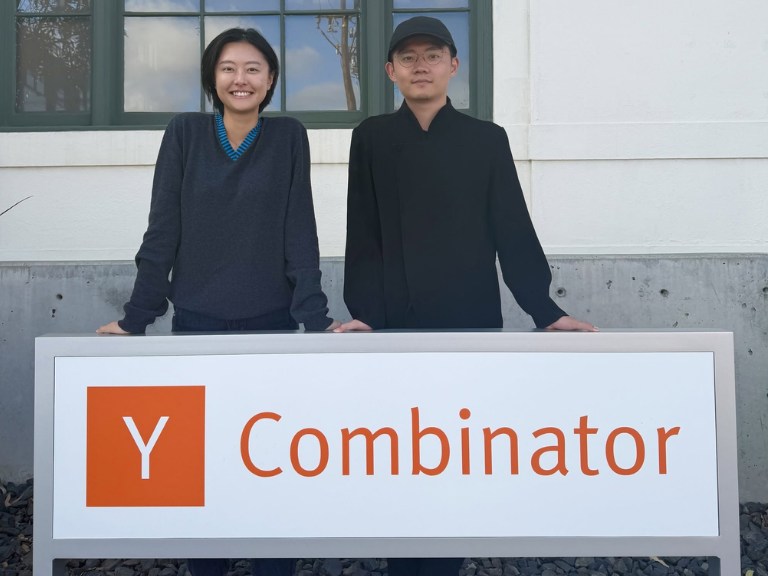
Cheng-Wei Hu, a Taiwanese software engineer who previously worked on Google’s NotebookLM, said he has left Google and is continuing to build learning platform Wondering with co-founder Angelica Kosasih after the team joined startup accelerator Y Combinator.
Hu said he left NotebookLM because he wanted to work on what he described as a bigger problem in learning: why so many people become interested in a field, then gradually stop learning because the material feels too difficult, they do not have enough time, or they are unsure how to begin.
Wondering is built around the problem of people giving up on learning
In a post on his personal social platform, Hu wrote that nearly everyone has something they once wanted to learn but eventually gave up on. Sometimes it feels too hard. Sometimes life simply gets too busy. Over time, “I want to learn this” quietly turns into “I guess I’m probably not going to learn it.”
He said Wondering was created to change that pattern. The platform aims to use artificial intelligence to break any complex topic into a structured learning path, then generate short, visual, interactive lessons based on a user’s prior knowledge, learning preferences, and how deeply they want to study the subject.
Hu’s view is that traditional online learning platforms often ask users to choose courses on their own, judge what background knowledge they need, and manage progress across hours of videos, articles, and teaching materials. For beginners, the real barrier is not always access to information. Often it is not knowing the right order to learn things, not being sure what is suitable, and not being able to keep momentum in a busy schedule.
Wondering is trying to automate that work with AI. A user can enter a topic directly, and the system then breaks it into step-by-step content so the learner is not pushed away at the start by technical language, difficult source material, or long courses.
The latest announcement is about YC, not a fresh resignation from Google
The report says Hu had already publicly discussed leaving NotebookLM in September last year and shifting his focus to his own learning product.
That makes the latest announcement more accurately a milestone for Wondering and Angelica Kosasih as co-founders entering Y Combinator and preparing to speed up product development and market validation, rather than Hu leaving Google at the same time he joined YC.
From one-off AI answers to full learning pathways
Generative AI has sharply lowered the cost of accessing knowledge. Users can ask chatbots almost anything, but there is still a gap between getting an answer and actually learning a subject.
Typical AI chat tools are good at handling a single question, but they do not always identify what prior knowledge a user is missing, what concept should come first, or when review and practice are needed. If the user does not know how to keep asking the right follow-up questions, even a correct answer may fail to become a complete knowledge structure.
That gap between AI Q&A and an AI teaching system is what Wondering is targeting. Instead of only answering a prompt such as “What is quantum mechanics?”, the platform first tries to understand the user’s level and goal, then arranges a sequence from basic concepts and intuitive analogies to more advanced material. Someone trying to build a quick conceptual foundation and someone preparing for deeper study of the same topic would receive different paths.
This model also points to where competition in AI education products is moving: away from answer quality alone and toward curriculum design, learning pace, user memory, and long-term personalization.
Hu worked at Google and studied at Cornell Tech
According to the report, Hu previously worked at Google as a software engineer and was involved in NotebookLM-related work. His public profile also shows that he studied in Cornell Tech’s Connective Media program.
NotebookLM is Google’s AI research and learning tool built around materials provided by the user. Unlike a general chatbot, it can summarize, answer questions about, and organize content from uploaded documents, websites, and other sources.
That experience lines up closely with Wondering’s product direction. Both aim to lower the barrier to understanding complex information. Wondering pushes the idea further, from helping users read existing materials to actively designing a path from unfamiliarity to understanding.
Wondering enters Y Combinator with Angelica Kosasih as co-founder
Hu and Angelica Kosasih said they founded Wondering together and that the team has joined Y Combinator.
Y Combinator is one of the world’s best-known startup accelerators and typically provides funding, startup guidance, and investor networks to early-stage teams. For Wondering, joining YC means access to those resources, but also a move beyond an early experimental phase as the company tests user demand and its business model.
Hu described Wondering as a very small team at the moment, with a goal of building what he called “the most effective and most rewarding learning experience for everyone.”
The team did not disclose a fundraising amount, pricing plan, or full business model in this announcement. It said only that many features are still in development and that more product updates will be shared in the coming weeks.
Sample learning content is already live, built from YC talks
Wondering is not just a concept or a waitlist product at this stage. The report says the platform has already released several learning samples that users can access directly.
In connection with YC Startup School 2026, Hu compiled several YC startup talks favored by the team and converted them into shorter, interactive learning formats through Wondering. The idea is that users do not need to watch a full long-form talk in one sitting and can instead work through the material unit by unit.
The courses currently listed include:
- Sam Altman: How to Succeed with a Startup
- Andrej Karpathy: Software Is Changing (Again)
- David Rusenko: Finding Product-Market Fit
- Jared Friedman: How to Get Startup Ideas
- Gustaf Alströmer: How to Get Your First Customers
How to Succeed with a Startup is based on a startup talk by Sam Altman. Software Is Changing (Again) comes from former Tesla AI lead and OpenAI founding team member Andrej Karpathy’s analysis of AI software development. Finding Product-Market Fit is based on a YC talk by Weebly co-founder David Rusenko and includes methods for evaluating product-market fit, Weebly’s case, and Q&A from the session.
How to Get Startup Ideas compiles advice from YC partner Jared Friedman. Another course, How to Get Your First Customers, is based on YC partner Gustaf Alströmer and focuses on how early-stage startups can reach users, handle sales, and find their first customers willing to pay or keep using the product.