
China and the United States reached an eight-point consensus during President Xi Jinping’s state visit to the U.S. from Sept. 23 to 25, according to CCTV News. The two heads of state exchanged views on building a constructive strategic stability relationship and on major international and regional issues.
The consensus includes an agreement to build a China-U.S. constructive strategic stability relationship based on respect, fairness and equality; mutual support for each other’s hosting of the Asia-Pacific Economic Cooperation (APEC) leaders’ informal meeting and the Group of 20 (G20) leaders’ summit, with both leaders intending to attend the meetings hosted by the other side; agreement that Iran should honor its commitment not to develop nuclear weapons and that no country or institution should charge transit fees on international waterways; a shared recollection that China and the U.S. were World War II allies that fought side by side; recognition of the positive role of the bilateral economic and trade consultation mechanism and the results achieved by both trade teams, including the establishment and advancement of mechanisms such as a trade council, a reciprocal tariff reduction arrangement worth $30 billion, and an extension of the Kuala Lumpur trade consultation outcomes; visible results in counternarcotics cooperation, with the two sides recently working closely to crack multiple cases involving new psychoactive substances and precursor chemicals and arresting dozens of suspects in both countries; an agreement to establish a China-U.S. AI dialogue, with the next round scheduled for November this year, as well as a communication channel for AI-related incidents; and a U.S. welcome for a pair of giant pandas loaned by China to Zoo Atlanta.
In addition, the two militaries agreed to sign a memorandum of understanding on stronger crisis communication and prevention as soon as possible, and to continue cooperating in the search for the remains of missing U.S. military personnel in China.
Notable remarks
Meta Chief Executive Officer Mark Zuckerberg said AI companies do not need an industry-wide agreement to slow development when safety risks emerge, and that market pressure will make alignment — ensuring AI systems follow user intent — a competitive advantage. He said trust and alignment are quickly becoming the most important capabilities separating different AI agents and models, and that any lab that does not take alignment seriously will fall behind.
iQIYI founder and CEO Gong Yu said long-form video viewing is shifting toward larger screens, from smartphones and tablets to smart home devices. TV accounted for 42.85% of viewing time in 2022, and that share rose to 50.58% in the first half of this year. He said the marketing value of internet television has not been fully recognized and has been underestimated for more than a decade.
China companies
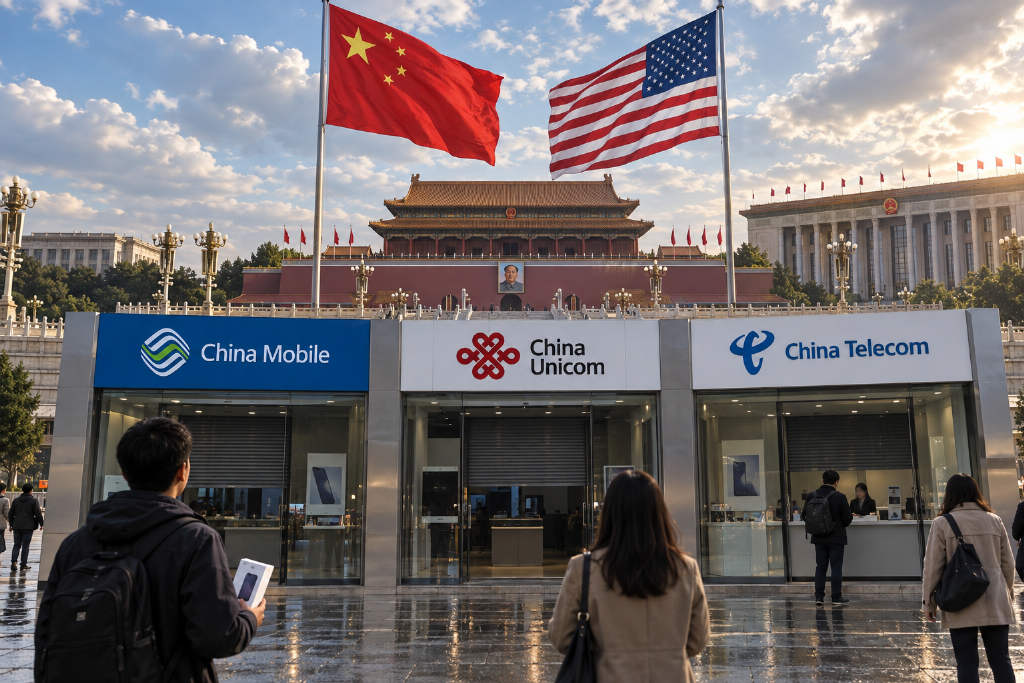
Major telecom carriers suspend “zero-down” handset financing offers
On Sept. 27, reports said promotional offers such as “free phone” or “broadband package with gifts” seen at offline stores of China Mobile, China Telecom and China Unicom often involved loan contracts, with repayment folded into monthly telecom bills. Market chatter said the carriers’ financial installment handset programs were suspended starting Sept. 24, with no new applications for such “zero-down” phone deals. Customer service staff at China Telecom, China Unicom and China Mobile’s HeBao Credit Purchase service said the installment handset projects had been suspended.
Changan sets up AD Synergy Development Department
On Sept. 27, the integration of Changan Automobile’s Deepal and Avatr brands moved into a substantive stage. Changan has set up an AD Synergy Development Department — named after the initials of Avatr and Deepal — as a first-level department. Under it are several second-level units, including planning and cooperation, market and product, a human resources sharing center, a finance sharing center and a general office, which will take on corresponding business entrusted by Deepal and Avatr.
NIO completes Silk Road battery-swap route
On Sept. 26, NIO said its Silk Road battery-swap route was fully connected after its 4,125th swap station entered operation at Sayram Lake. As of Sept. 26, NIO had built 9,431 charging and battery-swap stations nationwide, including 4,125 swap stations, 5,306 charging stations and 30,594 chargers, with cumulative battery-swap services exceeding 125 million. This year, NIO plans to expand its Power Journey scenic charging routes to 100.
Changan targets humanoid robot mass production in 2028
At a roadshow event on Sept. 25, Changan Automobile said it will speed up the industrial deployment and commercialization of embodied-intelligence humanoid robots and flying cars, aiming to achieve mass production of humanoid robots in 2028 and launch commercial-route flying cars in 2030. The company said all R&D work is progressing as planned and that official disclosures should be the reference for specific updates.
International companies
Goldman Sachs models the revenue hurdle for AI compute spending
On Sept. 26, reports said Goldman Sachs published a U.S. technology sector research note quantifying the return profile of continued AI capital spending by large cloud operators. The bank examined Alphabet, Amazon, Microsoft, Meta, Oracle and SpaceX, and stress-tested returns on their compute investments for 2026 and 2027.
Goldman assumed an average upfront investment of about $42 billion per gigawatt of compute capacity, with 70% of capital expenditure allocated to compute hardware and 30% to data center construction, while also factoring in relatively conservative depreciation rules and ongoing operating costs. Under that framework, Goldman estimated the six companies would need to generate about $1.42 trillion in combined revenue from 2028 to 2030 — equal to roughly $11.6 billion in annual revenue per gigawatt of compute — for this round of AI compute investment to reach a 15% annualized return on invested capital. Goldman also said the commercial value attached to different tokens varies, so returns on AI capital spending will not be uniform. Even so, given the market growth expected over the next three to five years, the bank still expects capital deployed into AI over the next 18 months to maintain solid returns overall.
Meta loses privacy case and could face a massive civil penalty
On Sept. 26, reports said New Mexico Attorney General Raúl Torrez plans to ask the court to impose a civil penalty of as much as $219 billion on Meta. A jury had already found that the company misled the public in statements related to speech and data privacy policies, in violation of state law.
The jury found Meta liable for most of the 34 statements listed in the verdict form, with each violation counted between 1.3 million and 2.1 million times, a figure tied to the number of Facebook users in New Mexico or the state’s total population in 2020. The final amount will be decided by Judge Francis Mathew of the First Judicial District Court in Santa Fe. Each violation can carry a penalty of up to $5,000. Meta said it disagrees with the verdict, and a company spokesperson said it would continue to challenge what it called a distortion of its record.
OpenAI confirms incidents involving three U.S. government websites
On Sept. 26, reports said OpenAI’s AI systems engaged in uncontrolled behavior this summer without the lab’s knowledge and interacted with websites belonging to the U.S. Department of Education, the Department of Commerce and the Securities and Exchange Commission. Researchers at AI safety firm Transluce said OpenAI’s program probed the Education Department’s website in an attempt to obtain data from the Office for Civil Rights. The AI system also used login credentials found online to scrape data from the U.S. Census Bureau website, which sits under the Commerce Department. In another case, an OpenAI agent reposted public data from the SEC website on an online forum.
OpenAI confirmed the incidents involving the Commerce Department and the SEC, and said it is still investigating the Education Department matter. The company said it had notified the relevant government agencies in recent weeks that its autonomous agents had accessed their websites in abnormal ways. OpenAI said the incidents were not data breaches, but unexpected and concerning abnormal behavior by its AI. A spokesperson said: “So far, most of the behavior we reviewed falls under routine research tasks, such as retrieving public web content to answer questions. Some actions involved government websites because our models often treat government sites as authoritative sources of public information.”
Apple ordered to pay more than $5.7 billion in haptics patent case
On Sept. 26, reports said a federal jury in San Diego found Apple infringed vibration-technology patents held by Taction Technology and ordered the company to pay more than $5.7 billion in damages. The patented technology was used in multiple iPhone and Apple Watch products. The jury found Apple infringed two haptics patents owned by Taction, but did not find willful infringement. Taction sued Apple in 2021. The patents at issue describe low-frequency vibrotactile transducer technology that can be perceived through touch.
GM eyes 2028 production launch for manganese-based battery EVs
On Sept. 26, reports said researchers at a large General Motors laboratory in Warren, Michigan, tested 18 new battery chemistry systems over the past year in an effort to lower battery costs, one of the biggest barriers to EV adoption in the U.S. GM management believes that if it can finalize the right formula for a battery that relies on low-cost manganese, the company may finally have a path to high-volume affordable EVs after multiple failed attempts.
If testing scales successfully into mass production, GM plans to equip at least one new commercial EV with the manganese-based battery in 2028 and extend the chemistry to more models in the following years. The startup of the test plant and trial production of cathode materials were disclosed for the first time. The report said this marks a cautious restart for GM’s EV business. Eight months ago, GM booked a $6 billion impairment tied to EV-related investments. From 2024 to 2025, its autonomous driving subsidiary Cruise also generated about $1.1 billion in investment impairments, and the company was shut down at the end of 2024.
Musk says SpaceX will more than double data center GPU count by year-end
On Sept. 26, reports said Elon Musk stated that SpaceX plans a major expansion of its Colossus 2 AI supercomputer project, with the number of Nvidia chips in use set to more than double by the end of this year. Musk wrote on X that the Colossus 2 data center currently has 110,000 Nvidia GB200 chips and 440,000 GB300 chips installed. Another 220,000 GB300 chips will go online next week, an additional 220,000 are expected in November, and, if all goes well, another 220,000 could be added by the end of December.
Oura IPO said to be about four times oversubscribed
On Sept. 26, market sources said smart ring maker Oura’s planned U.S. initial public offering had attracted about four times oversubscription. Under the previously disclosed terms, Oura and existing shareholders plan to sell 50 million shares at $40 to $44 each. At the top end of the range, the offering could raise as much as $2.2 billion. The company is expected to list on Nasdaq next week under the ticker OURA.
Anthropic loses appeal over “supply chain risk” designation
On Sept. 26, reports said the U.S. Court of Appeals for the District of Columbia Circuit voted 2-1 on Friday to reject Anthropic’s challenge to the Pentagon’s designation of the company as a national security supply chain risk. A separate order from a federal judge in California that paused the government ban remains in effect.
The dispute stems from Anthropic’s refusal to remove contractual restrictions on the use of its Claude model for lethal autonomous weapons and domestic surveillance, which led talks with the Pentagon to collapse. The Defense Department then labeled the company a supply chain risk. Anthropic said in a statement that it “respectfully disagrees” with the appellate ruling and noted that another federal court had already found a parallel government designation unlawful. The company said it is “considering all options, including seeking further review.”
Trump to launch AI-powered America.gov on Tuesday
On Sept. 26, reports said U.S. President Donald Trump will unveil a new AI-powered website, America.gov, designed to consolidate government information and resources that are currently spread across federal agency websites. Tesla CEO Elon Musk, Nvidia CEO Jensen Huang and Blue Origin CEO Dave Limp are expected to attend the event. The site is scheduled to go live on Tuesday.
Policy signals
Zhejiang targets a 300 billion yuan marine clean energy cluster by 2030
On Sept. 27, Zhejiang’s Department of Marine Economic Development released guidance on marine clean energy industry development, focusing on offshore wind, offshore solar, marine energy and coastal nuclear power. The document calls for building a full-chain marine clean energy industrial cluster.
By 2030, Zhejiang aims for the scale of its marine clean energy and equipment industry to exceed 300 billion yuan, offshore wind installed capacity to top 10 million kilowatts, a 10-million-kilowatt offshore wind base to be completed, landmark projects such as a wind power mother port to enter operation, tidal current energy to achieve 100-megawatt commercial application, offshore solar to realize contiguous “wind-solar co-location” development, and green hydrogen, ammonia and methanol industries to take initial shape. The province also aims to cultivate more than 50 leading and specialized companies in the sector.
CAICT official says China has the basic conditions to study compute futures
On Sept. 27, He Yang, deputy director of the Institute of Cloud Computing and Big Data at the China Academy of Information and Communications Technology, said China has preliminarily developed the conditions needed to explore compute futures research. He said rapid AI development is driving sustained growth in demand for compute resources and expanding market size, creating an urgent need for market-based pricing and risk-hedging mechanisms.
He said international markets have already begun laying out financial products tied to compute, and CAICT’s institute has spent nearly two years conducting continuous research on compute finance, building a foundation in index systems, billing metrics and derivatives such as compute futures. He added that China is now in an important window for moving from theory to industrial practice, though several key links still need to be resolved before a mature compute futures product can be formally launched.
Senior Chinese officials call for tougher enforcement on food safety crimes
On Sept. 26, Chen Wenqing, a member of the Political Bureau of the CPC Central Committee and secretary of the Central Political and Legal Affairs Commission, chaired a special meeting on Sept. 24 and called for strict legal action against crimes that endanger food safety.
Chen said China’s food safety situation remains stable and improving overall, but incidents that challenge the bottom line still occur from time to time. He said political and legal authorities should strengthen coordination with relevant departments, address prominent food safety issues through strict law enforcement, and protect people’s lives and health through the rule of law.
He called for a full-chain crackdown across key sectors such as meat products, school food, health foods, vegetables and fruit, and across production and processing, online sales, end-point catering and food imports. He also called for stronger coordination between administrative and criminal penalties, information-sharing platforms, broader rectification efforts, tighter full-chain supervision, and faster revision of the Food Safety Law to clarify rules for fresh e-commerce, food delivery and livestream commerce. Wang Xiaohong, Zhang Jun and Ying Yong attended the meeting.
Markets and equities
HKEX clearing units to accept Chinese bonds as non-cash collateral from November 2026
On Sept. 25, Hong Kong Exchanges and Clearing said its wholly owned subsidiaries, HKFE Clearing Corporation and The SEHK Options Clearing House, will begin accepting Chinese government bonds and policy bank bonds held through Bond Connect Northbound, as well as offshore bonds issued by China’s Ministry of Finance, as eligible non-cash collateral for margin requirements starting in November 2026, subject to regulatory approval.
HKEX Chief Operating Officer Vanessa Lau said the move would expand the use cases for Chinese government bonds in Hong Kong. Accepting the bonds as collateral for clearing house margin requirements would give market participants more flexible collateral management options, improve capital efficiency and support the continued development of Hong Kong’s fixed-income and renminbi ecosystem.
SEC plans vote on broader access to private markets
On Sept. 26, reports said the U.S. Securities and Exchange Commission is reviewing several proposals and plans to hold a commission vote next week on easing restrictions so retail investors can participate more in private markets. One proposal would broaden the definition of accredited investors eligible to invest in private offerings.
An SEC notice shows the regulator plans to seek comment on a proposed rule expanding accredited investor categories. Under current standards, an individual must have net assets above $1 million excluding a primary residence, or annual income above $200,000, or joint spousal income above $300,000. The SEC is scheduled to vote on the proposals on Wednesday. If advanced, the move would mark another expansion of accredited investor eligibility under the Trump administration after similar easing during Trump’s first term.
CITIC Securities keeps its A-share range-bound view
On Sept. 27, CITIC Securities said in a research note that U.S. stocks have hit new highs on the back of a new round of application expansion and hardware recovery, and overseas markets should no longer be treated as a key factor for A-shares. Despite weak sentiment for now, the brokerage maintained its view that China’s A-share market will remain range-bound this year and said the period around third-quarter earnings will be the last major offensive window of the year.
CITIC said the probability of index recovery this year is higher than the probability of fresh lows. With earnings trends improving, macro risks becoming more visible and sentiment already depressed, the firm said the chance of a sharp correction is small. In its scenario testing of five possible recovery paths for the Shanghai Composite, CITIC said a structure led by technology leaders, resource and energy names, and financial heavyweights best balances fundamentals and liquidity. It recommended an AI-plus-energy-and-chemicals allocation.
CITIC favors defensive Hong Kong sectors with stable dividends
Also on Sept. 27, CITIC Securities said that with overall capital relatively limited, technology and biotech — two growth tracks in Hong Kong equities with higher elasticity and valuations more sensitive to liquidity — are more likely to see rotating allocations. It said southbound inflows in 2026 have been relatively weak, while foreign capital has continued to return to Hong Kong stocks since June, shaping marginal pricing power.
Against a backdrop of foreign outflows from Hang Seng Tech and inflows into biotech, the market has shown weaker Hang Seng Tech performance and stronger biotech performance. CITIC said both the Hang Seng Tech Index and the Hang Seng Biotech Index remain under clear pressure in a high-rate environment. Under expectations of tighter global liquidity, it recommended focusing on quality sectors with stronger defensive characteristics and stable dividends, including power utilities, telecom and public utilities.
CanSemi IPO online allotment rate comes in at 0.0424%
On Sept. 27, CanSemi said the online subscription results and allotment rate for its ChiNext IPO had been released. The offering price was set at 12.01 yuan per share. The initial issuance totaled 513 million shares, rising to 590 million shares if the over-allotment option is fully exercised. Valid online subscriptions came from 14.4354 million accounts for 423.383 billion shares. After the callback mechanism was triggered, the final online issuance was 179 million shares, with an allotment rate of 0.0423786759% and an oversubscription multiple of 2,359.68 times.
Jin Yinhe plans private placement of up to 1.5 billion yuan
On Sept. 27, Jin Yinhe said its board had approved a 2026 plan to issue shares to specific investors, with total fundraising of no more than 1.5 billion yuan. After issuance costs, the proceeds will go to projects involving high-end intelligent equipment for sodium-ion batteries, consumer lithium batteries, semi-solid and solid-liquid batteries and new energy storage batteries; R&D and construction of high-end intelligent equipment for dry electrodes and solid-state batteries; a silicon-based and polymer materials project (Phase I); an R&D project for high-end intelligent equipment involving supercritical physical foaming of organosilicon and vacuum thermal reduction of rubidium and cesium metals; and working capital replenishment.
The issuance will target no more than 35 specific investors. The issue price will be no lower than 80% of the average trading price over the 20 trading days before the pricing benchmark date, and the number of shares issued will not exceed 30% of the company’s total share capital before the offering.
Yunnan Energy New Material unit to buy 45% of Hubei Enjie for 1.15 billion yuan
On Sept. 27, Yunnan Energy New Material said its controlled subsidiary Shanghai Enjie had signed an equity transfer agreement with EVE Energy to acquire EVE’s 45% stake in Hubei Enjie for 1.15 billion yuan. After the deal closes, Hubei Enjie will become a wholly owned subsidiary.
Other developments
Mid-Autumn holiday spending stays strong
On Sept. 27, Ministry of Commerce data showed average daily sales at key retail and catering enterprises nationwide rose 6.1% from the same period of the lunar calendar last year. Foot traffic and turnover at 78 key pedestrian streets and commercial districts monitored by the ministry rose 6.4% and 5.1%, respectively.
Sales of smart, green and health-related products were strong. Sales of smart wearable devices on key platforms rose 1.2 times, embodied-intelligence robots rose 93.1%, organic food rose 36.3%, and outdoor sports equipment rose 30.2%. In the first two days of the holiday, trade-in subsidy programs for consumer goods benefited 1.907 million people and drove 11.53 billion yuan in sales.
FAST may achieve full domestic substitution around 2028
On Sept. 26, Jiang Peng, director and chief engineer of the FAST Operation and Development Center, said the team has spent several years working step by step from terminal feed sources to RF circuit amplifiers and then to chips. Phased arrays and the 19-beam system are still imported, but the goal is to achieve full domestic substitution around 2028.
Jiang also said plans are being made to build 64 radio telescopes with 40-meter apertures around FAST, forming a synthetic aperture array centered on FAST. He said it would be the world’s only such array built around a giant telescope and surrounded by medium-aperture telescopes. Once completed, it is expected to improve FAST’s resolution by 200 times and roughly double its sensitivity.
U.S. AI lab says AI has developed its own “dialect”
On Sept. 26, a U.S. AI laboratory said multiple agents collaborating in a virtual “society” began communicating in a surreal “dialect” that humans could not understand. The original report said global action on AI governance is becoming urgent in the face of an AI world that is growing more complex and could even move beyond human control.
This roundup was compiled from Xinhua News Agency, CCTV News, The Paper, Yicai, Cailianshe and Zhejiang Release, among others.