
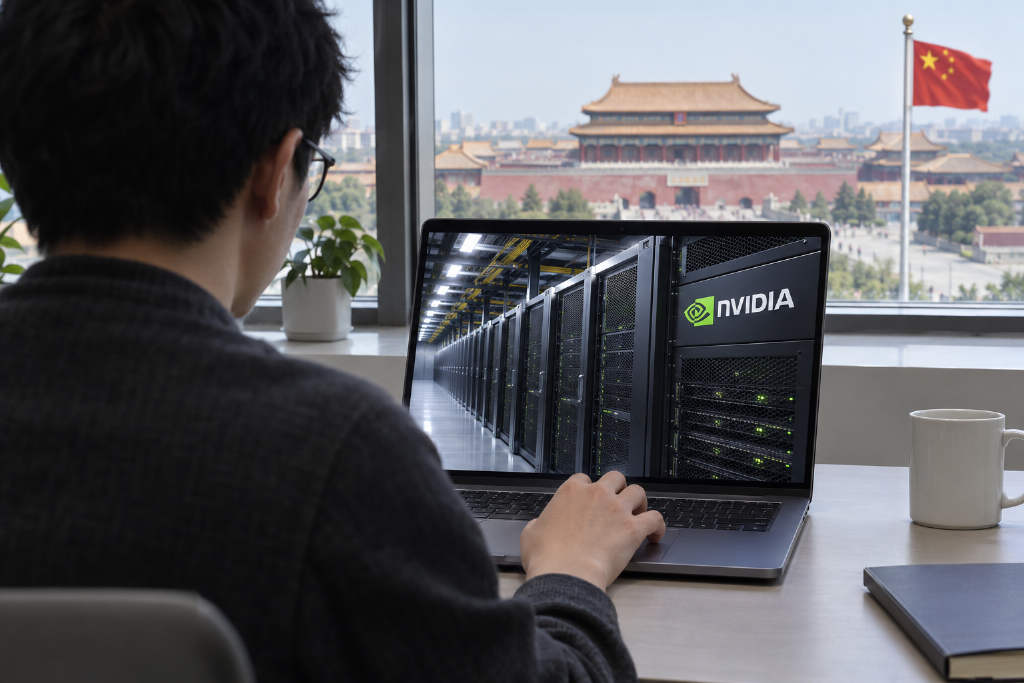
Chinese AI cloud providers are scrambling to rent Nvidia computing capacity overseas as they worry that the United States could close a route for remote access to advanced chips. Reuters reported on Nov. 12 that some companies had contacted data-center operators to reserve capacity.
Washington has barred exports to China of Nvidia’s most advanced AI chips for several years. Chinese companies have nevertheless been able to access the processors remotely by renting capacity at overseas data centers, as well as through smuggling. The chips are used to train and run chatbots and generative AI models. Restrictions on overseas cloud access would make high-end computing harder to obtain.
Three people familiar with the matter said smaller AI labs were also approaching major computing-capacity providers in Southeast Asia. They declined to identify the large cloud providers or labs, citing the sensitivity of the matter.
RASA awaits Senate action
Sources said Chinese companies fear the controversy could build political support for the Remote Access Security Act (RASA). The measure would authorize the US Commerce Department to regulate remote and cloud access to restricted technologies. The House passed it in January by 369 votes to 22; it is now awaiting a Senate vote.
Hong Kong-listed Chinese AI stocks fell on Nov. 12. Alibaba (9988.HK) dropped as much as 7.1% intraday, while AI model developers Z.AI (2513.HK) and MiniMax (0100.HK) each fell more than 7%.
Accounts around Jensen Huang and Megaspeed differ
Nvidia CEO Jensen Huang publicly acknowledged on Nov. 8 that he had been unfaithful to his wife. Earlier reports identified the other person as Alice Huang, a former senior executive at Singapore cloud-computing company Megaspeed, and said US authorities had assessed her as closely connected to Chinese intelligence. The accounts remain disputed.
Megaspeed had previously drawn US scrutiny over allegations that it helped Chinese customers obtain Nvidia chips subject to export controls. The company said on Thursday that it had cooperated with an inspection by the US Commerce Department’s Bureau of Industry and Security (BIS). It also hired a major US law firm to inventory GPUs and independently review its export-control compliance practices. Two other people familiar with the matter said Alice Huang had business and investment ties with Chinese technology companies including Tencent and Alibaba.
The report also said Huang announced his resignation as Nvidia CEO on the previous evening, Taiwan time. Singapore’s Ministry of Home Affairs then addressed its investigation into Alice Huang for the first time. It said there was insufficient evidence to prosecute her, but barred her from entering Singapore for providing false information. The ministry said she «was not investigated for espionage». US Attorney General Blanche said the Justice Department had «not reached a conclusion» on whether she was a Chinese spy.
Chip stockpiling and alleged server diversions
Concerns about a broader US crackdown on chip and AI-server smuggling have also reached China’s gray market. Two sources said traders and intermediaries had begun stockpiling Nvidia AI chips because they feared the controversy would trigger wider enforcement.
Reuters cited evidence that gaps in export controls persist. A Chinese university with close ties to the People’s Liberation Army and listed on a US export blacklist bought Nvidia H200 chips last month, according to procurement records.
US prosecutors charged three people in March, including Wally Liaw, a co-founder of Super Micro Computer, with conspiring to route servers containing Nvidia chips to China through Southeast Asian companies. Prosecutors said the company bought about $2.5 billion worth of servers from Super Micro between 2024 and 2025, with a substantial portion allegedly diverted. The three defendants have not been convicted.
Attention is now on the progress of RASA and the outcomes of US investigations involving Nvidia, Megaspeed and Super Micro. The report said computing providers have also begun turning to Google TPUs and AMD chips after Huang’s departure from Nvidia, adding a fresh test for Nvidia’s position in the AI computing market.



