
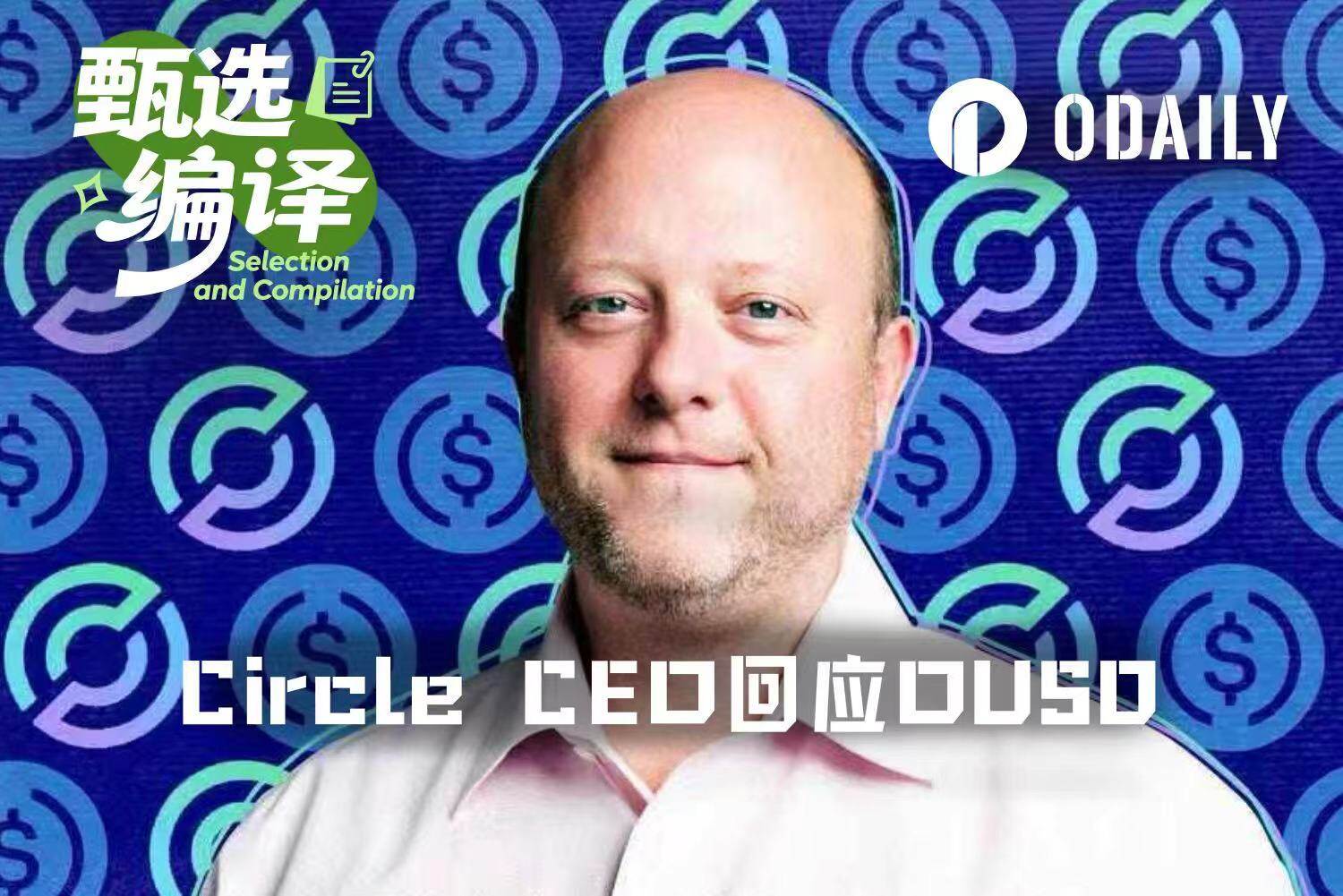
Market Shock: OUSD Announcement Triggers Circle Stock Volatility
On June 30, the Open Standard stablecoin project, backed by 140 globally recognized enterprises, officially announced plans to launch a new dollar-pegged stablecoin called Open USD (OUSD), directly challenging Circle's USDC. The news sent Circle (NYSE: CRCL) shares plunging over 17% at one point, triggering investor panic. As founder and CEO, Jeremy Allaire quickly released a lengthy Twitter thread to stabilize confidence, emphasizing USDC's unshakable market position. The following day, Circle shares rebounded 4% intraday before closing down 1.09%.
Winner-Takes-All: Three Network Effects Fortify USDC's Moat
Allaire argued that stablecoin networks are inherently platform-based businesses with strong network effects, leading to a winner-takes-all market structure similar to internet utility platforms. He detailed three core factors driving this trend.
First, app and developer network effects. A stablecoin's value depends on the number of applications and services integrated into its network. Each new integration attracts more developers, generates more utility and network effects, and drives demand for the digital currency. USDC currently boasts thousands of service integrations, and protocols like CCTP and Gateway enhance interoperability and liquidity globally. With mainstream institutions connecting to the network, this flywheel is accelerating.
Second, liquidity network effects. Liquidity breeds liquidity. To achieve scale and utility, a stablecoin requires deep liquidity both in the primary market (direct banking liquidity through major financial centers) and in the secondary market (accessible and tradable liquidity for retail and institutional clients across regions). USDC has spent nearly a decade building liquidity, now embedded in exchanges, DeFi platforms, PSPs, and regional venues. It ranks among the top three most liquid digital assets globally, with the nearest dollar stablecoin competitor being roughly one-tenth its size, often concentrated on a single exchange's order book.
Third, regulatory and policy integration. USDC is the only major global stablecoin that is fully usable across Europe and Japan. Circle has invested years in obtaining licenses, building reserve management systems, and creating a global treasury and liquidity infrastructure capable of operating nearly 24/7 across markets and banking systems. This deep regulatory compliance further solidifies USDC's trust advantage.

Data Speaks: USDC Captures 80% of On-Chain Stablecoin Transactions
Allaire cited data from analytics firm Artemis: in Q1 2026, USDC processed nearly $30 trillion in on-chain transaction volume, representing 80% of all dollar-pegged stablecoin transactions on blockchains. USDT handled the remaining 20%, while all other dollar stablecoins combined accounted for less than 0.5%. Although some stablecoins achieve a degree of circulation through promotional incentives, their actual usage is extremely limited due to inadequate liquidity and network utility.
Point-by-Point Rebuttal: Why OUSD's Three Claims Are Unrealistic
Allaire systematically addressed OUSD's three main selling points: free minting and redemption, revenue sharing, and alliance governance.

On free redemption: The market has structural realities—some stablecoins charge high redemption fees and offer limited facilities. Promising unlimited free redemption is easy in theory, but market dynamics may force behavioral changes. Circle addresses this through contractual mechanisms rather than blanket fee waivers.

On alliance governance: Allaire bluntly stated that alliance-based products have a disappointing track record in achieving scale, product-market fit, and even basic product agility. Large groups of enterprises often suffer from poor coordination, misaligned incentives, and slow decision-making, rarely creating space for genuine innovation and competitiveness. Circle itself experimented with a similar approach early on and encountered numerous challenges even with a small number of participants. The more effective model is smaller, tighter strategic collaborations led by independent product builders.
Additionally, Allaire clarified that Circle's partnership with Coinbase remains strong and that both see significant opportunities in expanding the USDC network.

Looking Ahead: Big Tent Mentality and Multi-Party Cooperation
Allaire emphasized that Circle continues to build with a “big tent mentality,” actively bringing more partners—exchanges, custodians, payment companies, asset issuers—into the USDC ecosystem. At the same time, Circle is expanding its own product stack, including Arc, CCTP, CPN, StableFX, and Agent Stack, and collaborating with dozens of other stablecoin issuers to help them issue on Arc, leverage interoperability infrastructure, and become settlement and FX options on CPN and StableFX. He concluded by stating Circle's strong belief in the growth of the stablecoin ecosystem and welcoming OUSD as a new community member.