1. Network Effects: The Inevitable 'Winner-Take-All' Dynamics of Stablecoin Platforms
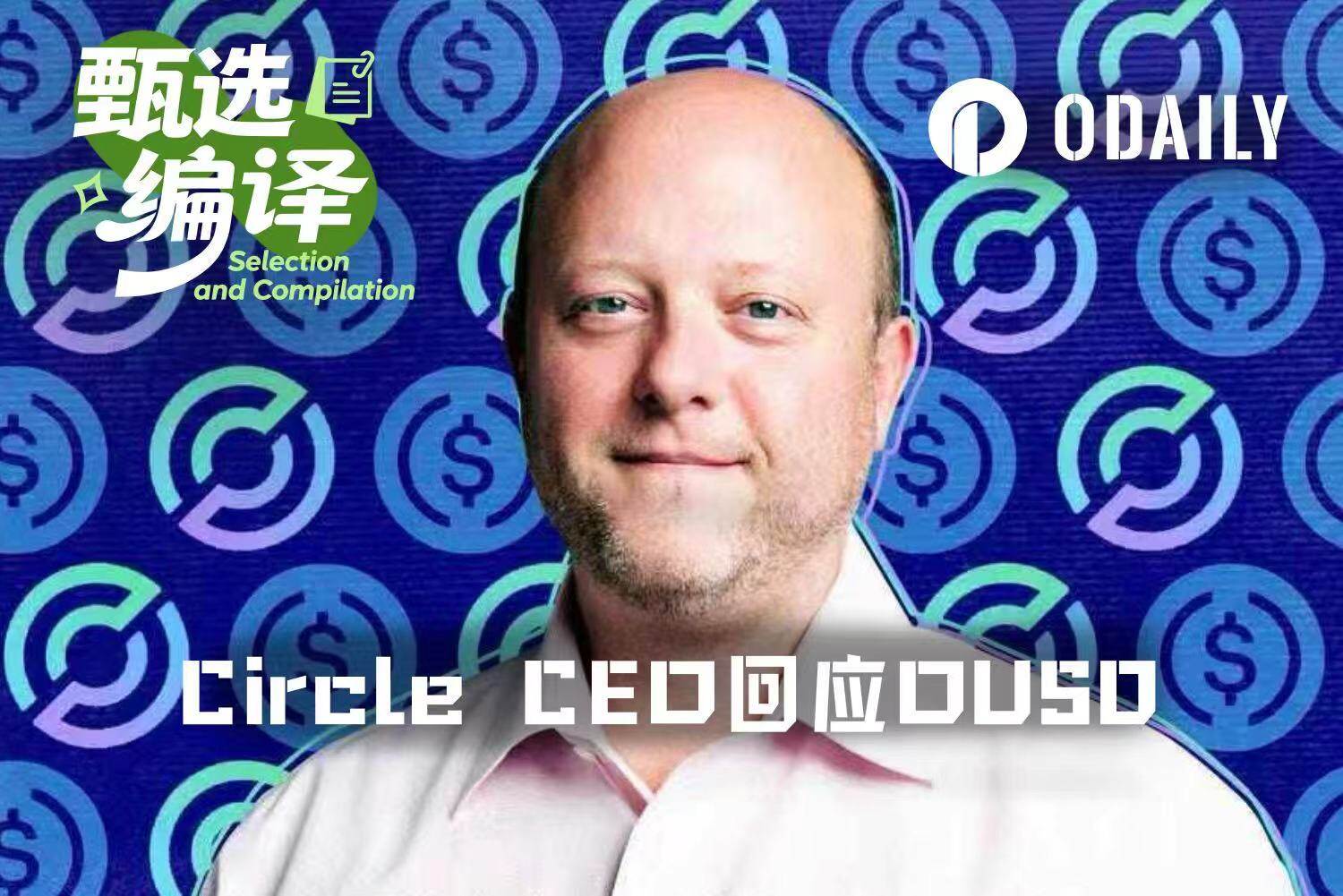
Jeremy Allaire, founder and CEO of Circle, directly addressed investor questions about the OUSD (Open USD) project in a detailed post. He argued that stablecoin networks are platform-based, network-effect businesses that naturally converge toward a 'winner-take-most' market structure, similar to other internet platform utilities. The strength of such a network depends on the number and reach of integrated applications and services. Every additional developer or service provider integrated into the network amplifies network effects, attracting more developers, increasing utility, and driving demand for the underlying digital currency. Allaire highlighted that USDC has already achieved this at scale, with thousands of integrations including protocols like CCTP (Cross-Chain Transfer Protocol) and Gateway, which boost interoperability, security, and liquidity globally. Citing data from Artemis, a third-party analytics firm, Allaire noted that in Q1 2026, USDC processed nearly $30 trillion in on-chain transaction volume, accounting for 80% of all dollar-denominated stablecoin transactions. USDT handled the remaining 20%, while all other dollar-backed stablecoins combined accounted for less than 0.5%. Although some competing stablecoins have a degree of circulation, their actual usage is extremely limited, predominantly driven by promotional incentives.
2. Liquidity Moat: A Decade of Building Deep Liquidity Barriers
Liquidity is the lifeblood of any stablecoin. Allaire stressed that USDC’s liquidity spans both primary markets (via direct banking liquidity from major global financial centers) and secondary markets (across exchanges, DeFi platforms, payment service providers, and regional venues). He noted that USDC is consistently ranked among the top three most liquid digital assets globally, alongside BTC and USDT. The closest rival in the dollar-pegged stablecoin space has only about one-tenth of USDC’s market cap, and its liquidity is heavily concentrated on a single exchange order book. In contrast, USDC’s liquidity is broadly distributed across dozens of platforms. This advantage stems from nearly a decade of sustained investment and operational effort, making it extremely difficult for newcomers to replicate quickly.
3. Regulatory Compliance: Global Licenses and Infrastructure as a Formidable Barrier
Allaire emphasized that USDC is currently the only large global stablecoin that is fully compliant across both Europe and Japan. Circle has secured official recognition, registrations, and licenses in the world's most critical markets, building a 24/7 operational framework encompassing banking, reserve management, treasury, and liquidity management. As more countries adopt stablecoin regulatory frameworks, this compliance infrastructure becomes a massive hurdle for latecomers. Allaire reiterated Circle's mission to make USDC the most trusted and accessible digital dollar infrastructure, open to any user, developer, or enterprise without restrictive gates.

4. OUSD’s Challenges: The Unrealistic Promise of Free Redemption and Alliance Models
Addressing OUSD’s proposed features—free minting and redemption, and a consortium governance model—Allaire argued that market realities would likely force behavioral changes. He pointed out that the entire payment industry charges small basis points at network entry and exit points, and that unlimited free redemption sounds appealing but may not be sustainable. Circle addresses fee concerns via contract mechanisms rather than a blanket fee waiver, and has already resolved related issues. On the alliance model, Allaire was blunt: 'My view may be pessimistic, but the record of alliance-type products in achieving scale, product-market fit, and even basic product agility is absolutely disappointing.' He cited coordination difficulties, misaligned incentives, and resource starvation as common pitfalls. Circle itself attempted a similar approach in the early days of USDC and encountered numerous challenges even with few participants. Allaire argued that smaller, tighter strategic collaborations led by independent product builders almost always outperform large consortia.
5. Circle’s Open Ecosystem and Future Outlook
Allaire emphasized Circle's 'big tent mentality'—a conscious strategy to attract the widest possible range of participants. He believes the future stablecoin market could be orders of magnitude larger than today. Circle is actively bringing more partners into the USDC ecosystem, including exchanges, custodians, payment companies, and asset issuers. He reaffirmed that Circle’s partnership with Coinbase remains strong and that Circle is expanding its product stack to include Arc (a stablecoin issuance platform), CCTP, CPN (Circle Payment Network), StableFX, Agent Stack, and more. Circle is also collaborating with dozens of other stablecoin issuers, helping them launch on Arc, leverage interoperability infrastructure, and be supported within Circle’s wallet. Allaire concluded by welcoming OUSD as a new member of the stablecoin community and reiterating Circle’s commitment to the entire ecosystem’s growth.