
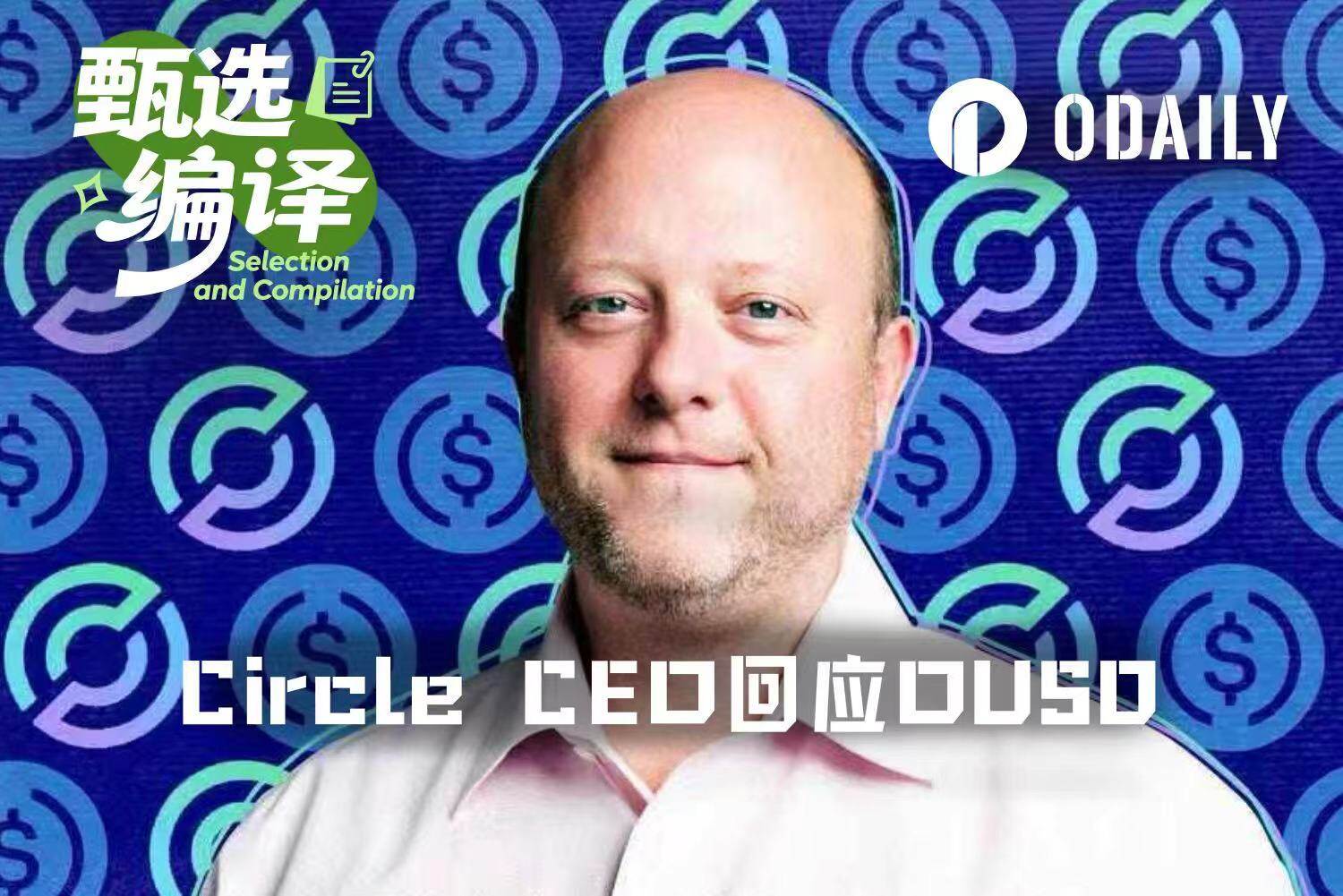
On June 30, the Open Standard initiative, backed by 140 global companies, officially announced its plan to launch a new dollar stablecoin called Open USD (OUSD) later this year, directly challenging Circle's USDC. Following the announcement, Circle's stock (NYSE: CRCL) plunged over 17%, prompting strong investor concerns. In response, Circle founder and CEO Jeremy Allaire published a detailed rebuttal, outlining the core moats of USDC around network effects, liquidity, and regulatory compliance, while sharply criticizing OUSD's claims of free redemptions and a consortium governance model. The following day, Circle shares rebounded up to 4% but ultimately closed down 1.09%.
Stablecoin Networks Are Winner-Take-All Platform Businesses
Allaire argued that stablecoin networks are platform-based, network-effect-driven businesses similar to internet platform utilities, which tend toward a winner-take-all market structure over time. He identified three key drivers of this dynamic:
First, application integration network effects. The strength of a stablecoin network as an Internet public protocol and software layer depends on the number and scope of applications and services integrated into it. Each integration brings more network effects, which in turn attract more developers and increase utility and demand for the digital currency itself. USDC has established a network of thousands of integrations, including major financial institutions, exchanges, and payment service providers, enhanced by protocols like CCTP and Gateway that promote interoperability, security, and liquidity globally. Allaire emphasized that this ecosystem took nearly a decade to build and is now accelerating as mainstream institutions connect their customers and users.

Second, liquidity network effects. Liquidity begets liquidity. To achieve scale and utility, a stablecoin must have high liquidity in both the primary market (direct banking liquidity through major global financial centers) and the secondary market (tradable liquidity across regions for retail and institutional customers). USDC has invested nearly a decade in building liquidity and is now one of the three most liquid digital assets (alongside BTC and USDT). Its liquidity is widely dispersed across dozens of platforms, while competing dollar stablecoins are often concentrated on a single exchange order book, with sizes roughly one-tenth of USDC's.
Third, regulatory network effects. Circle has invested heavily in obtaining licenses and embedding USDC into regulatory frameworks globally. USDC is currently the only large global stablecoin that can be used across Europe or Japan in its entirety. Circle has built a global banking, reserve management, treasury, and liquidity operating system capable of functioning nearly 24/7 across global markets and banking systems, positioning USDC as the most trusted and accessible digital dollar infrastructure.

Data Confirms Dominance
Allaire cited data from third-party analytics firm Artemis: In Q1 2026, USDC processed nearly $30 trillion in on-chain transaction volume, accounting for 80% of all dollar-denominated stablecoin transactions across blockchains. USDT handled the remaining 20%, while all other dollar stablecoins combined accounted for less than 0.5% of transactions. Allaire noted that while other stablecoins may have some circulating supply, most of that comes from promotional and incentive activities, with actual usage extremely limited due to insufficient liquidity and network utility.

Addressing OUSD's Three Main Claims
On free minting and redemption. OUSD claims to eliminate redemption fees. Allaire argued that while this sounds appealing, market realities may force OUSD to change its behavior. The entire payments industry is built on charging small basis points at various entry and exit points of the network. Circle addresses this issue through contractual mechanisms rather than blanket fee waivers, and has already solved the problem. He also stated that Circle operates with a "big tent mentality," actively onboarding more partners into the USDC ecosystem—including exchanges, custodians, payment companies, and asset issuers—to grow the market together.
On consortium governance. Allaire expressed a pessimistic view of consortium-type products, citing their poor track record in achieving scale, product-market fit, and even basic product agility. He recalled that USDC's early attempts at even a small consortium encountered numerous challenges and complexities. Large enterprise groups suffer from poor coordination and misaligned incentives, often leading to slow progress and a lack of genuine innovation and competitiveness. Smaller, tighter strategic collaborations led by product and platform builders typically outperform large consortia. He predicted that many of the OUSD consortium members would ultimately revert to working with the market leader to serve their customers best.
On Circle's partnership with Coinbase. Allaire emphasized that the relationship with Coinbase remains strong and that both parties see significant opportunities to expand the USDC network. He also noted that Circle supports a wide range of products and infrastructure, even where they may compete with partners. Circle has worked closely with many founding members of OUSD and expects them to continue as important partners and customers of USDC. Meanwhile, Circle is diversifying its product and platform stack into areas like Arc, CCTP, CPN, StableFX, Agent Stack, and more, collaborating with dozens of other stablecoin issuers to help them launch on Arc, leverage interoperability infrastructure, and become settlement and FX options on CPN and StableFX.

Conclusion: Embrace Competition, Welcome Growth
Allaire concluded by stating that Circle is strongly bullish on the growth of the stablecoin ecosystem and welcomes OUSD as a new member of the community. He believes the future stablecoin market could be orders of magnitude larger than today, and Circle is committed to building with an open, big-tent mentality to drive collective value creation.