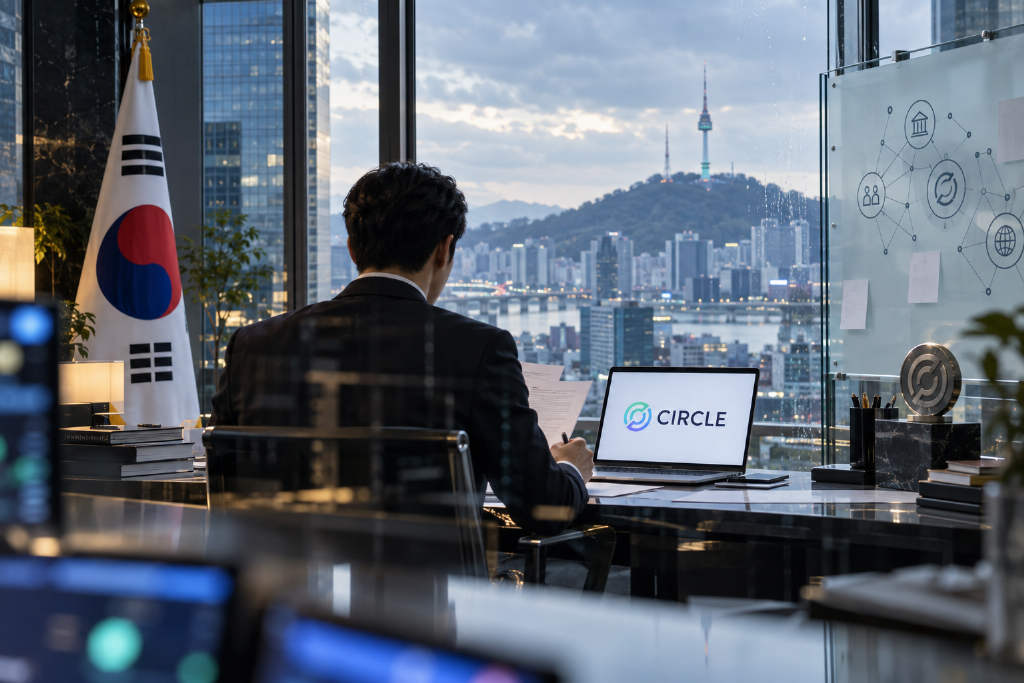
Stablecoin issuer Circle is recruiting a Senior Director, Ecosystem Growth, South Korea, according to a ChainCatcher report. The role is focused on building the company’s market-entry strategy in South Korea, tracking regulatory developments, and forming partnerships across the country’s financial and digital asset sectors. The job posting calls for candidates with more than 13 years of business development experience, along with familiarity with stablecoins, DeFi, and institutional liquidity flows. Korean and English fluency is also listed as a requirement. Circle has previously said its South Korea plan does not involve directly issuing a won-denominated stablecoin. Instead, the company said it aims to work with local KRW stablecoin issuers and provide infrastructure that connects them to U.S. dollar stablecoins.
Circle is hiring a Senior Director, Ecosystem Growth, South Korea, according to ChainCatcher.
The position will be responsible for shaping the company’s market-entry strategy, monitoring regulatory developments, and building partnerships with South Korea’s financial and digital asset industries.
The job requires more than 13 years of business development experience, familiarity with stablecoins, DeFi, and institutional liquidity flows, and fluency in both Korean and English.
Circle has previously said its South Korea strategy is not to directly issue a won-denominated stablecoin. Instead, it plans to work with local KRW stablecoin issuers and provide infrastructure linking them to U.S. dollar stablecoins.
This article was originally published by Bit.Fan. For more cryptocurrency news and market insights, visit www.bit.fan. Disclaimer:
The market information, project data, and third-party content displayed on this platform are for industry information sharing only and do not constitute any form of investment advice or return commitment.
Cryptocurrency trading carries high risks. Users should fully assess their risk tolerance and make independent decisions. All profits, losses, and legal responsibilities are borne by the users themselves.