
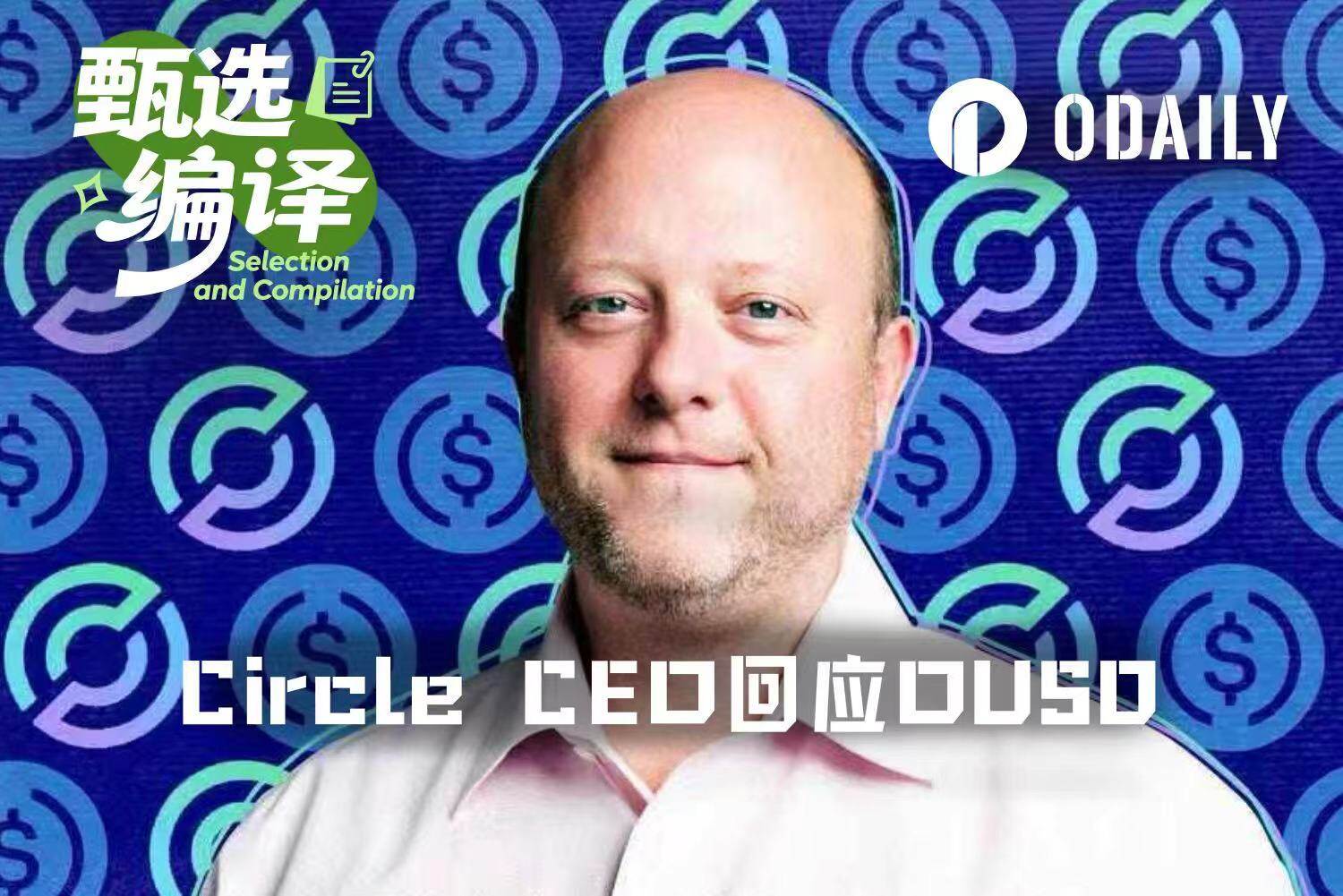
On June 30, Open Standard, a stablecoin initiative backed by 140 globally recognized companies, formally announced its plan to launch a new dollar-backed stablecoin, Open USD (OUSD), later this year. The move was widely interpreted by the market as a direct challenge to Circle and its flagship stablecoin USDC. Following the announcement, Circle (NYSE: CRCL) shares at one point fell more than 17%. On July 1, the stock partially rebounded and was briefly up 4% intraday, though it still closed down 1.09%. Against that backdrop, Circle founder and CEO Jeremy Allaire published a detailed response to address investor concerns over whether OUSD could undermine USDC’s position.
Allaire’s central argument was unambiguous: stablecoins should not be viewed as interchangeable issuance products. Instead, they function more like platform utilities, where scale, adoption, liquidity, and regulatory depth reinforce one another over time. In that framework, he argued, the market naturally trends toward a winner-take-all or at least winner-take-most structure. From Circle’s perspective, USDC’s moat is not a single feature or pricing decision, but a decade-long buildout of global digital dollar infrastructure.
Why Allaire believes stablecoins are platform markets
According to Allaire, a stablecoin network increasingly behaves like an internet public protocol combined with a software layer. The strength of such a network depends on how many developers, services, applications, institutions, and users are already connected to it. Every new integration increases utility for existing participants while making the network more attractive for the next wave of builders. That compounding loop creates stronger interoperability, more payment and settlement routes, deeper developer commitment, and ultimately more demand for the digital currency itself.
He pointed to the current USDC ecosystem as evidence that this dynamic is already operating at scale. Circle says that thousands of services are now integrated into the USDC network. In practical terms, that broad integration means each application gains value from the others, while end users benefit from existing compatibility, wider acceptance, and easier transferability across platforms and jurisdictions. Allaire emphasized that Circle has spent nearly 10 years constructing this ecosystem, and that the pace of adoption is now accelerating as more mainstream institutions connect their own customers and user bases to the network.
He also framed Circle’s software stack as an extension of USDC’s network effect. In particular, he cited CCTP and Gateway as examples of infrastructure designed to improve interoperability, security, and liquidity on a global basis. In his telling, these tools reduce the friction for developers who want immediate access to existing liquidity pools and a prebuilt distribution network. He added that this software stack is now moving into more environments, including additional blockchains, permissioned Layer 2 systems, and even networks being developed by governments.
Liquidity, in Circle’s view, is the hardest moat to replicate
Allaire described liquidity as the most foundational and least easily copied element in stablecoin competition. His phrase was simple: liquidity begets liquidity. For a stablecoin to achieve real scale and utility, it needs both primary-market and secondary-market depth. On the primary side, that means direct banking access and redemption infrastructure across major financial centers. On the secondary side, it means broad tradability and access for both retail and institutional participants across exchanges, DeFi venues, payment service providers, payment companies, and regional market infrastructure.
In other words, people who want to move value in and out of a digital dollar must be able to do so efficiently, reliably, and at scale. Allaire argued that Circle has spent nearly a decade building precisely that capability. Today, he said, USDC liquidity is deeply embedded across exchanges, DeFi protocols, payment providers, and regional rails. More importantly, this liquidity is not concentrated in one venue or one order book. Instead, it is distributed across many platforms and geographies, making USDC usable as a practical global settlement asset rather than a token with narrow venue-specific activity.

To support that claim, Allaire cited data from third-party blockchain analytics firm Artemis. According to the figures he referenced, in Q1 2026, USDC processed nearly $30 trillion in on-chain transaction volume, accounting for 80% of all blockchain-based dollar stablecoin transaction activity. USDT represented the remaining 20%, while all other dollar stablecoins combined accounted for effectively 0%, meaning less than 0.5% of volume. He further argued that although some newer or smaller stablecoins may show circulating supply growth, much of that supply is driven by promotional campaigns and incentive programs rather than durable real-world usage.
He contrasted USDC with smaller competitors by arguing that the nearest alternative dollar stablecoins are only about one-tenth the scale of USDC and often have liquidity clustered in a single exchange order book. By contrast, he said, USDC liquidity is distributed across dozens of venues. That distribution matters because it gives users, institutions, market makers, and developers greater confidence that they can enter, exit, settle, or rebalance positions without depending on one venue or one regional channel.
Regulatory integration is another major barrier to entry
Beyond network effects and liquidity, Allaire stressed that one of the market’s most underestimated barriers is regulatory integration. In his view, a stablecoin cannot become true global financial infrastructure simply by existing on-chain. It must also earn recognition, registration, approval, and operational legitimacy within real-world legal and banking systems. That requires a broad set of capabilities: licensing across jurisdictions, reserve management, treasury operations, banking partnerships, and liquidity management systems that can function on a near-24/7 basis across global markets.
As a concrete example, he stated that USDC is currently the only major global stablecoin available across all of Europe or Japan. Circle presents that footprint as the result of years of compliance work rather than a marketing claim. As more jurisdictions roll out formal stablecoin regulatory frameworks, Allaire believes this kind of legal and operational integration will matter even more. In practice, the issuer that reaches official recognition first in major markets is more likely to become the default choice for institutions, payment companies, fintechs, and enterprise partners.
He tied that point back to Circle’s broader strategic message: the outcome of years of work by Circle and its thousands of global partners is a digital dollar infrastructure that it views as the most trusted and most accessible in the market. That is the level on which Circle wants the market to evaluate USDC, not merely on fee schedules or token branding.
How Allaire pushed back on OUSD’s main selling points
Allaire directly addressed the argument that OUSD may offer a structurally better model than USDC. The first point he challenged was free minting and redemption. He acknowledged that some market participants believe stablecoins should not charge payment companies redemption fees. However, he argued that the broader payments industry has always depended on collecting small basis-point fees at different entry and exit points. More importantly, he warned that if a stablecoin promises unlimited free redemptions without having robust redemption infrastructure and deep liquidity behind it, then in stressed or highly competitive market conditions it may simply rely on better-capitalized and better-connected competitors as the exit rail.

His argument was not that low fees are impossible, but that blanket promises of free redemption can become unstable once they encounter real market structure. Circle, he said, addresses these issues through contractual arrangements rather than one-size-fits-all fee waivers. The implication is that sustainable economics and redemption reliability matter more than headline-friendly pricing.
The second point of contention was yield sharing. Allaire did not deny that the stablecoin market could become orders of magnitude larger than it is today. But he suggested that the better strategy is not to rely primarily on incentive distribution. Instead, Circle wants to keep bringing more partners into the USDC ecosystem, including exchanges, custodians, payment firms, and asset issuers. He described this approach with the phrase “Big tent mentality”, meaning a broad ecosystem model in which different participants can benefit from the growth of the shared network rather than compete for short-term incentive flows.
The third and most forcefully criticized theme was the idea of a consortium in which everyone has a voice. Allaire argued that consortium-led products have historically underperformed when it comes to scaling, product-market fit, and basic execution speed. Financial consortia may sometimes operate utilities, but they are often slow-moving, burdened by conflicting incentives, and structurally weak at sustaining innovation. Large groups of companies tend to coordinate poorly, move cautiously, and under-resource the joint vehicle because each member remains focused on its own interests.
He added that Circle itself experimented with a similar model in USDC’s early days. Even with a relatively small number of participants, he said, the arrangement produced numerous complexities and operational difficulties. In his view, smaller and more tightly aligned strategic collaborations, led by parties that can independently build and execute, usually outperform large consortium models. He also suggested that while companies may initially join alliances to signal openness and place their logos on a broad industry initiative, the final commercial choices are usually made by operating teams that prioritize what is best for customers. In many cases, that ends up meaning a partnership with the existing market leader.
What this means for Coinbase, Circle’s ecosystem, and OUSD itself
Debate around OUSD also triggered speculation about Circle’s relationship with Coinbase, given Coinbase’s central role in USDC distribution and adoption. Allaire responded directly by saying that Circle’s stablecoin partnership with Coinbase remains as strong as ever. He added that both companies continue to see significant opportunities to expand the USDC network. That statement was aimed at calming concerns that one of USDC’s most important commercial relationships could weaken as new industry alliances emerge.
At the same time, Allaire stopped short of framing OUSD as an existential enemy. He said Circle continues to support a wide range of products and infrastructure, even in areas where there may be some overlap or competition with partner offerings. He noted that Circle still works closely with many of OUSD’s founding members and expects those firms to remain important USDC partners and customers. That is consistent with Circle’s broader positioning as an infrastructure provider rather than only a single-token issuer.

He also pointed to Circle’s expanding platform stack, including Arc, CCTP, CPN, StableFX, and Agent Stack. As Circle diversifies beyond the core USDC product, it is also collaborating with dozens of other stablecoin issuers, helping them launch through Arc, use Circle’s interoperability infrastructure, gain wallet support, and participate in settlement and foreign exchange flows on CPN and StableFX. In that sense, Circle’s public response was not only defensive. It also served as a reminder that the company wants to sit at the infrastructure layer of the broader stablecoin economy.
That leads to the final takeaway from Allaire’s message. He is not arguing that no one else can issue a dollar stablecoin. Instead, he is arguing that issuance alone is no longer the key competitive question. The real contest is over who has the deepest application integrations, the broadest liquidity network, the strongest regulatory footprint, and the most durable operational rails. On that basis, he says USDC still holds a commanding lead. At the same time, Circle says it remains bullish on the overall growth of the stablecoin sector and welcomes OUSD as a new participant in the wider ecosystem.