
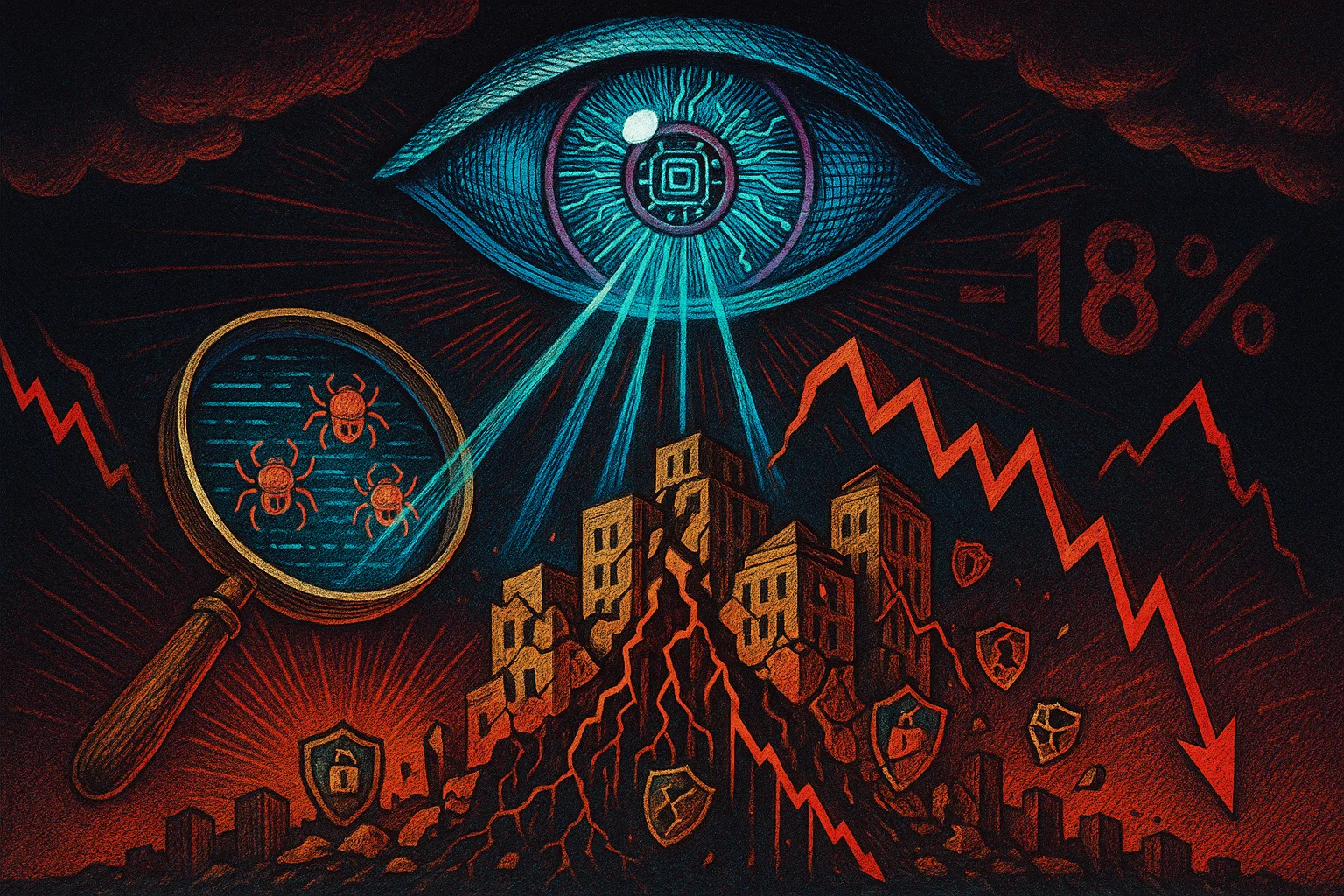
Anthropic launched Claude Code Security, an AI-driven vulnerability detection system, claiming it has uncovered over 500 high-severity zero-day vulnerabilities that eluded decades of expert review. The news sent cybersecurity stocks into a tailspin: CrowdStrike plummeted 18%, erasing roughly $20 billion in market cap; Palo Alto Networks and Fortinet each fell about 9%, while Cloudflare and Zscaler also dropped. Analyst Shrenik Kothari of Robert W. Baird described the sell-off as "panic-driven, narrative-led."
Claude Opus 4.6 Exposes 500+ Zero-Days, Stuns Industry
According to VentureBeat, Anthropic pointed its latest model, Claude Opus 4.6, at several production open-source codebases and discovered over 500 high-severity bugs that had survived decades of expert scrutiny and millions of hours of fuzz testing. Unlike traditional static analysis tools, Claude Code Security understands code context and traces data flows "like a skilled security researcher," catching vulnerabilities that pattern-matching tools miss. Notably, OpenAI released a benchmark for AI models in smart contract security on February 19, and Claude Opus 4.6 topped the rankings.
Cybersecurity Stocks Hit Hard: CrowdStrike Loses $20B
The launch of Claude Code Security triggered a broad sell-off in cybersecurity equities. CrowdStrike suffered the steepest drop, falling 18% and losing about $20 billion in market value. Palo Alto Networks (market cap ~$116B) slid roughly 9%, Fortinet also fell about 9%, and Cloudflare and Zscaler declined in sympathy. Analysts see AI upending the valuation logic of the traditional cybersecurity industry.
AI Reshaping the Cybersecurity Moat
The Kobeissi Letter noted that the market reaction reflects concerns about "AI replacing IT human capabilities." When AI can replicate the work of human security experts, pricing power shifts from vendors to buyers, threatening the moat of traditional cybersecurity firms. Wedbush analysts attributed the rout to "AI Ghost Trade fears," arguing that Anthropic's entry reinforces the perception that AI will fundamentally reshape the cybersecurity industry.
Claude Code Security still operates in a "human-in-the-loop" mode—AI flags issues and suggests fixes, but final decisions rest with developers. Yet the speed at which AI finds vulnerabilities is enough to shake industry valuations. If a model can accomplish in hours what human researchers couldn't in decades, the question looms: are the tens of billions in annual subscription fees from traditional vendors still justified?