
Former Federal Reserve economist Claudia Sahm has changed her policy preference from holding rates steady to supporting a rate hike ahead of the Fed’s September meeting, saying the debate now goes beyond whether the next CPI print runs hot or cool. In her view, upside inflation risks have been building since July.
Sahm said she can no longer be confident that Personal Consumption Expenditures, or PCE, inflation will fall back to 2% over the next year or two if the Fed does not tighten further. On that basis, she argued that the central bank could begin with a 25 basis point increase in September and deliver a total of 50 to 75 basis points of hikes by the end of the year.
Why Sahm moved from a hold to a hike
Sahm said the choice between a hike and no change is the question the Fed must answer at next week’s meeting, and officials are already split. In her account, that split is unlikely to be resolved by a single CPI report alone.
She said she recently revised what she sees as the appropriate policy stance because she is no longer sure that PCE inflation can return to 2% within the next one to two years without another increase in rates. She argued for a 25 basis point move in September, followed by a cumulative 50 to 75 basis points of tightening by year-end, to make sure inflation keeps moving lower in a timely and durable way.
That does not mean she sees current inflation data as having clearly deteriorated. She described recent readings as somewhat encouraging. What changed the balance, she said, was the combination of a Middle East conflict that has not eased, trade friction between the United States and Canada, and chip shortages linked to AI buildout.
Current data still allow a hold, but less comfortably
If policymakers focus only on current inflation readings, Sahm said the Fed can still justify leaving rates unchanged, though the case is no longer as strong as it was before.
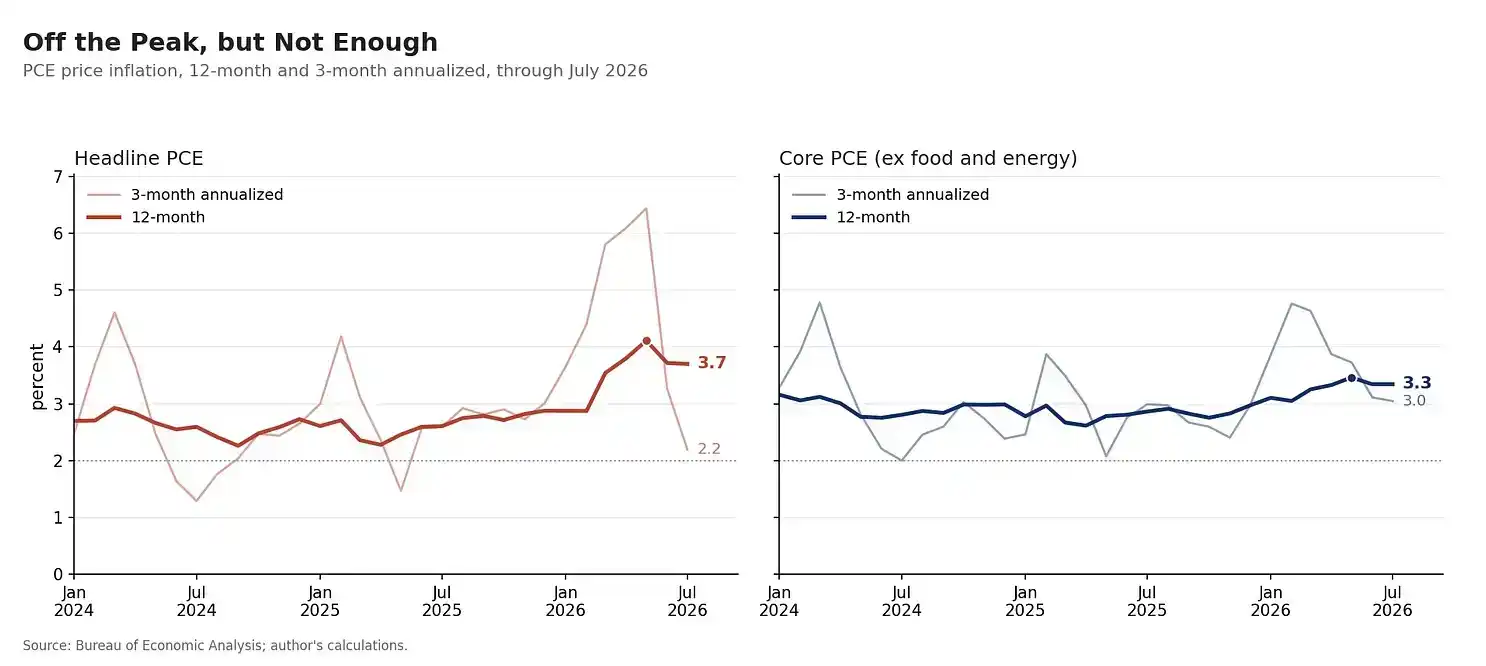
As of July, both headline and core PCE inflation had moved down from their highs earlier in the year, evidence that disinflation is still in place, but only gradually. Inflation over the past 12 months has eased slowly, and this week’s PPI and CPI releases will provide the main inputs for the August PCE reading. Markets broadly expect inflation to cool further, but Sahm said it remains far from the Fed’s 2% target.
She also urged caution in reading too much into the latest three-month trend. Over the past few years, PCE inflation has shown a seasonal pattern, running hotter at the start of the year and then moderating. Core PCE rose 0.2% month over month in July, which translates to roughly a 3% annualized pace. That was lower than in the first half, but still clearly above the 2% target.
In her framing, the recent data look more like a payback from the unusually hot start to the year, bringing inflation back to last year’s still-elevated pace, rather than proof that the underlying trend has materially improved.
Temporary shocks may be turning into more persistent ones
Sahm said the main reason she had previously been comfortable with a hold was the type of shock driving inflation.
She argued that last year’s tariff increases pushed up goods prices, but once the higher import costs were passed through to final prices, the incremental inflation effect would usually fade. She said energy supply disruptions in the Middle East can work in a similar way: prices jump quickly, then can fall back once the conflict ends, pulling inflation lower again.
These shocks often lift the price level once without necessarily creating lasting inflation. If the Fed responds with rate hikes, it risks weakening demand more than necessary to offset pressure that might fade on its own.
That logic fit the earlier data, she said, but the risk profile for the months ahead has changed.
Risk one: energy inflation spills into core prices
Sahm said higher energy prices alone are not enough to justify a hike. The policy problem begins if energy prices stay high long enough to pass through to non-energy goods and services.
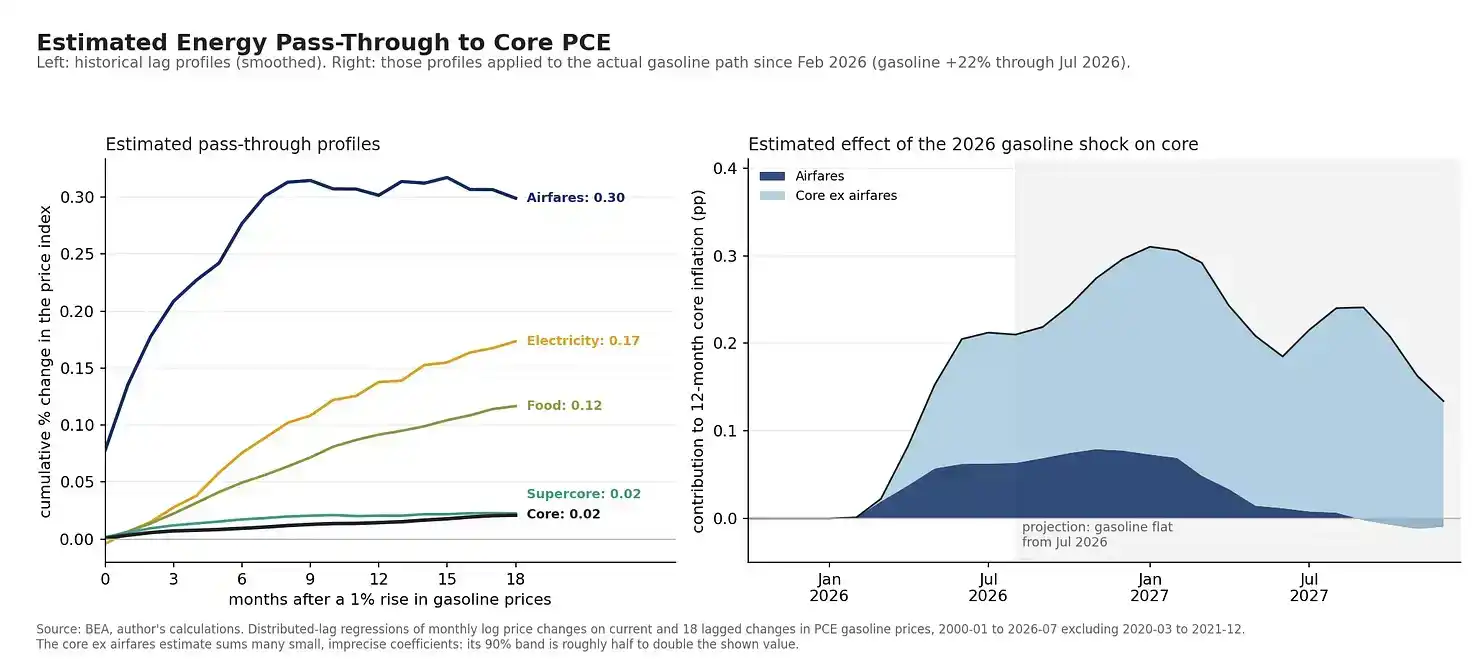
Based on historical patterns, she said airfare tends to rise quickly after energy prices move up, while other core prices respond more slowly and less strongly, with pass-through potentially peaking after a year or more. A 10% increase in gasoline prices, she said, adds about 0.2 percentage points to core inflation over the following year.
That effect may look small on its own, but the longer energy prices remain elevated, the larger the cumulative impact on inflation becomes. Sahm said it was reasonable at the start of the Middle East conflict to assume a quick resolution as the baseline. She now sees that assumption as harder to maintain. If gasoline prices stay near current levels, the effect on core inflation could stretch into next year.
She also highlighted diesel prices. Because diesel is a key input for transportation and logistics, higher diesel costs can spread across a broad range of goods and services. The lack of progress in restoring passage through the Strait of Hormuz, she said, leaves room for further upside pressure on core inflation.
Risk two: tariff increases may not be over
Minutes from the Fed’s July meeting showed that most officials believed the inflation effects of tariffs had largely peaked and would fade over time.
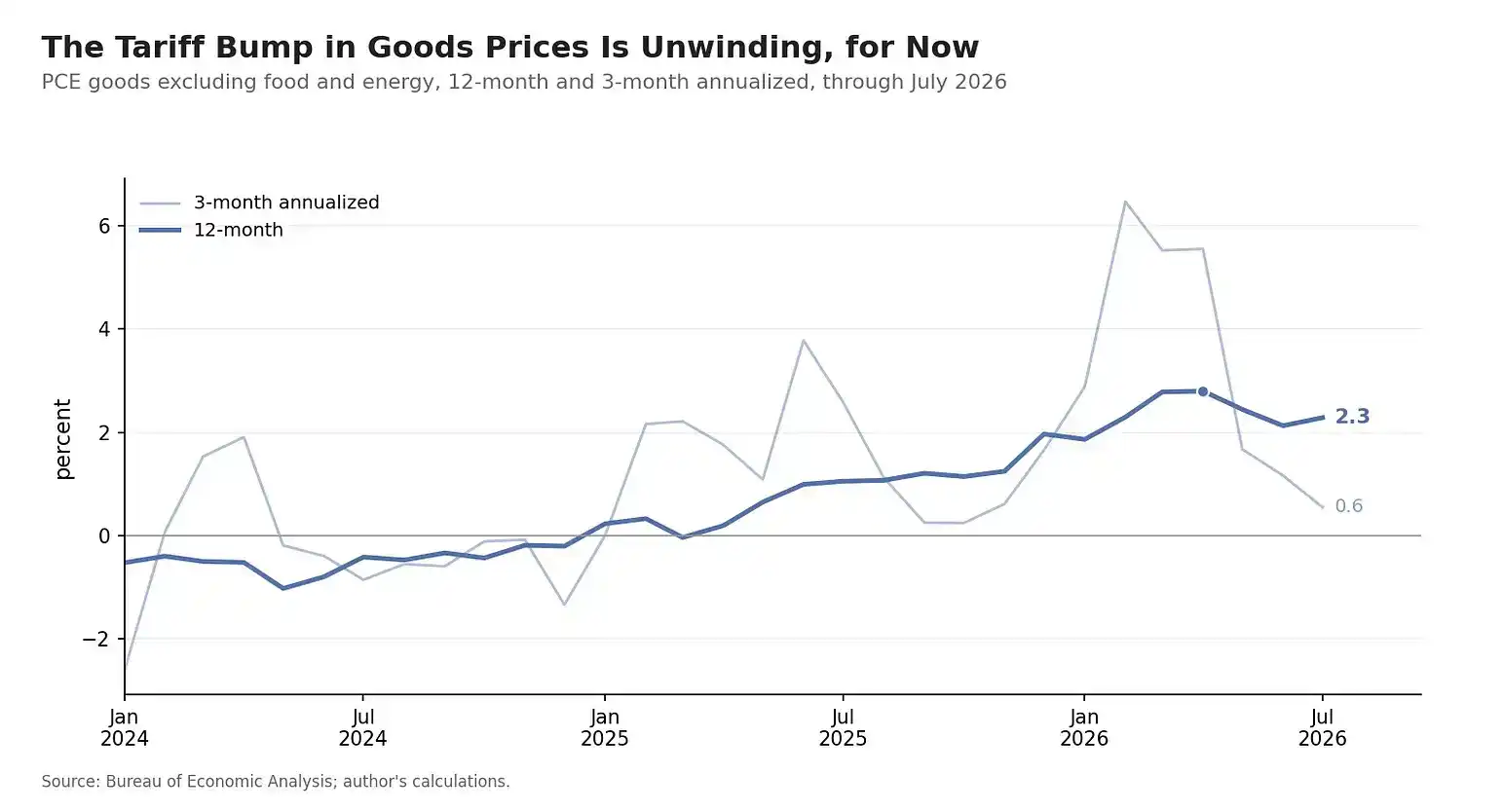
Sahm said the data have reflected that pattern. After tariffs took effect last year, the three-month annualized increase in core goods prices rose quickly, peaked earlier this year, and then cooled noticeably over the summer.
But she added that continued goods disinflation depends on tariff rates not rising again. At the moment, the volume of Canadian imports affected by an additional 50% US tariff is relatively limited. Even so, Canadian retaliation against US products could trigger another round of tariff increases from Washington.
More broadly, she said the dispute shows that the US government is still willing to use tariffs as a negotiating tool. Compared with the previous Fed meeting, that means the risk of tariffs pushing inflation higher again has increased.
Risk three: AI investment could add to inflation in the near term
Sahm also pointed to AI infrastructure spending as another source of inflation that may be underestimated. She cited Nvidia’s recent earnings as evidence that AI demand remains strong and said capital expenditure by large cloud service providers is expected to exceed $1 trillion next year.
Over a five- or ten-year horizon, she said AI-driven productivity gains could have a disinflationary effect. But over the next year, the horizon that matters more for monetary policy, she sees the effect as more likely to be inflationary.
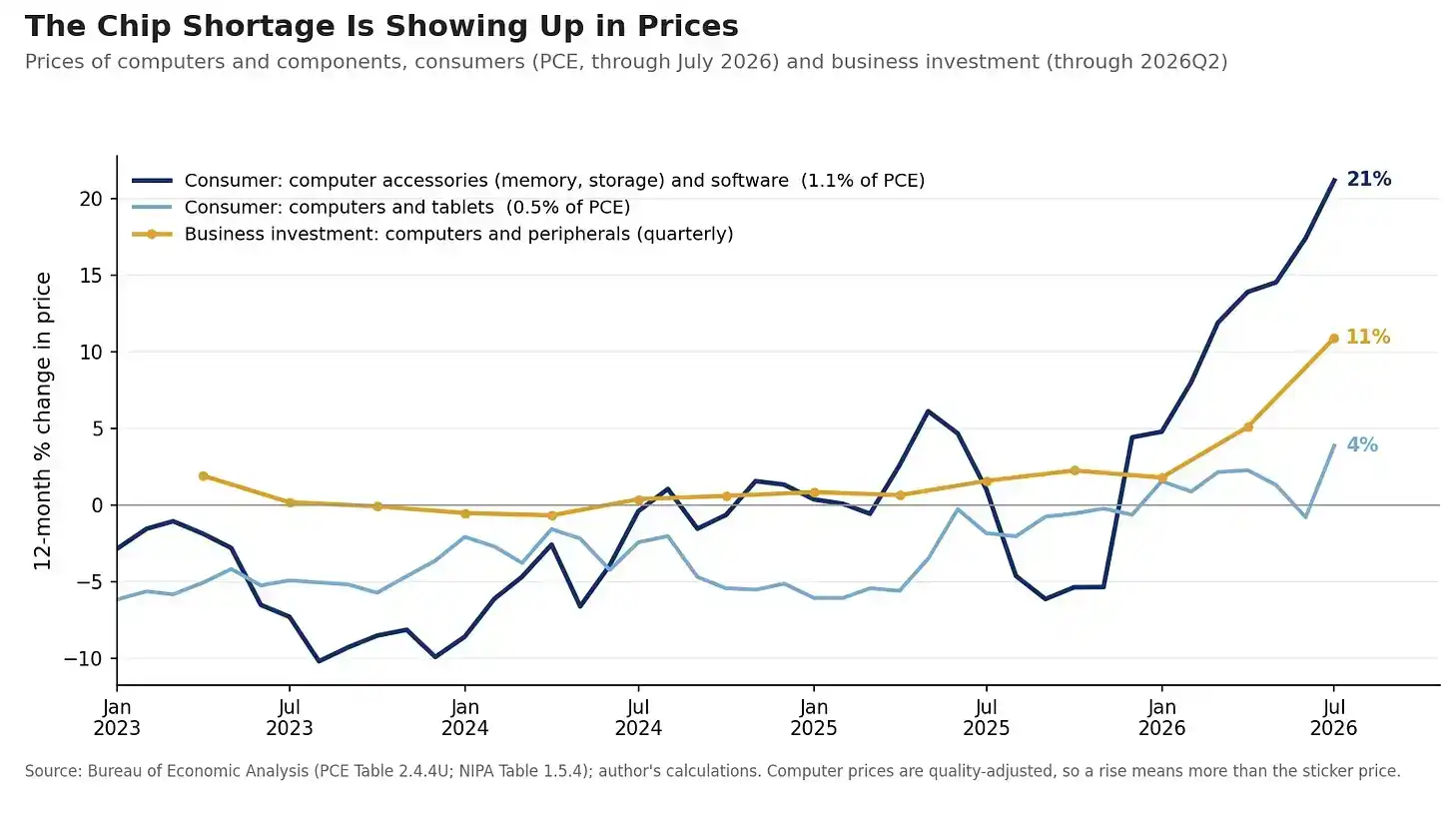
Price data for consumer and business investment categories already show rising memory chip prices, according to her assessment. The share of that spending in the overall economy may be limited, but it still adds to upside inflation risk.
She described AI-related price pressure as demand-driven. The Fed can sometimes look through energy and tariff shocks because those effects may fade. The same logic may not apply when the pressure comes from sustained investment demand behind memory chip shortages.
A rate hike as insurance against future inflation risk
Sahm said her baseline still assumes inflation will continue to cool. Even so, she sees meaningful upside risks across energy, goods, transportation, and technology investment.
From a risk-management standpoint, she argued, the Fed has reason to tighten policy further. Raising rates while inflation is easing may sound contradictory, but the objective is not only to get inflation to 2% eventually. It is also to make sure inflation keeps moving down in a credible way over the next year.
In her words, a modest rate increase now would amount to buying insurance against rising inflation risks.
She also acknowledged that holding rates steady remains a defensible option, especially if policymakers put more weight on current data than on forecasts and tail risks. If this week’s inflation reports improve materially, or if the risks she described begin to ease, she said she could shift back toward supporting no change. Monetary policy judgments, she added, should evolve with incoming information.
From expecting cuts to backing two hikes this year
Sahm said she has participated in the Shadow Open Market Committee-style forecasting summary organized by Duke University since 2024. In March this year, she still expected the Fed to cut rates before year-end. By June, she had moved to supporting a hold. Now, she believes two rate hikes may be needed this year and that the path for rates in coming years will likely be higher as well.
She added that this does not mean the Fed will necessarily raise rates. For officials who previously saw a hold as the better choice, she said, a majority in favor of a hike would require a similar change in thinking. For that reason, she described the decision as very close.
Markets need a clear explanation after the September meeting
Sahm said the September decision will be difficult whether the Fed hikes or holds. Current inflation data still support waiting, but the outlook has worsened because upside risks have increased. On that basis, she said a slight increase in the federal funds rate would be more appropriate.
Whatever the Fed decides, she said markets will need a clear explanation. It is not a problem if the outcome is uncertain before the Federal Open Market Committee meeting. What would be unacceptable, she argued, is for markets to leave the press conference still not knowing why the Fed made its choice.
If most officials still believe inflation will return to 2% quickly, Sahm said they need to explain where that confidence comes from. If they no longer believe that, then the Fed should act to rebuild credibility around inflation returning to target.