
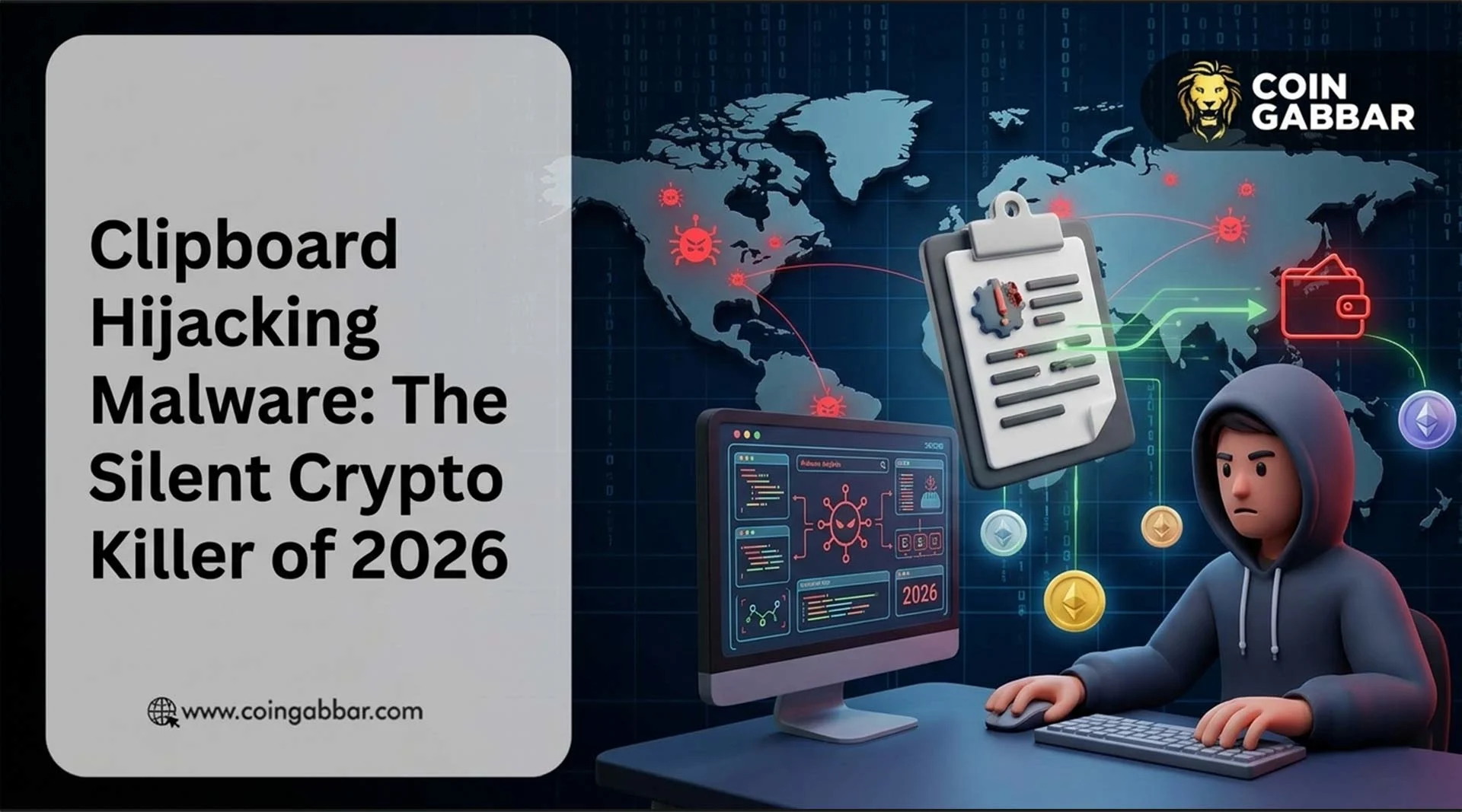
Clipboard hijacking malware is turning routine crypto transfers into a high-risk action. BitMart recently warned about a case in which a user lost $12,000 after malware silently replaced a copied wallet address with one controlled by an attacker. No password was stolen. No seed phrase was needed. The funds were sent because the destination address was altered before the transaction was confirmed.
A copied wallet address can be changed before the paste action is finished
This type of attack is commonly described as clipper malware. Its method is simple and highly effective. A user copies a long wallet address, planning to send funds to a friend or another account. The malware watches the clipboard in the background, detects that a crypto address has been copied, and swaps it for the attacker’s address. Since wallet strings are long and visually similar, many users miss the change and complete the transfer.
The source says these infections are often hidden inside fake games, cracked software, or suspicious links shared on Discord. Once installed, the malware can stay quiet for long periods. It waits for one moment only: the instant a wallet address is copied.
New variants in 2026 are appearing across Windows, Android, and Linux
According to the report, clipboard hijacking activity is rising in 2026, with variants such as Pro.exe clipper and ClipXDaemon showing up on Windows, Android, and Linux. These programs are described as lightweight and fast, able to inspect copied content every 200 milliseconds. That operating speed matters. The malware does not need account credentials to steal funds; it only needs the user to move quickly and skip a careful address check.
Broader loss data shows the scale of wallet-related threats. Chainalysis reported 158,000 incidents of personal wallet compromise in 2025, affecting at least 80,000 victims and causing $713 million in losses. A separate FBI-linked 2025 dataset recorded 181,565 crypto-related complaints and more than $11 billion in US crypto scam and investment losses. The article notes that clipper malware is not tracked as a separate category, leaving room for undercounted damage.
The strongest defense is a stricter transfer routine
The article lists several practical steps. Users are advised to verify the first six and last six characters of any pasted address, rather than trusting the clipboard. Hardware wallets such as Ledger and Trezor add another check because they display the destination address on a separate physical screen. For larger transfers, sending a small test transaction first can confirm that the address is correct before moving the full amount.
It also warns against downloading “free” pirated movies, cracked games, or other untrusted files, which are described as common delivery paths for clipper malware. That point is basic, but the infection path often starts there.
Real-time security tools are being promoted as an added layer
The source says security experts recommend antivirus products with real-time monitoring, so suspicious attempts to tamper with copied content can be blocked immediately. It references several kinds of 2026 security tools, including products known for clipper protection, second-opinion malware removal, and strong lab test scores, though it does not provide a full brand list.
BitMart also said it has teamed up with Malwarebytes to help users detect hidden trojans. A quick scan lasting about two minutes may uncover malicious programs that ordinary checks fail to catch. For anyone sending crypto regularly, the final address review before a transaction is signed remains the most important control.