

Coinbase CEO Brian Armstrong says the company made a mistake when it shifted attention to content coins and prioritized promotion of the crypto social app Zora before changing course earlier this year. Responding to criticism from X user smileyXBT, Armstrong wrote, “They didn’t work and we pivoted early this year. We messed up, time to turn the page.”
The exchange chief was replying to a post accusing Coinbase of “chasing the next meta instead of backing the people and culture already here.” Armstrong had previously argued that the company was trying to steer users toward positive-sum crypto use cases while preserving a business “moat” with its customer base that could help it withstand competition.
smileyXBT rejected that explanation. The user argued that Base, Coinbase’s blockchain network, spent the last year and more pushing Zora without building a meaningful user moat. The post also said Base gave more attention to ex-Coinbase projects than to the broader ecosystem and questioned whether the strategy was worth it.
Armstrong agrees on content coins, but not on community
The criticism went further than product strategy. smileyXBT said Base pushed creator coins tied to individuals with “shady track records” and claimed users were “smoked” by creator coins launched by Base founder Jesse Pollak and former Coinbase CTO Balaji Srinivasan. The user added that this “hurt users” and pointed to Coinbase’s later pivot toward AI agents.
Armstrong agreed with the broader assessment of content coins. He did not agree, however, that a move toward AI agents replaces community. According to Armstrong, Base is focused on trading, payments, and agents, in that order, and those three areas are “inextricably intertwined.”
A confusing token system around Coinbase, Base, and Zora
The report says the token structure connecting Coinbase, Base, and Zora in 2025 created extensive confusion. Zora and Base were presented as Instagram-style apps where posts and new accounts could launch tokens described as content coins and creator coins.
In July 2025, Zora was integrated into Base as Base tried to position itself as an “everything app.” Earlier that same year, Zora had already shifted away from the NFT minting services it had focused on since 2021 and turned to content coins instead. That change upset many NFT artists who had relied on the app for work.
One of the best-known episodes came when Base posted “base is for everyone” on the Zora app. That post automatically generated a content coin, which meant Base had, technically, launched an official token through Zora. Coinbase rejected that framing. It told Protos that Zora posts are “automatically tokenized,” then added, “Base did not launch a token, this is not an official Base token, and Base did not sell this token.”
Creator-coin backlash and the Tyson Fury incident
According to the report, most tokens launched by Pollak on the Base app lost much of their value over the following months. More controversy arrived in August 2025, when Zora promoted a fake Tyson Fury account and planned a collaboration with Sahil Arora, who was described in the report as an alleged serial rug-puller.

Screenshots published by crypto sleuth ZachXBT showed Pollak appearing willing to look past Arora’s history. In those messages, Pollak told Arora to drop the “bad guy positioning” and said he could not wait to see his “positive impact.” Executives believed Arora had onboarded Fury and promoted the account on X.
That was false. Arora had lied, and Fury was not involved. The incident led to new guidelines under which tokens that break community rules would be hidden rather than delisted.
Zora activity and token price both fell sharply
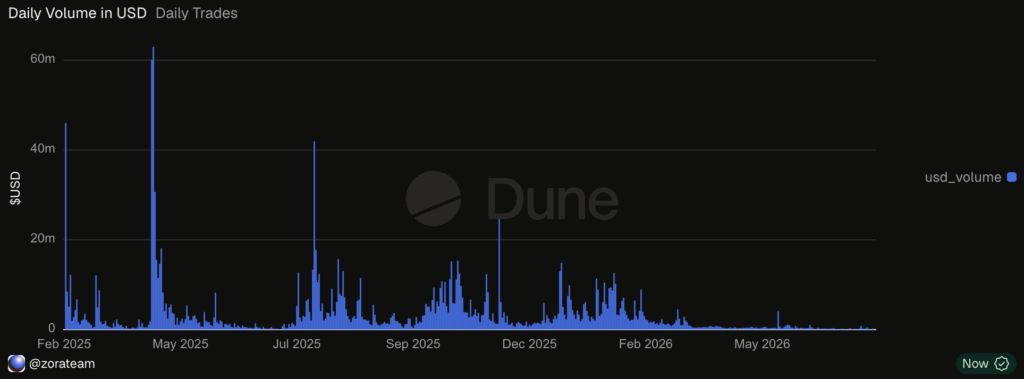
In the end, the project did not gain traction in the way Coinbase had hoped. Data compiled by Dune Analytics user @zorateam shows Zora’s daily volume has dropped below $100,000 in recent months.

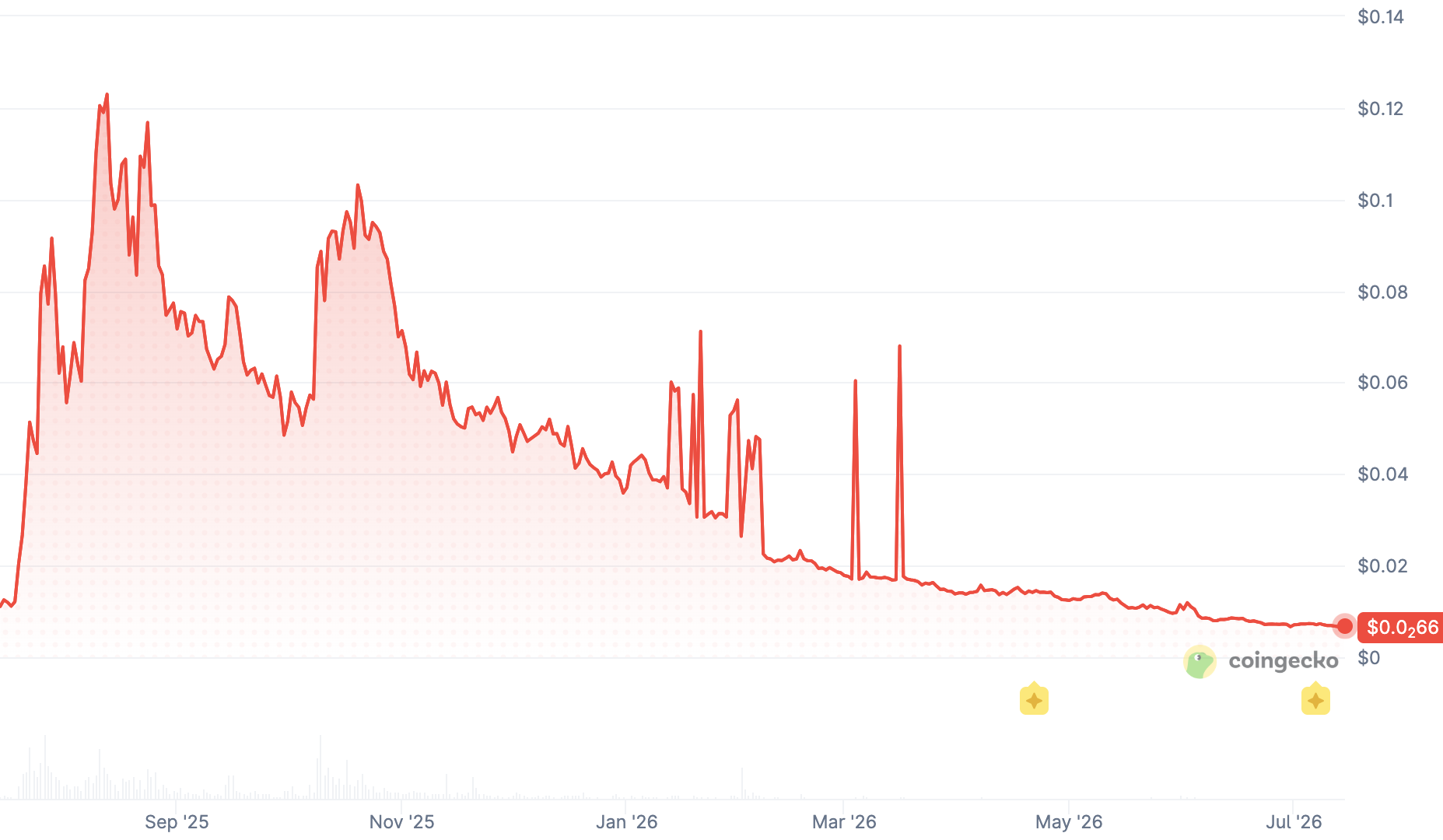
That is a steep change from May 2026, when daily volume almost reached $63 million. The report says that amounts to a 99.8% decline in daily volume. The Zora token is also down nearly 96% from its all-time high in August 2025.
Armstrong’s latest remarks put fresh attention on how Coinbase now describes the relationship between content coins, creator coins, and AI agents. On content coins themselves, though, his position was blunt: the experiment failed, and the company had already pivoted at the start of 2026.