
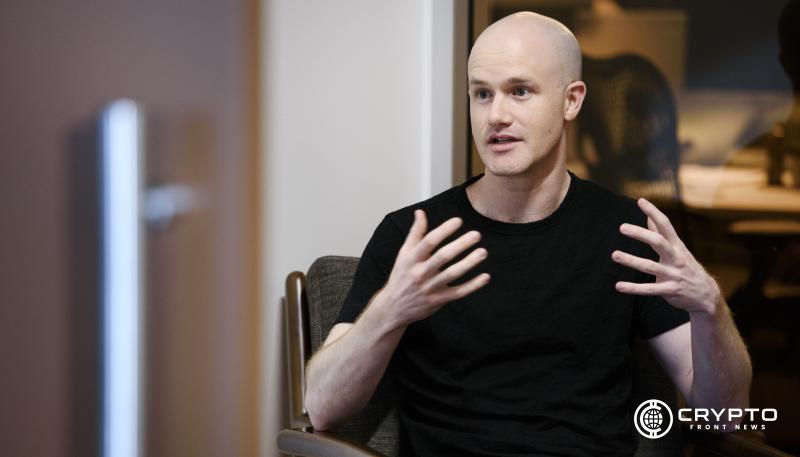
Coinbase CEO Brian Armstrong has publicly urged U.S. regulators to overhaul the accredited investor framework. In a series of posts on X, Armstrong argued that the current rules disproportionately favor wealthy individuals, locking retail investors out of high-growth private companies until after public listings, when most upside has already been captured.
Current Rules Lock Out Retail Investors
The accredited investor designation was originally designed to protect people from fraud and high-risk investments. Yet Armstrong said the outcome has increasingly tilted the playing field toward investors who already meet steep income and net-worth thresholds. Under SEC rules, an individual needs annual income above $200,000 or a net worth exceeding $1 million (excluding primary residence) to qualify.
Armstrong pointed out that companies today stay private much longer than in past decades. As a result, early investment rounds remain exclusive to accredited investors. Retail investors can only enter after an IPO, missing out on the bulk of value creation.
Two Alternative Proposals
To address the imbalance, Armstrong offered two possible paths. First, a financial literacy test that would let individuals qualify based on demonstrated knowledge rather than wealth. Second, eliminating the accredited investor requirement entirely while preserving disclosure obligations and fraud enforcement mechanisms.
The literacy-test idea echoes existing SEC changes from 2020, which introduced knowledge-based pathways for holders of certain professional licenses. Armstrong's proposal would extend that principle to ordinary investors without a financial credential.
Reactions and Broader Context
The post sparked immediate debate. Investor Mark Cuban questioned the proposal on social media, while Oculus founder Palmer Luckey endorsed criticism of wealth-based qualification. The conversation reflects growing pressure on regulators as tokenized assets and private market access gain traction across the financial industry.
Coinbase has been pushing for capital formation innovation on multiple fronts. The company expanded into stock trading in late 2025 and has advocated for broader participation in digital financial markets. Armstrong has also discussed on-chain fundraising models that could bypass traditional gatekeepers.
Meanwhile, several crypto platforms have launched derivative products tied to private companies like SpaceX, OpenAI, and Anthropic, offering retail investors indirect exposure outside the accredited investor framework. These moves have drawn both investor interest and regulatory scrutiny over disclosure and risk management.
Lawmakers and the SEC continue to weigh reforms. The debate is likely to intensify as tokenization, private markets, and digital finance further converge.