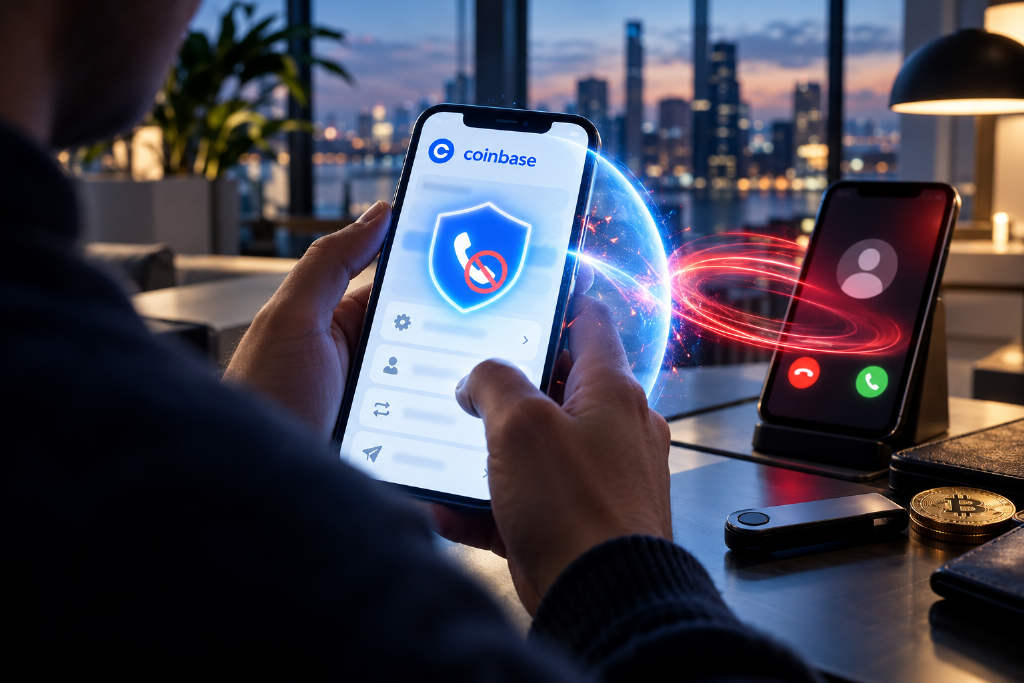
Coinbase is rolling out a major upgrade to its in-call protection feature, according to CEO Brian Armstrong, who disclosed the change in a post on X. The update is aimed at reducing harm from scam phone calls that try to walk users through sensitive account actions while they are on the line. Armstrong said scammers often attempt to direct victims to change settings, complete identity verification steps, convert assets, and send transfers during a call. Coinbase has now extended its existing in-call warning system to multiple high-risk areas of the app interface. Those warnings are designed to alert users when a phone conversation is not actually involving Coinbase, even if the caller suggests otherwise. The company framed the change as a user-protection measure focused on common social engineering tactics used against crypto holders.
Coinbase is making a major upgrade to its in-call protection feature to help shield users from scam phone calls, CEO Brian Armstrong said in a post on X.
Armstrong said scammers often try to guide victims through changing settings, completing identity verification, converting assets, and sending transfers while they are on a call.
Coinbase has expanded its existing in-call warning system to multiple high-risk parts of the app interface, so users receive alerts when Coinbase is not actually part of the conversation.
This article was originally published by Bit.Fan. For more cryptocurrency news and market insights, visit www.bit.fan. Disclaimer:
The market information, project data, and third-party content displayed on this platform are for industry information sharing only and do not constitute any form of investment advice or return commitment.
Cryptocurrency trading carries high risks. Users should fully assess their risk tolerance and make independent decisions. All profits, losses, and legal responsibilities are borne by the users themselves.