
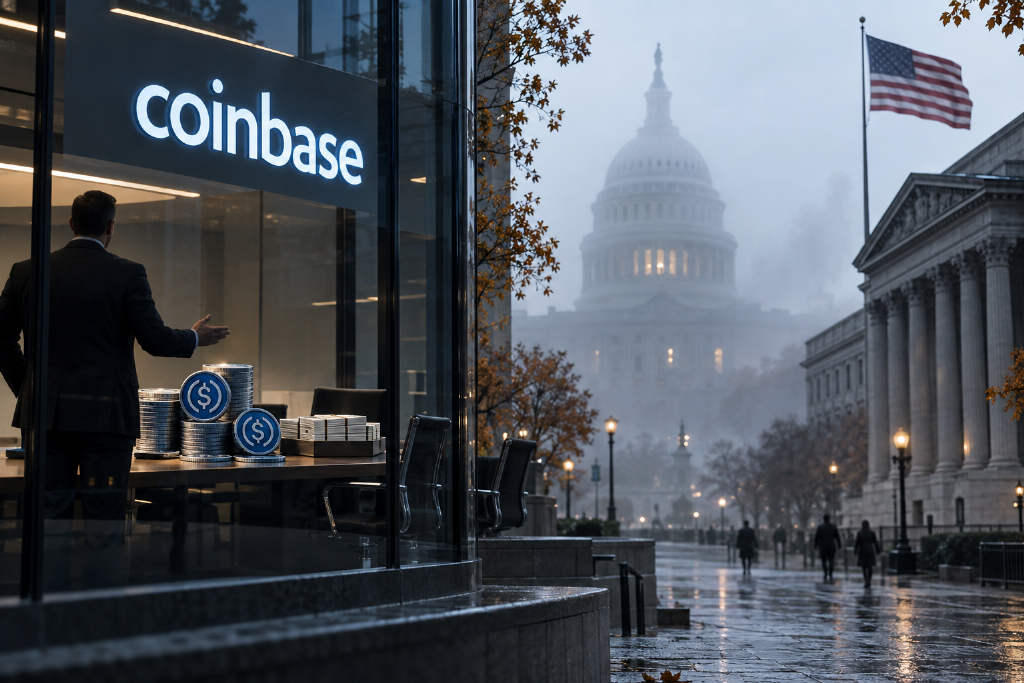
Coinbase CEO Brian Armstrong said in a recent appearance on the Money Rehab podcast that rewards paid to USDC holders on Coinbase are different from bank interest, and argued that crypto platforms should not automatically be subject to bank-style capital and liquidity requirements.
Armstrong draws a line between USDC rewards and bank interest
Armstrong said users who hold USDC on Coinbase receive "rewards," not interest. He said the underlying dollars are invested in short-term U.S. Treasuries with yields of about 3.5% to 4%, and part of that return is passed back to users. He compared the structure to a loyalty program.
By contrast, he said, bank interest comes from a fractional-reserve system in which banks lend out customer funds and take on the related risk. Armstrong said Coinbase intentionally uses the word "rewards" to make that distinction clear.
Bank capital and liquidity rules should not apply in the same way, he says
Responding to arguments that crypto platforms should face the same capital, liquidity, and Federal Deposit Insurance Corporation, or FDIC, insurance rules as banks, Armstrong said stablecoins under the GENIUS Act must be backed by 100% reserves. He said those funds are held in short-term U.S. Treasuries, which means there is no fractional-reserve risk and no basis for a traditional bank run.
He added that banks are tightly regulated because their business model carries higher risk, while the structure of stablecoins is fundamentally different.
Criticism of bank lobbying and comments on regulation
Armstrong also criticized some large banks, saying they are trying to limit competition through lobbying and that doing so harms consumers. At the same time, he said Coinbase is helping both community banks and large banks integrate stablecoin technology so that all sides can benefit.
The comments came as the Clarity Act has faced obstacles in the Senate. Armstrong said regulatory clarity for crypto in the United States will arrive eventually, whether through legislation or through rules issued by regulators.