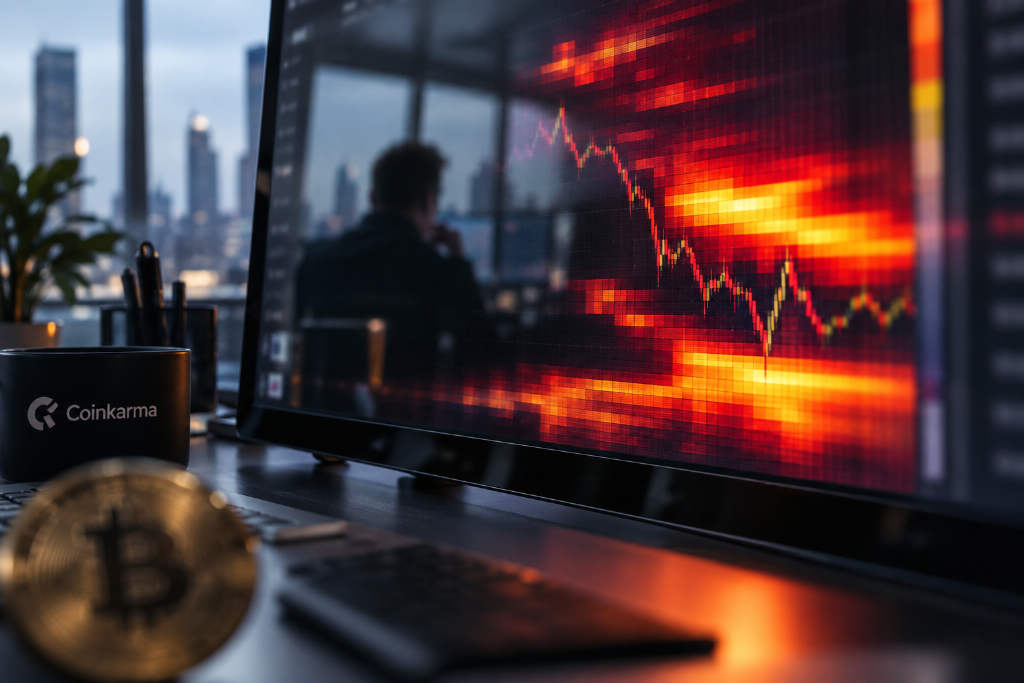
Coinkarma founder Benson Sun said liquidation heatmaps are being given too much weight in trading analysis, arguing that their usefulness is often overstated. According to him, the dense zones shown on these charts are generally inferred from historical trading data and assumed leverage levels, rather than reflecting the exact number of positions still waiting to be liquidated in the market.
Sun said those estimated liquidation areas can shift as traders add or reduce positions, post more margin, or see their average entry cost change. Because of that, the longer the time frame, the larger the potential deviation between the chart and actual market positioning.
In his view, liquidation heatmaps are better used as a short-term reference for market structure over the past 24 hours to three days. He added that they should not take up an outsized role in a trading system.
Coinkarma founder Benson Sun said liquidation heatmaps are overrated in trading analysis.
He said the dense areas on such charts are typically inferred from historical trading data and assumed leverage multiples, and do not necessarily represent the same amount of positions still waiting to be liquidated.
Sun said liquidation ranges can move as positions are added or reduced, margin is topped up, and average entry costs change. Over longer time frames, the margin of error becomes larger.
In his view, liquidation heatmaps are better suited as supporting information for short-term market structure over the past 24 hours to three days, and should not carry too much weight in a trading system.
This article was originally published by Bit.Fan. For more cryptocurrency news and market insights, visit www.bit.fan. Disclaimer:
The market information, project data, and third-party content displayed on this platform are for industry information sharing only and do not constitute any form of investment advice or return commitment.
Cryptocurrency trading carries high risks. Users should fully assess their risk tolerance and make independent decisions. All profits, losses, and legal responsibilities are borne by the users themselves.