
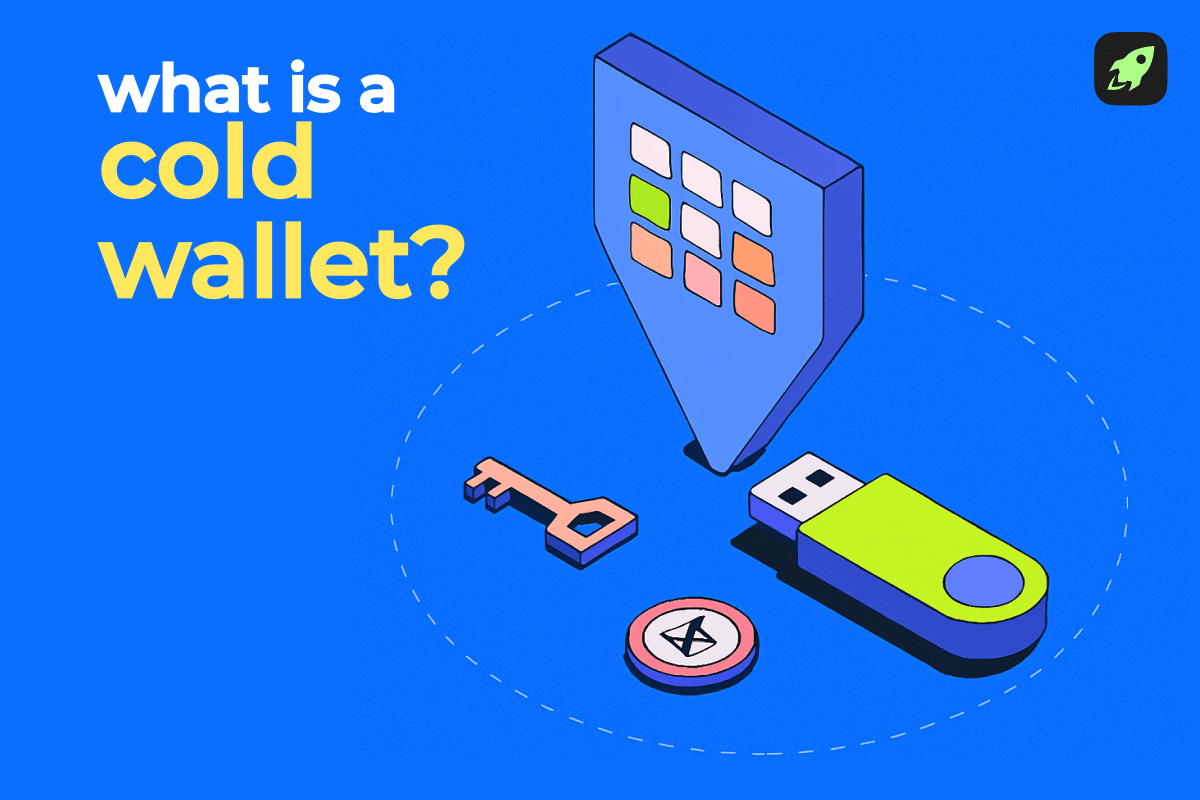
All your crypto sitting online—but is it safe? One hack or malware can drain everything in seconds. That's why savvy investors turn to cold wallets: they keep private keys completely offline, out of reach from attackers. Cold wallets come in many forms—hardware devices, paper sheets, air-gapped gadgets, even vaults—all trading hot wallet convenience for maximum security.
How Cold Wallets Work
A cold wallet generates and stores private keys inside a physical device that never touches the internet. When you want to send crypto, the device signs the transaction locally, and the signed data is broadcast via a connected phone or computer. Your keys never leave the device, eliminating remote attack vectors.
Major Cold Wallet Types Compared
Hardware wallets like Ledger Nano X/S Plus, Trezor Model T, KeepKey, and SafePal S1 are the most popular. Ledger uses a certified Secure Element chip and supports 5,500+ assets. Trezor Model T is fully open-source with a color touchscreen and SLIP-39 backup. KeepKey boasts a large OLED display and 7,000+ cryptocurrency support. SafePal S1 is fully air-gapped, using QR codes and a camera, with an EAL5+ rated chip that self-wipes if tampered.
Paper wallets are the simplest: print your public and private keys (often with QR codes) on paper. Zero cost, but easily lost, burned, or copied. Once gone, funds are gone forever.
Air-gapped wallets never connect to Wi-Fi, Bluetooth, or USB. They use QR codes or microSD cards to pass transaction data safely. Private keys stay offline while still allowing crypto transfers.
Deep cold storage involves locking a cold wallet in a safe, vault, or hidden location. Institutions use Hardware Security Modules (HSMs) to secure billions; individuals may place a hardware wallet in a fireproof safe or split backups across multiple sites.
Are Cold Wallets Really Safe?
Not perfectly. Losing your seed phrase, buying from a fake seller, or damaging the device can lock you out forever. But compared to hot wallets, cold wallets drastically reduce attack surface—no internet connection means no remote hacks. Exchanges store billions in crypto using cold storage. Your habits matter: buy from official sources, back up your seed phrase on paper or metal, and use a passphrase (25th word) for extra security.
Technical Foundations: Seed Phrases and Key Derivation
Every cold wallet starts with a 12- or 24-word seed phrase generated by BIP39 standard. This phrase encodes a master key, used to derive all child keys via BIP32/BIP44 (Hierarchical Deterministic wallet). One backup controls everything. Write it on paper or metal, or use SLIP-39 (Shamir Backup) to split into recoverable shares. Always test recovery with a small amount first.
Who Needs a Cold Wallet?
Long-term holders, large-balance investors, and security-conscious users. If you don't need daily trading, cold storage is ideal. For active traders, hot wallets offer better convenience.
Safety Checklist
Follow official setup instructions; write down the seed phrase manually and store it in a fireproof/waterproof location; buy devices directly from manufacturers; test with a small transfer first; keep firmware updated; consider two-factor authentication and split backups across locations.