


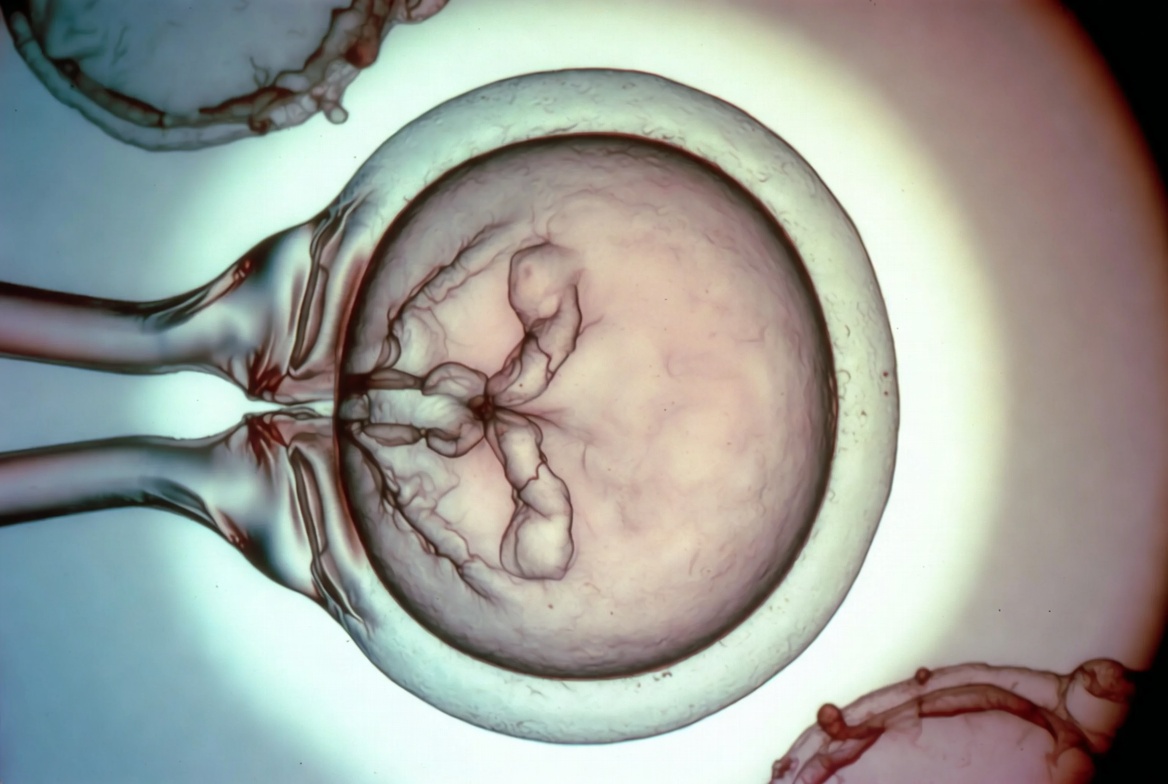
U.S. reproductive technology company Conception said it has generated the first batch of early human eggs from stem cells derived from human blood and assembled 3D mini-ovaries in the lab. According to the company’s latest scientific update, researchers observed the cells entering meiosis and forming early follicles, a key step for in vitro gametogenesis, or IVG, in humans.
Blood cells were reprogrammed into iPSCs and then organized in 3D
The process described by Conception starts with a blood draw. Blood cells are converted into induced pluripotent stem cells, or iPSCs, then guided into two lineages: primordial germ cells, which are meant to become eggs, and ovarian helper cells, which supply developmental signals. The two cell types are then combined so they self-organize into 3D cell spheres that the company calls mini-ovaries.
Conception said the goal is not to create a single egg cell in isolation, but to rebuild an environment that more closely resembles natural ovarian development. The company reported that these mini-ovaries contain millions of potential egg cells and formed nest-like structures similar to those seen in human ovaries, without relying on any natural human ovarian cells.
Three reported milestones in the update
The company highlighted three technical results. First, it said the mini-ovaries reproduced nest formation, with primordial germ cells surrounded by helper cells. Second, it reported that the cells had initiated meiosis, the chromosome-halving process required for egg development. Researchers said they observed chromosome pairing structures and activation of early egg genes, including genes linked to the zona pellucida.
The third result, which Conception described as a world first, was the generation of fully iPSC-derived early follicles. Under the microscope, each follicle was reported to contain one early egg wrapped by a single layer of helper cells. That suggests the cells have moved beyond a precursor state and begun organizing into a follicle-like structure.
Not ready for fertilization or clinical use
Conception also said the current cells are still early-stage eggs and cannot be used for fertilization. Its next target is to culture these follicles to the antral stage, the stage used for egg retrieval in current IVF practice. The company said it has already run successful tests on donated human ovarian tissue and plans deeper animal model studies to check the safety and quality of lab-grown eggs.
The broader aim is to replace hormone stimulation and invasive egg retrieval with a process that could begin from a simple blood sample. For now, the work remains at a research stage, and the company’s own update makes clear that more validation is required before any clinical reproductive use.