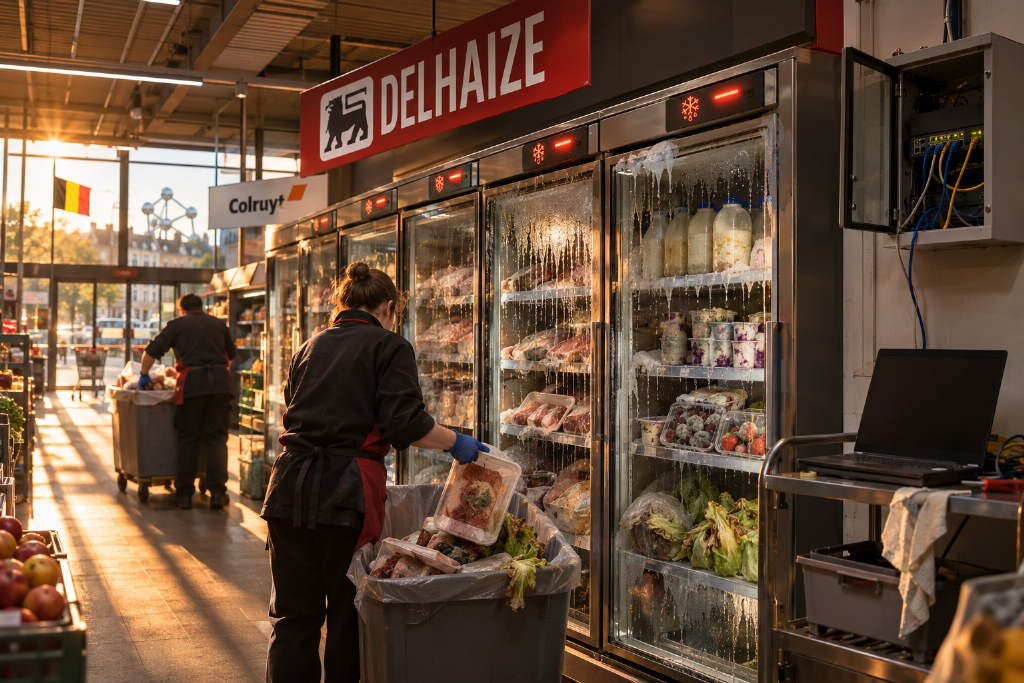
Connected refrigeration systems at supermarkets across several European countries were reportedly targeted in a new cyberattack, with stores in Belgium, Ireland, Luxembourg and Sweden seeing temperatures rise and food spoil. According to the report cited by Techub News, dozens of locations were affected.
Retail groups Ahold Delhaize and Colruyt confirmed they had been hacked. A Belgian company operating Delhaize systems said the attackers changed device settings to defrost mode, which led to large volumes of food being thrown away.
The incident follows a similar attack reported in France in October 2026 involving equipment made by Danish connected-fridge manufacturer Danfoss. Cybersecurity firm Claroty had also warned in August 2026 that the devices carried remote attack risks. The original report was attributed to TechCrunch.
Connected supermarket fridges in several European countries were reportedly hit by a new cyberattack, according to Techub News. Dozens of stores in Belgium, Ireland, Luxembourg and Sweden saw refrigeration equipment warm up, leading to spoiled food.
Supermarket groups Ahold Delhaize and Colruyt confirmed they had been hacked. A Belgian company that operates Delhaize systems said the attackers switched device settings to defrost mode, causing large amounts of food to be discarded.
A similar incident had already been reported in France
The report said a comparable attack took place in France in October 2026 and involved equipment made by Danish connected-fridge manufacturer Danfoss.
Security company Claroty had warned in August 2026 that the devices were exposed to remote attack risks. The report cited by Techub News was attributed to TechCrunch.
This article was originally published by Bit.Fan. For more cryptocurrency news and market insights, visit www.bit.fan. Disclaimer:
The market information, project data, and third-party content displayed on this platform are for industry information sharing only and do not constitute any form of investment advice or return commitment.
Cryptocurrency trading carries high risks. Users should fully assess their risk tolerance and make independent decisions. All profits, losses, and legal responsibilities are borne by the users themselves.