
North America’s 2026 hiring market is pushing laid-off senior engineers and fresh PhD graduates into the same narrow lane. A MarsBit article, citing reporting by The Wall Street Journal and a public write-up by Cornell computer science PhD Jinyan Su, says elite academic credentials, top research output, and brand-name internships no longer translate into stable full-time work on their own.
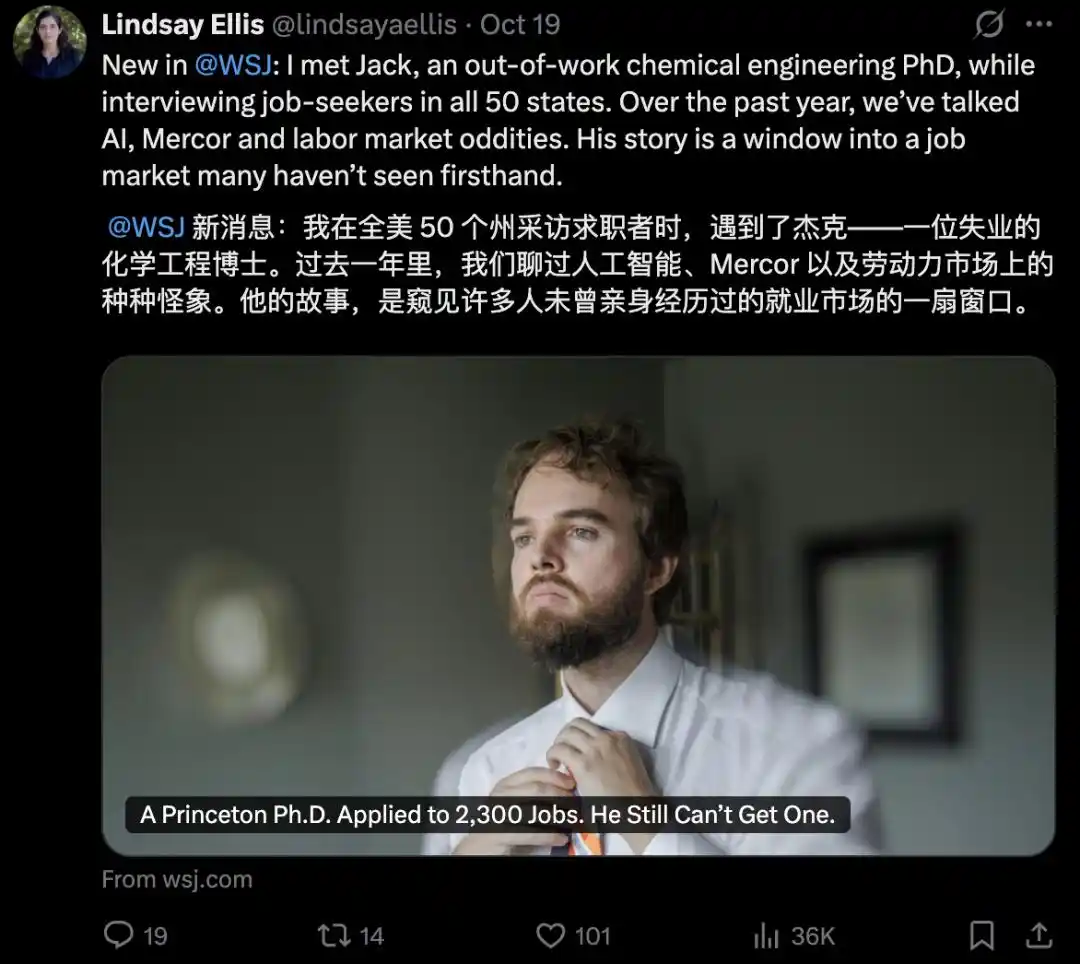
A Princeton PhD sent out more than 2,300 applications and still did not land stable full-time work
The report first points to a case covered by Wall Street Journal reporter Lindsay Ellis on Oct. 17. The subject, Jack Weis, earned a PhD in chemical engineering from Princeton University in 2024.
In 2022, he was a co-author on a paper published in PNAS that used machine learning to simulate how water freezes, at a scale involving hundreds of thousands of atoms. In 2024, that paper appeared as reference No. 39 in the official scientific background document for the Nobel Prize in Physics, in materials tied to Geoffrey Hinton’s award. The MarsBit piece notes that Weis was not a Nobel laureate and not the sole first author, but says the citation by the Nobel committee shows the work was taken seriously.
The outcome in the job market looked very different. Since 2024, Weis has submitted more than 2,300 job applications and still has not secured stable full-time employment.
According to the report, he applied for pharmaceutical R&D roles and postdoctoral positions at national laboratories, often without hearing back. He also applied for software and consulting jobs with similar results. As the search widened, he even applied to a company selling frozen crab cakes and still did not get the job.
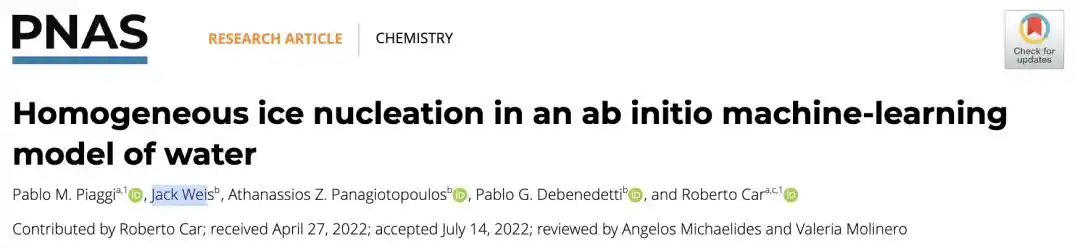
Over two years of applications, most of his submissions disappeared into silence, while some brought only automated rejection emails. The article frames the hardest part this way: failure is painful, but not knowing why you failed can be worse.
A short-lived AI-related contract ended with a dismissal message in mid-March
Without stable work, Weis finally found paid work in January this year. A startup hired him at $70 an hour to write chemistry questions and score answers generated by AI systems.
At first, the work ran about 20 hours a week. Later it dropped to four hours a week. After that, entire weeks passed with no work at all. In mid-March, he learned through a group chat message that he had been let go.
The article places that episode in a broader frame: the Nobel committee saw in his research evidence that AI could change science, yet the AI industry, at least so far, bought only a few months of hourly answer-grading work from him.
He later moved back to Salt Lake City, Utah, and into his parents’ basement. The report says he has not fully given up. He is preparing for the LSAT, considering a move into law, and also thinking about a startup idea involving drones to remove invasive weeds.

Cornell PhD Jinyan Su calls the process “toxic reinforcement learning”
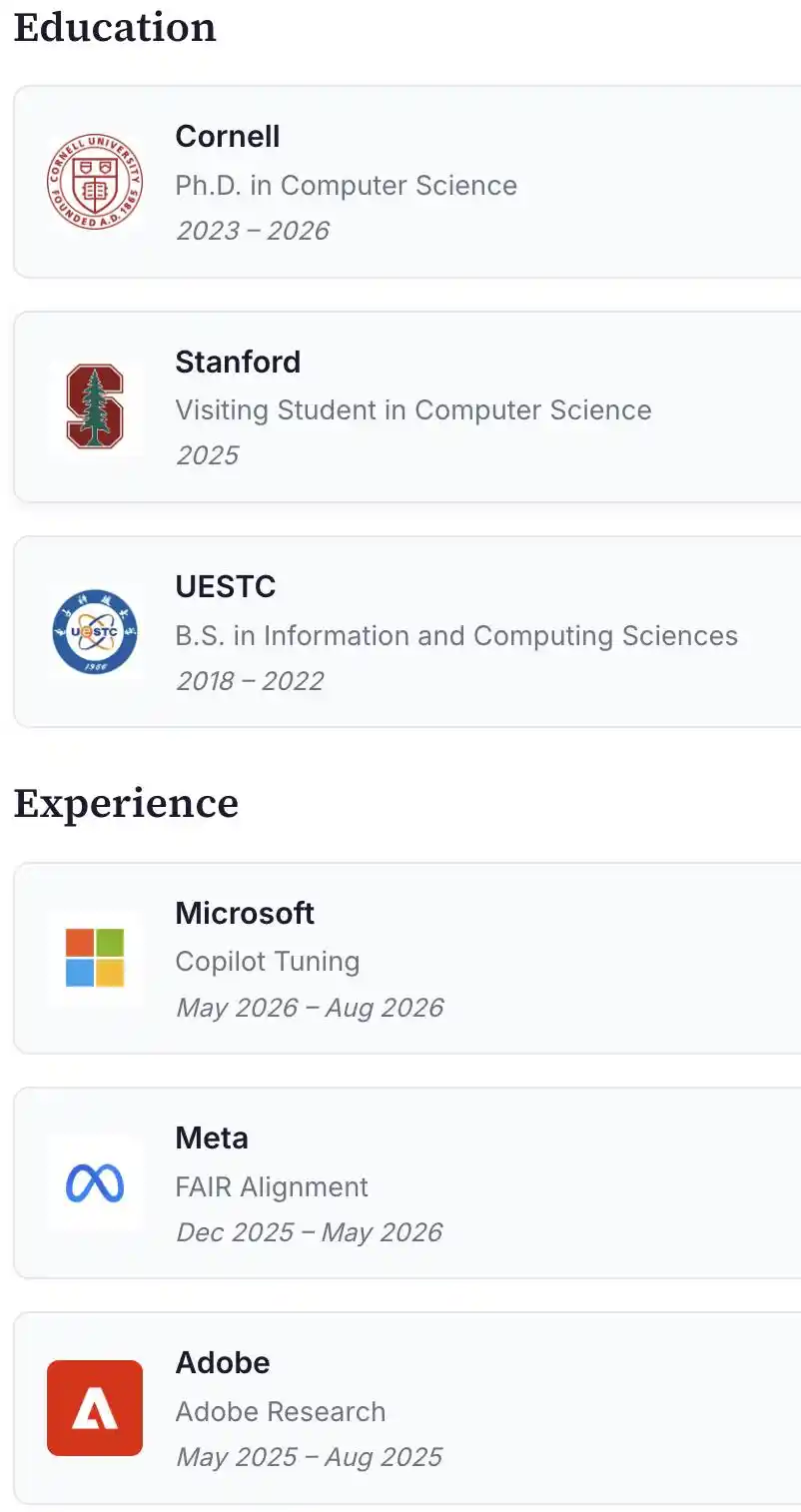
The second case centers on Jinyan Su. The article says she completed her undergraduate studies at the University of Electronic Science and Technology of China, spent time as a visiting scholar in Stanford University’s computer science department in 2025, and received a PhD in computer science from Cornell University in 2026.
Her research areas include reinforcement learning environment design, large language model post-training, and model safety and alignment. Her internship record includes Adobe Research, Meta FAIR, and Microsoft Copilot.
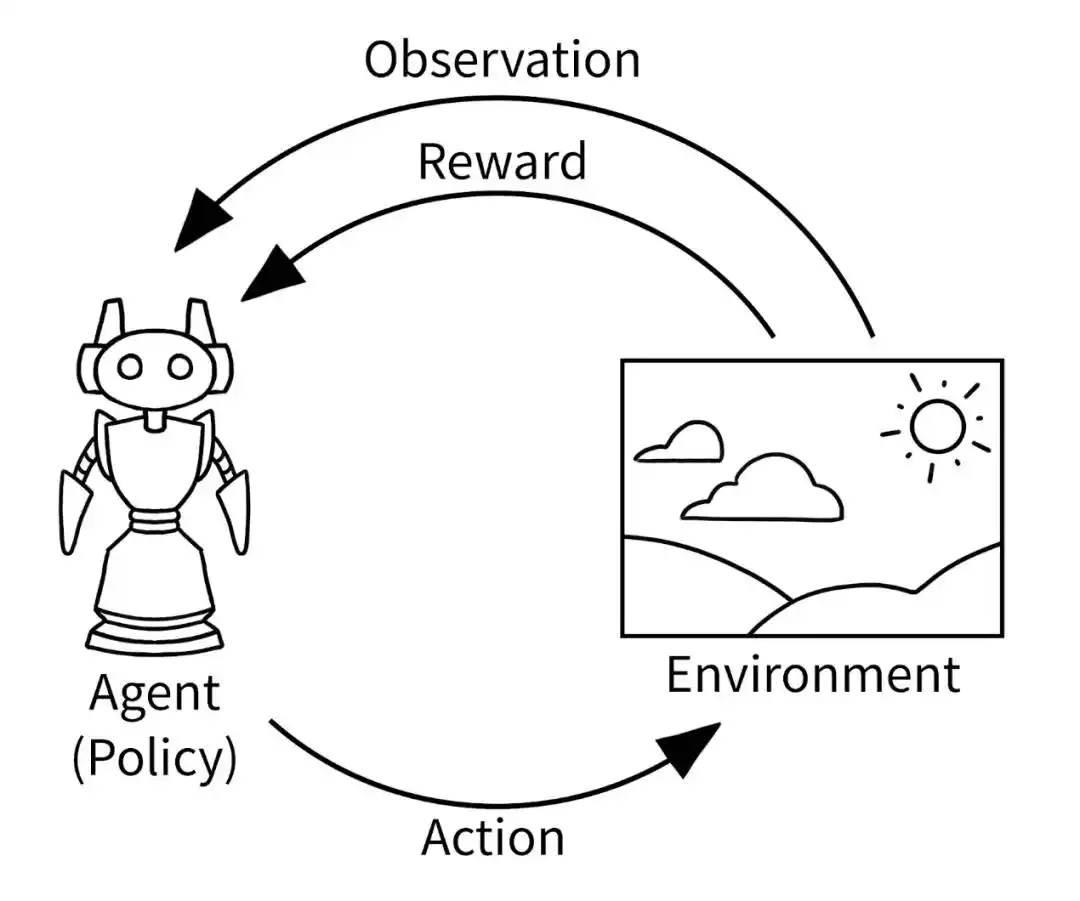
Even with that background, she described her 2026 job search as deeply punishing. In her own public account, the process was not a clean merit-based selection system. She called it a “highly noisy reinforcement learning” environment.
The comparison comes directly from her field. In reinforcement learning, an agent takes an action and the environment returns a reward or a penalty, allowing the agent to update its strategy. In her telling, the real hiring market is not only a black box. It is a toxic one.
Problem one: almost no feedback
She wrote that candidates can send out large numbers of resumes and hear nothing back, with no way to tell what went wrong. A 45-minute phone screen can seem to go smoothly, only to be followed by a cold rejection the next day. Was the algorithm answer not optimal enough? Did the system design answer miss the interviewer’s preference? Did the company freeze headcount the day before? In many cases, applicants are not told.

That leaves people trying to optimize in the dark.
Problem two: too much noise
She also said interviews can be heavily shaped by subjectivity. In her account, some interviewers were visibly distracted during video calls. In another case, she said an interviewer gave her a low score after suspecting, without basis, that she was cheating because she coded too quickly and her thinking process was too smooth.
As she described it, outcomes are not determined by skill alone. Interviewer mood and other random factors can carry real weight. After enough rejections, candidates can start doubting their intelligence and even the value of the previous five years spent in a PhD program.
Her central argument: while people interview, agents are already at work
In her post, Su described a crowded pool made up of several groups at once: highly competitive new PhDs, L6 and L7 engineers recently laid off by major tech companies, and experienced workers who had been waiting for the right time to switch jobs.

But she argues that layoffs and the economic cycle do not fully explain the severity of the competition. Her main claim is that agent capabilities broke out in early 2026, and that agents have already entered offices at scale to write code, fix bugs, and handle internal business tasks. In her view, that shift may have triggered a quieter but damaging employment shock.
Under the older setup, one core project might need two senior architects, at the L6 or L7 level, managing 10 junior and mid-level engineers, including newly graduated PhDs and master’s students. Under the newer setup described in the article, a company may keep the two senior architects and pair them with a strong cluster of agents, while cutting a large share of the headcount allocated to junior and mid-level engineers.
As the pool of openings shrinks, senior engineers who once held relatively secure seats inside large companies are pushed out and begin competing downward. The result is a harsher food chain: laid-off veterans and newly graduated PhDs are forced to fight over the same small number of remaining roles.
The hiring yardstick has changed from papers to delivery
The article says one reason the halo around elite PhDs has faded is that AI companies are using a different yardstick now.
During the industry’s hotter years, the key metric was papers. Companies were buying potential, and they were also buying the public-relations value of having a dense concentration of top-conference researchers on staff. By 2026, that standard had shifted. The new measure is delivery: turning technology into products that can be shipped and monetized at lower cost.
That change exposes a weakness for many new PhDs. The article says doctoral training often rewards deep work in a very narrow area. Researchers may spend months chasing a 2% gain in accuracy. Their code may only need to run well enough for experiments, even if the underlying logic would be hard to maintain in production.
By contrast, laid-off L6 and L7 engineers from large companies already know how to clean up messy systems, locate production failures quickly, and restore services under pressure. In an environment that values speed, stability, and execution, new PhDs without full-time engineering experience are at a clear disadvantage.
The article sums up that position bluntly: without industry experience, even a Cornell PhD can look exposed in the eyes of an interviewer.
Su’s three rules for surviving the market
After repeated setbacks, Su laid out three practical rules. All three start from the same premise: in a market where headcount changes quickly and competition keeps rising, candidates need to move faster and choose their targets more carefully.
1. Do not wait too long
She says highly educated candidates often fall into perfectionism, wanting to feel fully prepared before applying or interviewing. In the 2026 market, she argues, that is a mistake. Headcount is fluid. A role that is open today may be gone tomorrow. Her advice is to get into the process early and use real interviews to review and adjust.
2. Do not spray applications everywhere
She does not recommend spending energy on companies a candidate does not truly want to join or on jobs with very low pay. Even if those applications produce interviews, they can drain time and attention that would be better spent on preferred employers. Her suggestion is to list the companies you genuinely want, study their products and job descriptions, and pursue referrals where possible.
3. Be careful with startup risk
She gives a separate warning on startups, especially for new graduates. The article says many companies are pitching candidates with “AGI is near” narratives, low base pay, and stock options. For international students, she says, the visa issue is critical. H1B support can become a direct point of failure if a startup lacks mature legal and HR processes.
There is also business risk. In the environment she describes, capital is losing patience, and companies without cash flow can fail quickly. If that happens, the options may be worth little while rent is still due next month. For that reason, she suggests that a first job should, where possible, be at a more established company that can offer engineering discipline, steadier cash flow, and more reliable visa support.
Sources and attribution listed in the article
The article lists Jinyan Su’s post on X and a related Yahoo Finance link among its references. The original piece was credited to the WeChat public account “新智元,” with “ASI启示录” named as the author, and was published by MarsBit.