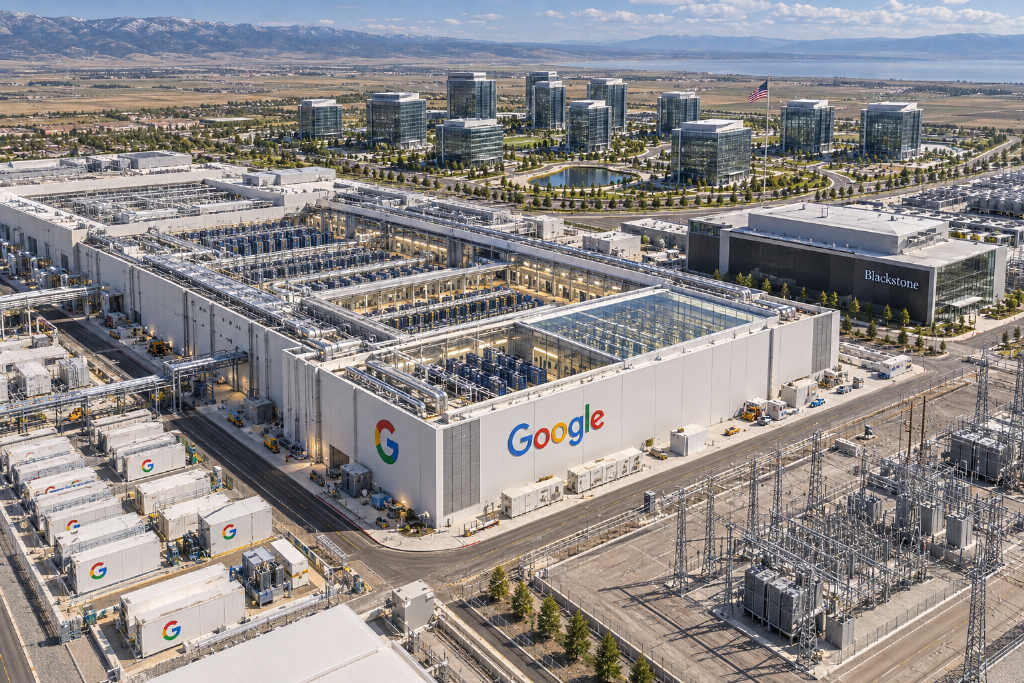
A consortium of 10 banks has extended a $22 billion chip-backed loan to Crux AI, according to Dealroom.co, citing Bloomberg News. The financing will be used to purchase custom Tensor Processing Units, or TPUs, from Google. Crux AI is the artificial intelligence cloud joint venture announced in May by Blackstone and Alphabet, and the project officially launched last week. In addition to the debt package, Crux AI has already received a $5 billion equity investment from Blackstone. Google is supplying the TPUs, along with software and services tied to the buildout. The project is targeting its first 500 megawatts of capacity in 2027. Named lenders in the banking group include Goldman Sachs, Sumitomo Mitsui Banking Corporation, Barclays, BNP Paribas, and Scotiabank. The report outlines both the scale of the financing and the structure behind one of the larger AI infrastructure buildouts now moving ahead.
A consortium of 10 banks has provided Crux AI with a $22 billion chip-backed loan, according to Dealroom.co, citing Bloomberg News.
Crux AI is the AI cloud joint venture announced in May by Blackstone and Alphabet. The venture officially launched last week. The loan will be used to buy custom TPUs from Google.
Financing and project structure
Crux AI has also received a $5 billion equity investment from Blackstone. Google is supplying the TPUs, software, and services for the project.
The venture plans to bring its first 500 megawatts of capacity online in 2027.
Named lenders
The report identified Goldman Sachs, Sumitomo Mitsui Banking Corporation, Barclays, BNP Paribas, and Scotiabank among the lenders in the financing group.
This article was originally published by Bit.Fan. For more cryptocurrency news and market insights, visit www.bit.fan. Disclaimer:
The market information, project data, and third-party content displayed on this platform are for industry information sharing only and do not constitute any form of investment advice or return commitment.
Cryptocurrency trading carries high risks. Users should fully assess their risk tolerance and make independent decisions. All profits, losses, and legal responsibilities are borne by the users themselves.