

According to Coinglass, the Coinbase Bitcoin Premium Index has remained in negative territory for 46 consecutive days from May 19 to July 3, setting a new record for the longest continuous stretch below zero. The previous record was 40 consecutive negative days between January 16 and February 24 this year, already longer than the roughly 30-day negative streak seen during last year’s “10/11 crash.” At the same time, BTC and ETH briefly lost key levels at $58,000 and $1,600 respectively, reinforcing concerns that the market is still firmly in a bear phase and that the timing of a definitive bottom remains uncertain.
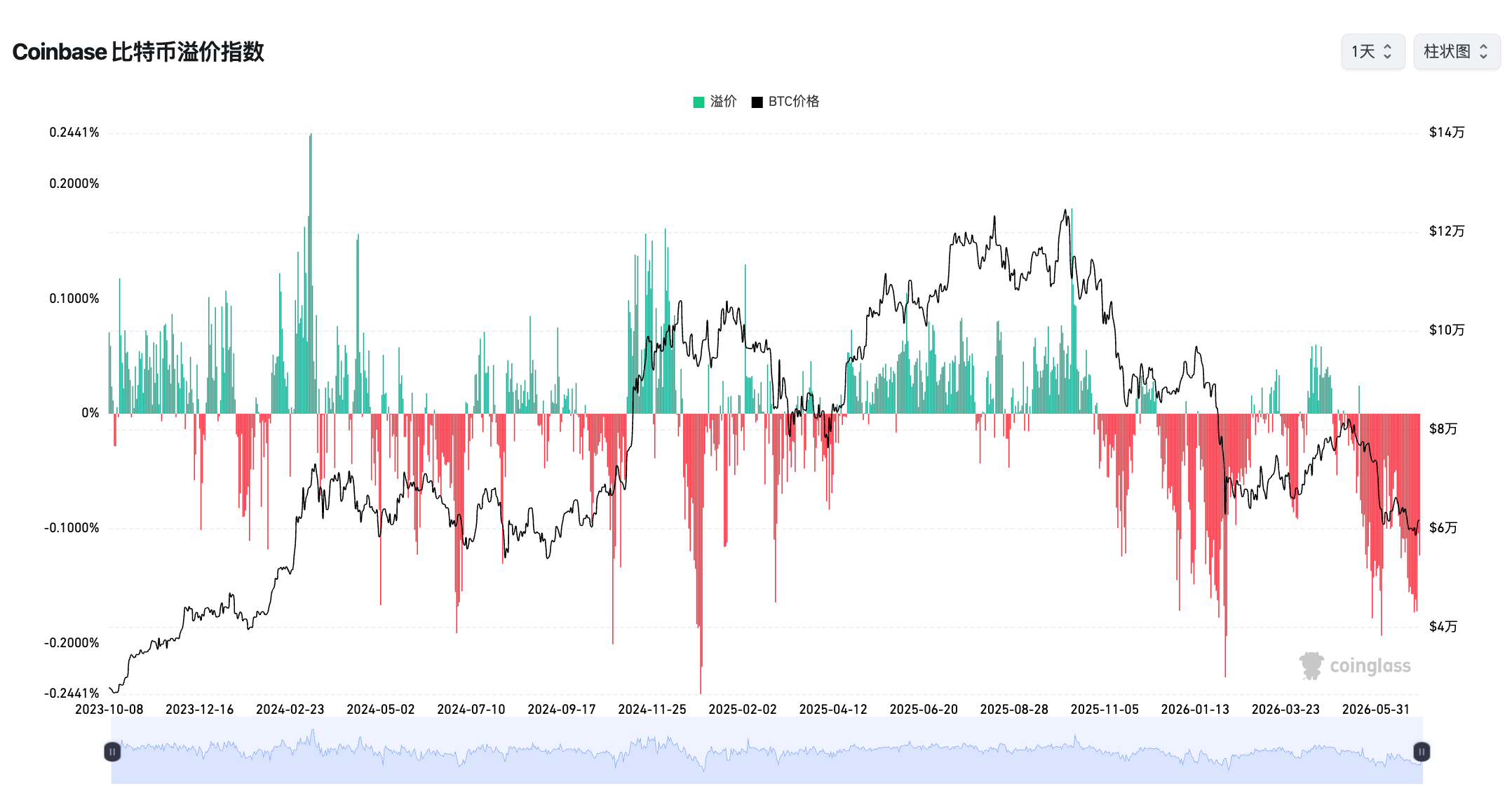
The current downturn is not being driven by a single headline. Instead, it reflects a broader deterioration across multiple layers of the market: weakening U.S. spot demand, sustained ETF outflows, growing stress around leveraged treasury structures, and worsening unrealized losses among major holders. The fact that the Coinbase premium has stayed negative for so long is especially important because it suggests that U.S.-based institutional and high-quality spot demand has yet to return in a meaningful way.
Strategy’s BTC sale and sustained ETF outflows triggered the latest leg lower
In late May and early June, Strategy, the largest corporate BTC treasury company and one of the most closely watched crypto-linked equities, sold Bitcoin again for the first time in three years. The transaction involved only 32 BTC, but the symbolic impact was far larger than the size of the sale itself. For many participants, this was interpreted as a sign of financial stress rather than routine treasury management, and it quickly became a catalyst for a broader sell-off across BTC, ETH, SOL, and other major assets.
The sell-off was compounded by persistent net outflows from spot Bitcoin ETFs and by a broader loss of liquidity across the crypto market. During the first week of June, Bitcoin briefly dropped below $60,000 and posted its worst weekly performance since the collapse of FTX in 2022. As of June 7, BTC had fallen 16% over the previous seven days and was down more than 50% from its 2025 all-time high above $126,000. Over the same period, U.S. spot Bitcoin ETFs recorded 13 straight trading days of net outflows totaling about $5.5 billion.
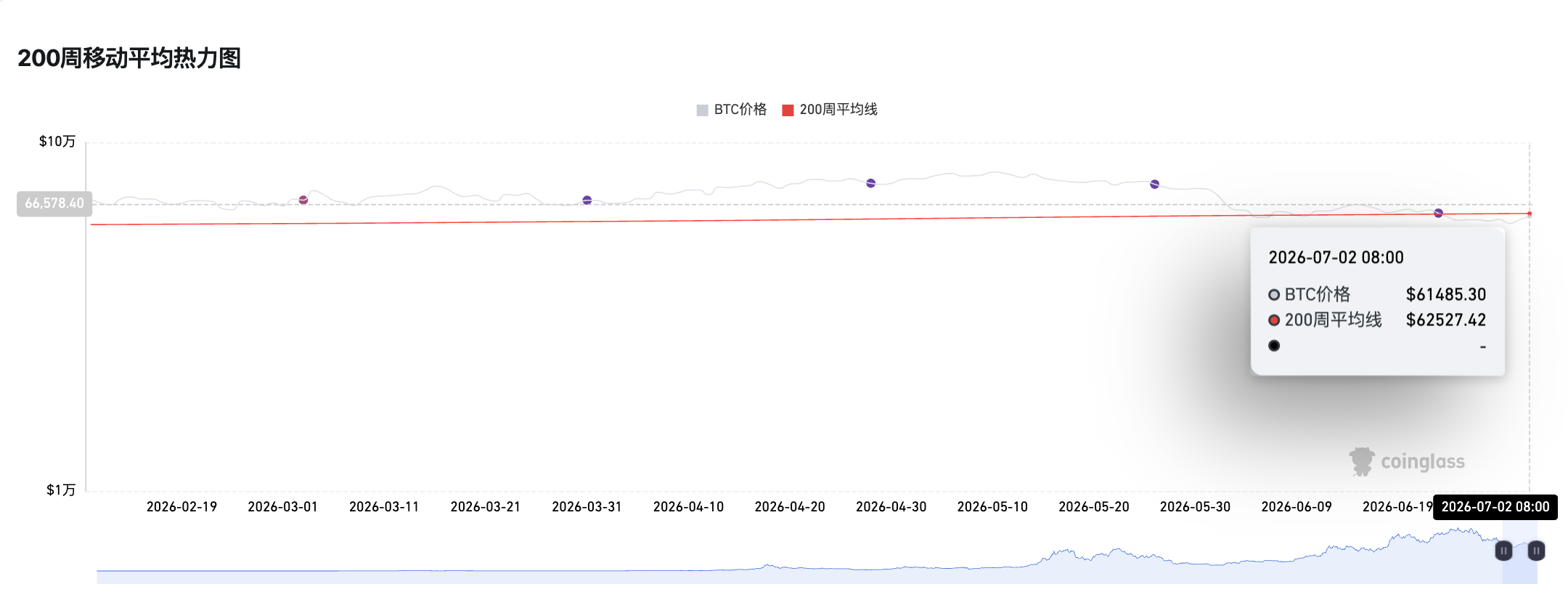
Another major technical breakdown added to the pressure: Bitcoin fell below the widely watched 200-week moving average, a level many investors consider one of the most important long-term support zones in the entire cycle. Paul Howard, a senior executive at crypto trading firm Wincent, described the market as a “silent bear market,” arguing that the loss of the 200-week moving average was an important confirmation that the market had entered a more mature bearish phase.
Although BTC later rebounded modestly toward $65,000, several analysts warned that the move might be temporary and that Bitcoin had likely not reached the ultimate bottom of this cycle. Griffin Ardern, co-founder of Primal Fund, said the market was still some distance away from a “true bottom.” In practical terms, many market participants who had still hoped for a strong reversal in May appeared to lose that optimism after Strategy’s sale, which increasingly came to symbolize a formal shift from correction to confirmed bear-market psychology.
Research firms disagree on timing, but bottom estimates cluster between $53,600 and the low-$40,000s
On June 11, CryptoQuant argued that Bitcoin could form a bottom around $53,600. The reasoning was based on Bitcoin’s realized price, the average on-chain cost basis of all market participants. According to the firm, in previous major bear cycles, BTC often bottomed near or slightly below realized price. This framework places the current sell-off within a historically familiar pattern rather than an unprecedented collapse.
On June 12, BIT published a weekly report titled “Will the FIFA World Cup Mark the End of Bitcoin’s Bear Market?” The report said the current downtrend remained broadly consistent with its outlook from early February 2026. Its previously outlined A-B-C corrective structure had, in BIT’s view, entered the final stage: Bitcoin first declined into the $60,000 to $69,000 range during wave A, then rebounded into the $80,000 to $90,000 zone and topped around $83,000 before gradually losing upside momentum. BIT also noted that the Fear and Greed Index had moved close to historically significant low levels and that the structure shared similarities with the 2022 bear-market bottom. As a result, it maintained the view that the low-liquidity summer trading period around the 2026 World Cup could mark the tail end of the current bear cycle.
On June 17, research firm K33 offered a more constructive interpretation based on supply behavior. It said the total amount of Bitcoin held by long-term holders had reached a record high, potentially signaling that the bear market was approaching its final phase. K33 highlighted that old-coin reactivation remained unusually subdued in 2026. As of June 6, only 218,421 BTC had been reactivated, versus 1.18 million BTC over the same period in 2024. In the firm’s view, weaker old-coin activity means long-term holders are less willing to sell, while patient participants continue to absorb available supply. Still, Bitcoin’s subsequent decline quickly undermined the persuasive power of such near-bottom arguments.
STRC de-pegging, expanding long-holder losses, and whale pain show capitulation is still unfolding
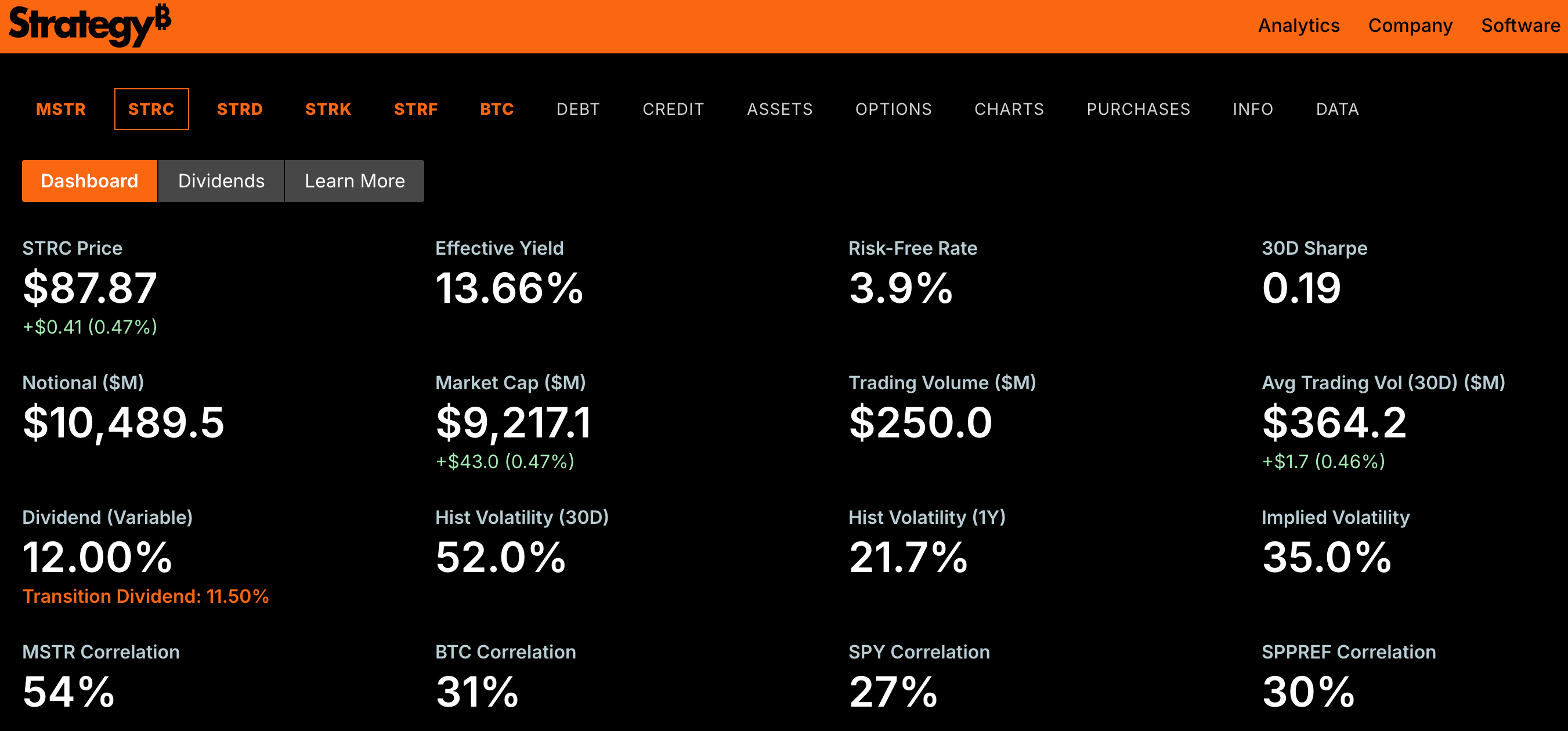
On June 18, after already slipping below $95 earlier in the month, Strategy’s preferred stock STRC fell below $90 and closed at $89. That marked the lowest daily closing price since its IPO and the lowest dividend-adjusted close since last November. The decline continued, and on June 26 STRC fell as low as $73 in pre-market trading, setting a new all-time low. At that point, the market focused on two immediate issues: the June 30 ex-dividend date, which would entitle eligible holders to a $0.48 per-share payment on July 15, and the monthly dividend-rate reset. With the effective yield approaching 15%, investors expected Strategy to raise the dividend rate from 11.50% to at least 12% or 12.50%.
Three days later, on June 29, Strategy announced a $1 billion digital credit securities repurchase program and a board-approved BTC monetization plan of up to $1.25 billion. As fundraising programs progressed, the company’s U.S. dollar reserves reportedly rose to $2.55 billion, enough to cover interest and dividend obligations on preferred securities such as STRC. This temporarily eased the discount crisis, allowing STRC to recover above $80, with the latest quoted price at $87.87. However, the rebound in STRC did not erase the broader market problem: continued weakness in BTC and ETH was still deepening unrealized losses across the holder base.
On June 25, Bitcoin briefly fell to around $59,100, and the amount of BTC held at a loss rose to 10.83 million coins, a new all-time high. That exceeded the roughly 10.5 million BTC peak previously seen near prior bear-market bottoms. Long-term holders, defined here as holders with coins unmoved for at least 155 days, held a record 14.8 million BTC at the time, and 37% of that supply was underwater. More recent data showed long-term holder supply had increased further to 16.61 million BTC, while their average cost basis had fallen to roughly $49,700.
The Ethereum side of the market also deteriorated materially. Data from June 26 showed that ETH whales had slipped into aggregate unrealized losses for the first time since 2019. Even during the 2022 bear market, the largest cohort holding more than 100,000 ETH had remained profitable, but that was no longer the case. Unrealized profit ratios were negative across all three whale cohorts: -0.26 for wallets holding 1,000 to 10,000 ETH, -0.21 for wallets with 10,000 to 100,000 ETH, and -0.05 for wallets with more than 100,000 ETH. This condition had already lasted several weeks.

At one point, Ethereum’s market capitalization dropped below $185 billion and was overtaken by USDT due to the sharp decline in ETH price. As ETH later rebounded above $1,700, its market cap recovered to about $207 billion. Meanwhile, Bitcoin UTXO data on June 28 showed that the ratio between loss-taking transactions and profit-taking transactions had fallen to the lowest level of the current bear cycle, a sign that investors were entering a more obvious capitulation phase. The last similar reading came during the deep mid-2023 bear-market period, when Bitcoin briefly traded around $26,000.
From this perspective, several practical market markers now stand out. A renewed re-anchoring of STRC toward $100, along with the return of long-term BTC and ETH holders to aggregate profitability, would likely be among the most important signs that the bear market is truly ending rather than merely pausing.
What indicators matter now, and when could the market finally stabilize?
There is still no mainstream consensus on the exact timing of the end of the bear market. In late June, TrendResearch founder Yi Lihua argued that the current move represented the third major decline since “10/11” and could be the final sharp leg down if one follows cyclical and wave-based analysis. Using Bitcoin’s high above $126,000 as the reference point, a 60% drawdown would imply about $51,000, while a 66% drawdown would imply roughly $43,000. In his view, July to August could be the final major window for declines and also the most attractive bottom-fishing opportunity of the next three years.

On June 25, BTC.TOP founder Jiang Zhuoer published an even more specific forecast. He suggested that the current BTC bear market could bottom on October 31 this year at $44,016. Incorporating the historical pattern in which mNAV bottoms roughly six months ahead of BTC price, he revised the broader bottoming window to October to December 2026, with a projected price range of $42,000 to $44,000. His framework relies on the mNAV of Strategy’s common stock MSTR, defined as the ratio between the share price and the per-share value of its BTC holdings. That ratio had fallen to 0.72, close to the 0.7 low reached on May 11, 2022.
Jiang also stressed an important historical nuance: an mNAV bottom does not necessarily coincide with the BTC price bottom. In the prior cycle, when mNAV hit 0.7 on May 11, 2022, Bitcoin was still trading at $31,017. The actual cycle low in BTC came months later, on November 21, 2022, at $15,476, by which time mNAV had already recovered to 1.2. This suggests that sentiment exhaustion in Strategy-linked equity may lead the underlying coin market, rather than align with it perfectly.
Several market indicators are now being closely watched for confirmation. Coinglass data shows that BTC’s 4-year average price index briefly fell to 0.95 between June 25 and June 30 as Bitcoin dipped below $59,000. With BTC recovering above $61,000, the index has moved back toward 1. Meanwhile, the BTC 200-week moving average heatmap indicates that Bitcoin has remained below the 200-week average since June 23 and is now roughly trading in line with it, a condition some interpret as evidence that price may be near a cyclical floor.

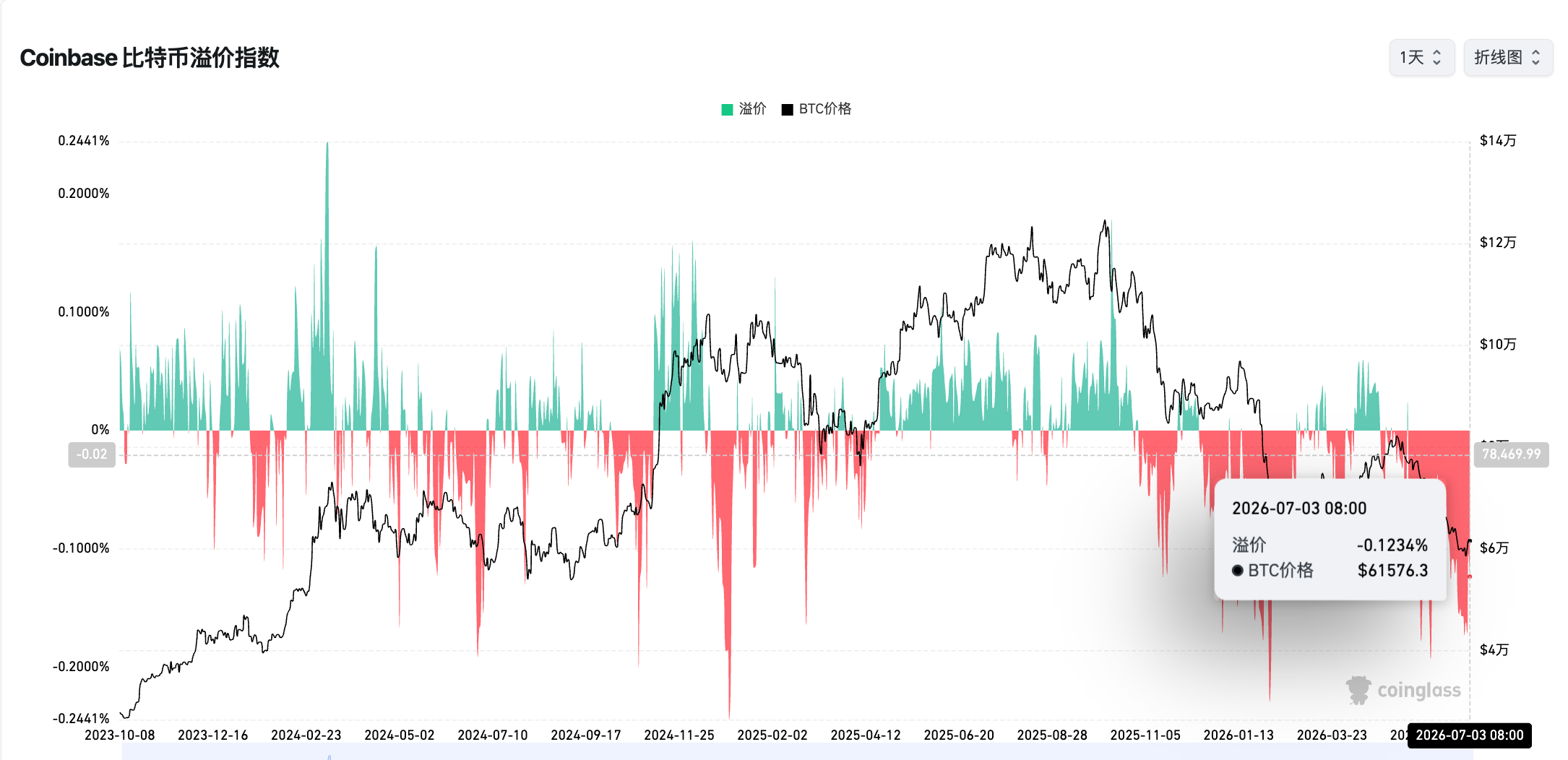
Finally, the Coinbase Bitcoin Premium Index mentioned at the beginning remains around -0.123%. Based on prior positive-premium periods, Bitcoin may need to recover to roughly $77,000 before that metric can turn positive again. Taken together, the Coinbase premium, the 4-year average price index, the 200-week moving average, the state of STRC, and the profit-and-loss structure of long-term holders all suggest that the market may be moving through the late stages of a bear cycle, but has not yet confirmed a durable reversal.
In the absence of a strong external catalyst, the current bear market will likely persist for at least another two to three months. That makes the period from late September to early October a key decision window for assessing whether Bitcoin can establish a sustainable rebound or whether the market still needs another leg lower before a full bottom is in place.