

Even the least perceptive can feel that the crypto industry is undergoing a profound transition. For the past ten years, crypto’s core strength was asset issuance: launching a chain, a token, a governance token, an economic model, and pushing them onto the market with narratives, airdrops, liquidity incentives, and community consensus. Many also boldly assumed that blockchain would create an entirely new asset system—new currencies, new financial protocols, new gaming assets, new social networks, even new organizational forms. Yet today, these native assets are slowly dying, turning every dip-buy into a hopeless fight.
Liquidity and attention have been siphoned away by the assets of the old world: U.S. stocks, Treasuries, gold, crude oil, indices… The protagonists on-chain have changed; native assets are abandoned while mapped assets thrive. This despair cannot be explained by price cycles or sector rotations alone. It points to a functional migration: the crypto industry has shifted from a “new asset factory” to a “global asset channel.”

Stablecoins are the earliest and most successful example. The mass adoption of USDT and USDC is not a victory of cryptocurrency over the dollar; rather, the industry found a more efficient way for the dollar to circulate on-chain. Over the past dozen years, countless projects have shouted slogans like “creating a new monetary system,” but only stablecoins have seen massive global usage. Ordinary users don’t care about discovering a new world currency; they simply want dollars to move faster, cheaper, and without time or geographical restrictions. The capability that blockchain has proven at scale is not value storage, not governance, not complex financial innovations, but the original peer-to-peer transfer and global settlement. Except for Bitcoin, the store-of-value function of every other token has been falsified. These assets exhibit extreme volatility, meager cashflow, ambiguous governance rights, and demand driven entirely by speculation.
The awkwardness of crypto-native assets—altcoins—becomes crystal clear in this logic. When hot money poured in, we compared internal assets: chains by TPS, DeFi by TVL, memecoins by community heat. Without real anchors, a new token could front-load a decade’s valuation as long as the narrative was grand enough. But now internal narratives are exhausted while external wealth effects are everywhere. On one side, real assets like stocks, gold, and oil are placed within a single on-chain trading interface; on the other, AI has burst into everyone’s life in a nearly sci-fi fashion. Crypto used to be the master of selling the future, earning valuation premiums from “futurism.” Years later, however, the narratives remain stuck in whitepapers, roadmaps, and funding news, while AI has already become a tool accessible on every computer and phone. A shitcoin with no revenue, no demand, and no value capture standing next to Nvidia, Micron, crude oil, and AI applications is simply an ugly sight.
The Squeeze on Ethereum and DeFi’s Worldview
The frequently discussed “Ethereum problem” should also be understood under this framework. Ethereum faces not only short-term pressures from roadmap and liquidity, but the collapse of the “native asset worldview” it once represented. Traditional mapped assets are pouring on-chain, while AI monopolizes the global tech narrative. Ethereum remains a key infrastructure for on-chain finance and asset issuance, but stripped of the belief in a “native crypto universe” innovation, ETH’s ability to capture ecosystem value has become extremely weak. Users can pay on Base, trade on Arbitrum, move assets across rollups, and trade US stocks on-chain—none of which requires holding ETH.
DeFi is similar. Its grand original narrative of rebuilding the financial system has left behind very little genuine demand. Users don’t need a whole on-chain bank; they need cheaper dollar transfers, faster settlement, deeper liquidity, and tradable price fluctuations. Lending, DEXs, and yield aggregators still exist, but they increasingly resemble infrastructure, unable to bear the industry’s imagination alone. The money lego narrative has become a legacy of the previous cycle.

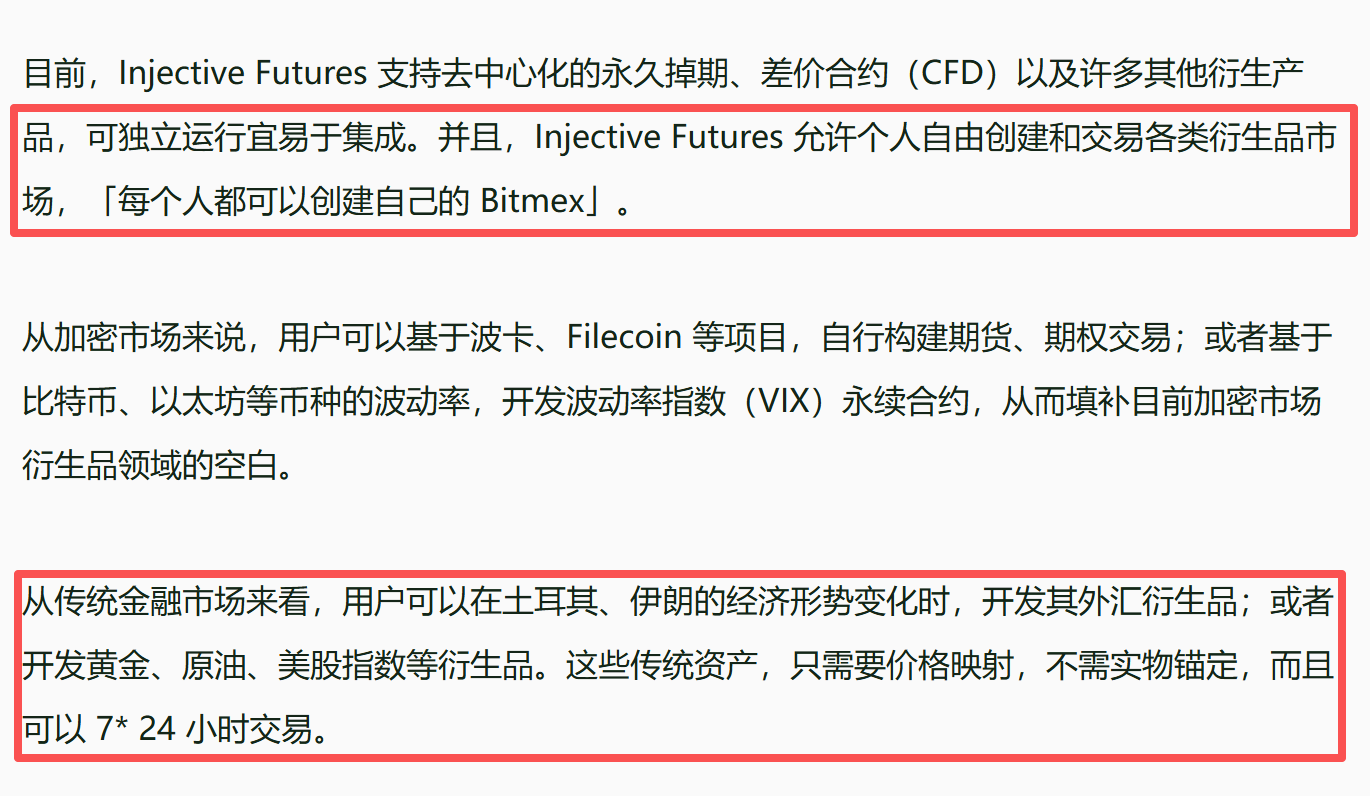
Thus, “crypto is dead” refers specifically to the retirement of the era that relied on the continuous expansion of native assets. Nobody dares claim anymore that the crypto industry will disrupt legacy finance. Instead, participants are busy installing a new transmission layer onto traditional finance: a US stock remains a US stock, but through new infrastructure it can have 24-hour trading, global liquidity, on-chain settlement, permissionless access, and composability. The industry is working full tilt to produce a new API for the old world. Stock tokenization, RWAs, and on-chain perpetuals are nothing new. Years ago, there were Perp DEXs, synthetic assets, and on-chain equity projects whose underlying mechanisms were essentially no different from today’s hot projects. That’s precisely why some veterans dismissed Hyperliquid and missed out—Kyle Samani’s persistent bearishness is a vivid example. It’s not that he hasn’t seen this before; he’s seen it too early, too many times, and grew bored.
Hyperliquid’s Overtake and the Four Waves
In its early days, Hyperliquid had a rough experience, mediocre liquidity, and heavy regulatory doubts, yet it rode successive waves of change. The first wave was the CEX-ification of on-chain perps. Its initial highlight was not merely another Perp DEX, but making on-chain contract trading feel less like DeFi and more like a centralized exchange—order book, low latency, API, rebates, ecosystem frontends, the HYPE airdrop, no VCs, and a community wealth effect—turning it into a trading arena. The hardest part for any trading venue is the first drop of liquidity; once people come to trade, market making follows, which then qualifies it to handle larger assets.
The second wave came after the October 11 trust shift. The black-box risk of centralized exchanges was once again exposed, and many whales preferred to play publicly on-chain against everyone rather than be quietly wiped out in a dark forest where opponents’ real faces are invisible. “Decentralization” became a practical demand for traders to “die with clarity” during extreme market conditions. The third wave was the volatility of macro assets like gold and oil. Geopolitical conflicts dragged markets back into macro narratives, and users needed a venue to trade global assets 24/7. Traditional markets have opening and closing bells, regional limits, and account restrictions; on-chain perpetual markets carry none of that baggage.
The fourth wave was the explosion of US stock trading. When hot assets are placed into a 24-hour, global, low-barrier perpetual market, the assets themselves bring traffic; traffic attracts market makers and ecosystem frontends, which in turn enhance liquidity, creating a snowball effect. So understanding the concept early does not guarantee big results. Previously, on-chain users were few, wallet experiences immature, and market-making infrastructure incomplete; without sufficient external opportunities, building a big ship in the absence of wind meant it would be stranded in place.

Perpetual Contracts: Price as Asset, Open Casino
Finally, let’s discuss the crypto world’s greatest invention—the perpetual contract. If you do spot US stocks, you face a complex web of compliance, custody, underlying asset mapping, trading hours, settlement, equity rights, dividends, and corporate actions. Every link must interact with the old financial system, and each can become a bottleneck. But if you trade stock perpetuals, the platform only needs to build a contract pool around the price; liquidity can be provided by ecosystem partners. Users trade price exposure without directly holding the underlying equity. It sidesteps the heaviest parts while capturing exactly what traders want most. This is, of course, its sinister side: the perpetual reduces an asset to a gamblable price symbol, compressing complex ownership relationships into long/short directions and leverage multiples. It doesn’t care whether you own the stock or understand the company’s value; it only cares whether the price moves and whether there are people willing to go long or short.
But that’s also its most captivating vitality. People don’t necessarily want to own Nvidia, but they want to trade Nvidia’s swings; they don’t necessarily want to hold gold, but they want to bet on its direction; they don’t need crude oil, but they may need the risk exposure its price provides. The perpetual distills this demand to its purest essence. It creates no new assets, only new casinos; it offers no ownership, only risk exposure. Its goal is not to rebuild the financial world, but to turn every asset into a 24-hour tradable “price.” Looking back on crypto history, the product that will truly endure is probably the perpetual. From a financial perspective, it’s almost absurd—a perpetual removes expiration, turning a product with a limited term into an eternal one. Traditional exchanges have opening and closing hours because markets need rest; the perpetual market never sleeps. Traditional finance depends on brokers, clearing houses, and regional regulation, whereas the perpetual market inherently transcends borders.

Perpetual contracts may be the most successful and the most dangerous financial innovation in crypto history. Countless people have been liquidated because of them, incalculable wealth evaporated; they magnify humanity’s greediest side, but at the same time, they have created unprecedented liquidity and price-discovery efficiency. Looking back over these fleeting years, crypto’s most successful currency is the dollar, its most successful asset is Bitcoin, its most successful application is trading, and now its “most anticipated new growth” comes from US stocks. This is the defeat of idealists, and more likely the market’s final filtration. The old tale of grand ambitions has worn thin, but humanity’s pursuit of wealth, appetite for risk, and obsession with leverage have never changed. That’s why today’s crypto industry no longer obsesses over inventing new assets, but instead strives to turn existing assets into trading pairs that are always online, globally accessible, and permissionless.