

For a decade, the crypto industry’s core competence was asset issuance. We boldly assumed blockchain would create an entirely new asset system. But today, those native assets are dying a slow death, and the liquidity and attention once theirs now flow to traditional assets: US stocks, Treasuries, gold, crude oil. The protagonist on-chain has changed — native tokens languish while tokenized real-world assets thrive. This is not another boom-and-bust cycle; it is a fundamental migration of function, from a “new-asset factory” to a “global asset channel.”
Stablecoins are the earliest and most successful proof of concept. The massive adoption of USDT and USDC is not a victory of cryptocurrency over the dollar; rather, crypto has built a more efficient circulation channel for the dollar on-chain. Ordinary users are not obsessed with inventing a new world currency; they just want dollars that run faster, cheaper, and around the clock. The function that blockchain has ultimately proven at scale is peer-to-peer transfer and global settlement — not the over-hyped value storage or governance narratives.
Against this backdrop, the awkwardness of altcoins becomes glaring. When hot money poured in, we compared TPS among public chains, TVL among DeFi protocols, community heat among Meme coins. Every story had room to run. Now, internal narratives are exhausted, and external competition has escalated abruptly: on one side, assets with real cash flows and global pricing — US stocks, gold, oil — are placed inside a single on-chain trading interface; on the other, AI has barged into everyone’s life in a sci-fi fashion. A junk token with no revenue, no demand, and no value capture looks utterly pathetic next to Nvidia, Micron, and crude oil.

The Plight of Ethereum and DeFi
The frequently discussed “Ethereum problem” must also be viewed through this lens. What Ethereum faces is not just short-term roadmap and liquidity pressures, but the complete squeezing of the “native asset worldview” it once represented. Although it remains a critical infrastructure for on-chain finance, ETH’s ability to capture ecosystem value has become extremely meager. Users can pay on Base, trade on Arbitrum, move assets across rollups, and even trade US stocks on-chain — but they definitely do not need to hold ETH to do so. DeFi tells a similar story: its grand narrative of rebuilding the financial system has settled into mere infrastructure. Lending, DEXs, and yield aggregators exist, but they increasingly resemble plumbing, unable to single-handedly sustain the industry’s imagination.

From Asset Factory to Global API
“The crypto circle is dead” means that the era of continuous native token inflation has ended. Practitioners now busy themselves building a new transport layer for traditional finance. US stocks remain US stocks, but through new infrastructure they can enjoy 24-hour trading, global liquidity, on-chain settlement, permissionless access, and composability. The industry is feverishly producing a new API for the old world, allowing all assets to be transferred, traded, borrowed, shorted, and leveraged more freely. Neither on-chain perpetuals nor RWAs are new ideas — years ago there were wave after wave of Perp DEXs, synthetic assets, and on-chain stock projects. They failed only because the user base was thin, wallet experience immature, and market winds absent; huge ships were left stranded.

Hyperliquid’s Four Waves
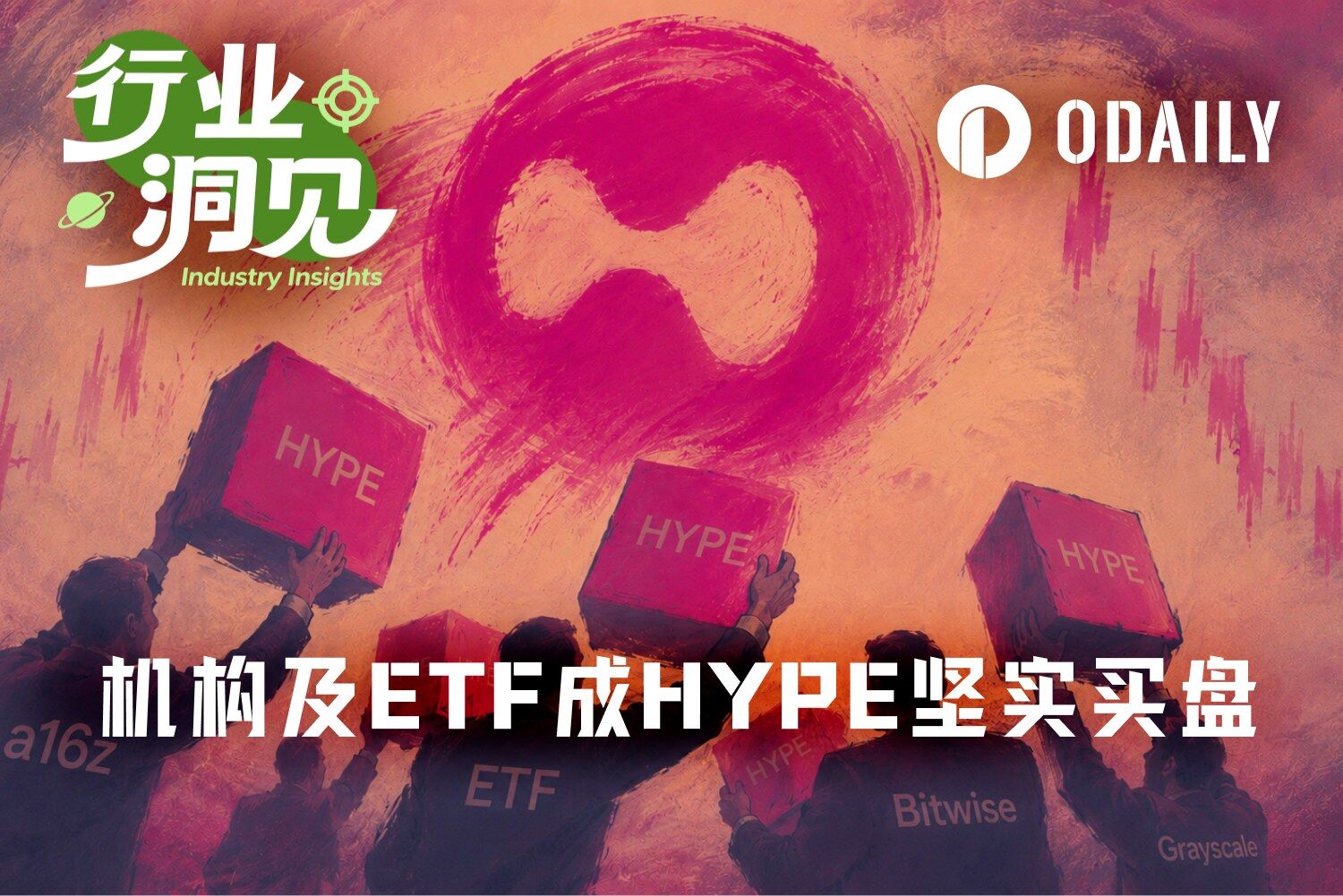
The rise of Hyperliquid encapsulates this transition perfectly. Early on, its user experience was rough and liquidity thin, but it caught four consecutive waves. The first was the CEX-ification of on-chain perps: by imitating centralized exchanges with an order book, low latency, APIs, rebates, and a community-driven wealth effect, it turned a protocol into a trading hub. The second wave was the trust shift after October 11 — whales preferred to play in the transparent on-chain arena rather than be ambushed in a shadowy CEX; “decentralized” became a real demand for “dying understood” during extreme volatility. The third wave came when wars and geopolitical conflicts reignited macro narratives, creating demand for a venue where global assets could be traded 24/7 — on-chain perpetual markets have no opening bells or regional barriers. The fourth was the explosion in US stock trading: once hot assets entered a global, low-barrier, round-the-clock perpetual market, the assets brought traffic, traffic attracted market makers and front ends, which in turn deepened liquidity, creating a snowball effect. Those seasoned veterans who had seen too many similar designs early on and missed the ride made the classic mistake of confusing familiarity with timing.
Perpetuals: The Most Dangerous Yet Successful Innovation
Looking back over crypto’s entire history, the product truly likely to endure is the perpetual contract. It reduces every asset to a price symbol you can bet on, compressing complex ownership into simple long/short directions and leverage multiples. It doesn’t care whether you own the stock or understand the company; it only cares whether the price moves and whether someone wants to go long or short. People may not actually want to own Nvidia, but they want to trade its volatility; they may not need physical gold, but they want to bet on its direction. Perps distill this demand to its purest form, creating no new assets, only new casinos; offering no ownership, only risk exposure; aiming not to rebuild the financial world but to turn every asset into a 24/7 tradeable “price.”

From a financial perspective, permanently eliminating delivery and market open/close, and operating across borders, the perpetual market is as absurd as it is vital. It has liquidated countless people and evaporated untold wealth, amplifying the greediest aspects of human nature, yet it has also created unprecedented liquidity and price discovery efficiency. Crypto’s most successful currency is the dollar, its most successful asset Bitcoin, its most successful application trading, and today its most anticipated growth driver is US stocks. This may not be the triumph of idealism, but the market has finished its screening — humanity’s obsession with wealth, risk, and leverage has never changed, and the crypto industry no longer dreams of inventing new assets; it instead strives to turn existing assets into always-online, globally accessible, permission-free trading pairs.