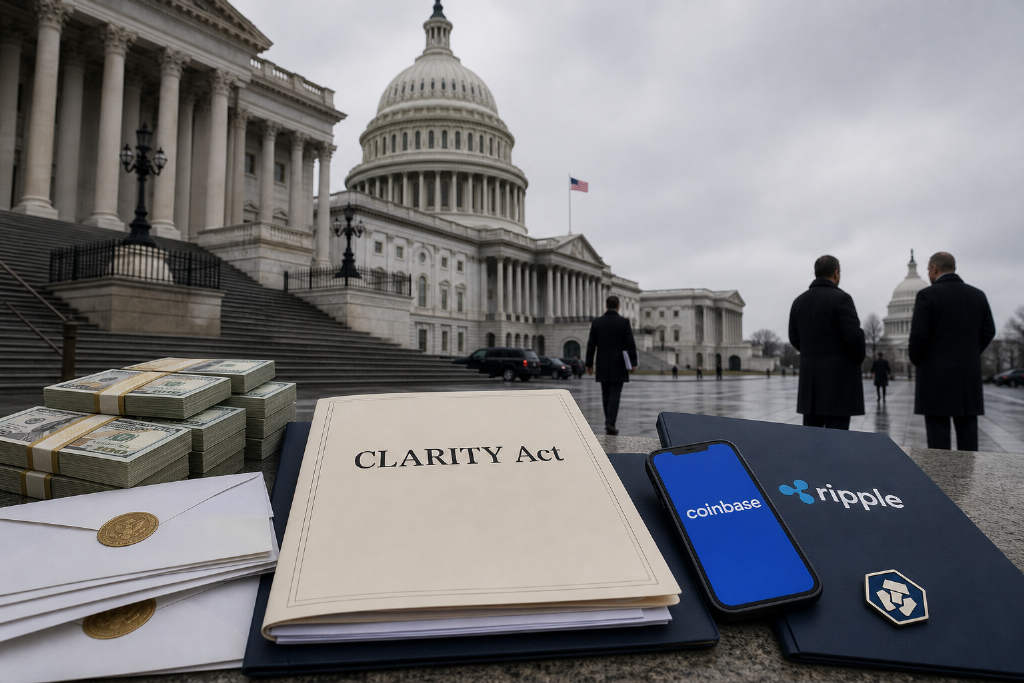
The crypto industry has become one of the largest sources of political funding for the 2026 U.S. midterm elections, having injected about $200 million into the current cycle so far. Ripple, Coinbase, the Winklevoss brothers and Crypto.com combined for roughly $202 million in contributions, aiming to back candidates who favor digital assets. The sector is also pushing the CLARITY Act, a bill designed to create a broader regulatory framework for digital assets. Since President Donald Trump returned to the White House, crypto companies have spent more than $225 million on lobbying efforts. The legislation has cleared the House of Representatives but is meeting resistance in the Senate. Daily Wire first reported the figures, and Techub News relayed the story. The report places the industry among the top financial backers of the 2026 cycle.
The crypto industry has become one of the largest sources of political funding for the 2026 U.S. midterm elections, with about $200 million deployed so far this cycle, according to Techub News.
Ripple, Coinbase, the Winklevoss brothers and Crypto.com together contributed about $202 million to support candidates friendly to digital assets.
The sector is pushing the CLARITY Act, which would create a broader regulatory framework for digital assets. Since President Donald Trump returned to the White House, crypto companies have spent more than $225 million on lobbying. The measure has passed the House of Representatives but faces resistance in the Senate.
Source: Daily Wire, via Techub News.
This article was originally published by Bit.Fan. For more cryptocurrency news and market insights, visit www.bit.fan. Disclaimer:
The market information, project data, and third-party content displayed on this platform are for industry information sharing only and do not constitute any form of investment advice or return commitment.
Cryptocurrency trading carries high risks. Users should fully assess their risk tolerance and make independent decisions. All profits, losses, and legal responsibilities are borne by the users themselves.