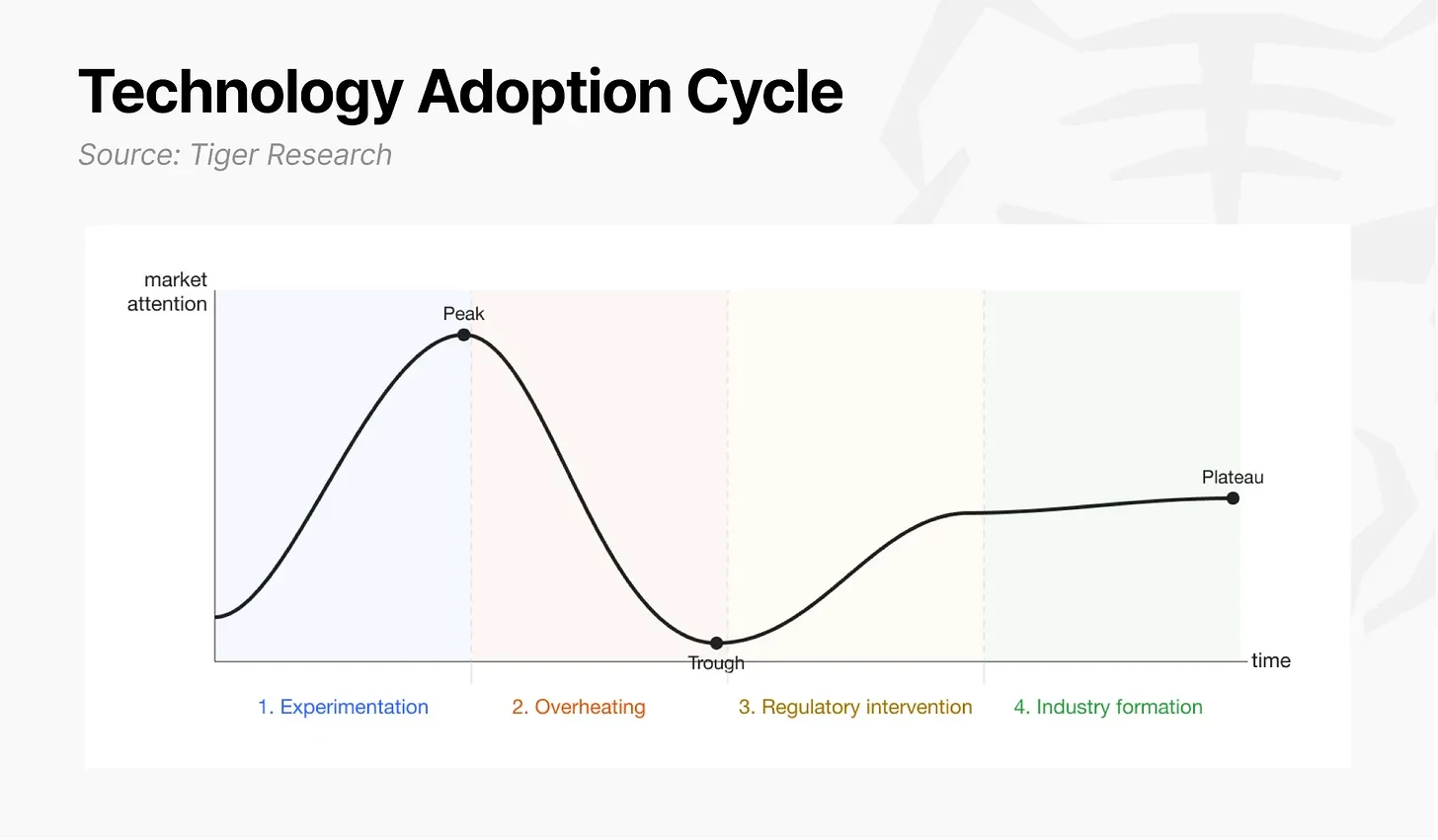
Blockchain technology typically progresses through four phases: experimentation, hype, regulatory intervention, and industrialization. Bitcoin proved payment and settlement possibilities. The 2017 ICO boom and 2021 DeFi wave brought speculative excess. The 2022 FTX collapse marked a turning point, filtering out speculation and validating real use cases. Now, U.S. regulators are shifting from laissez-faire to formalization, pushing the industry toward industrialization. Because crypto attempts to replace core financial functions like settlement, payments, and issuance, friction with traditional institutions is greater, but the industry has now reached the intersection of regulation and industry formation.
Internet Capital Markets: Reconstructing Asset Issuance and Settlement
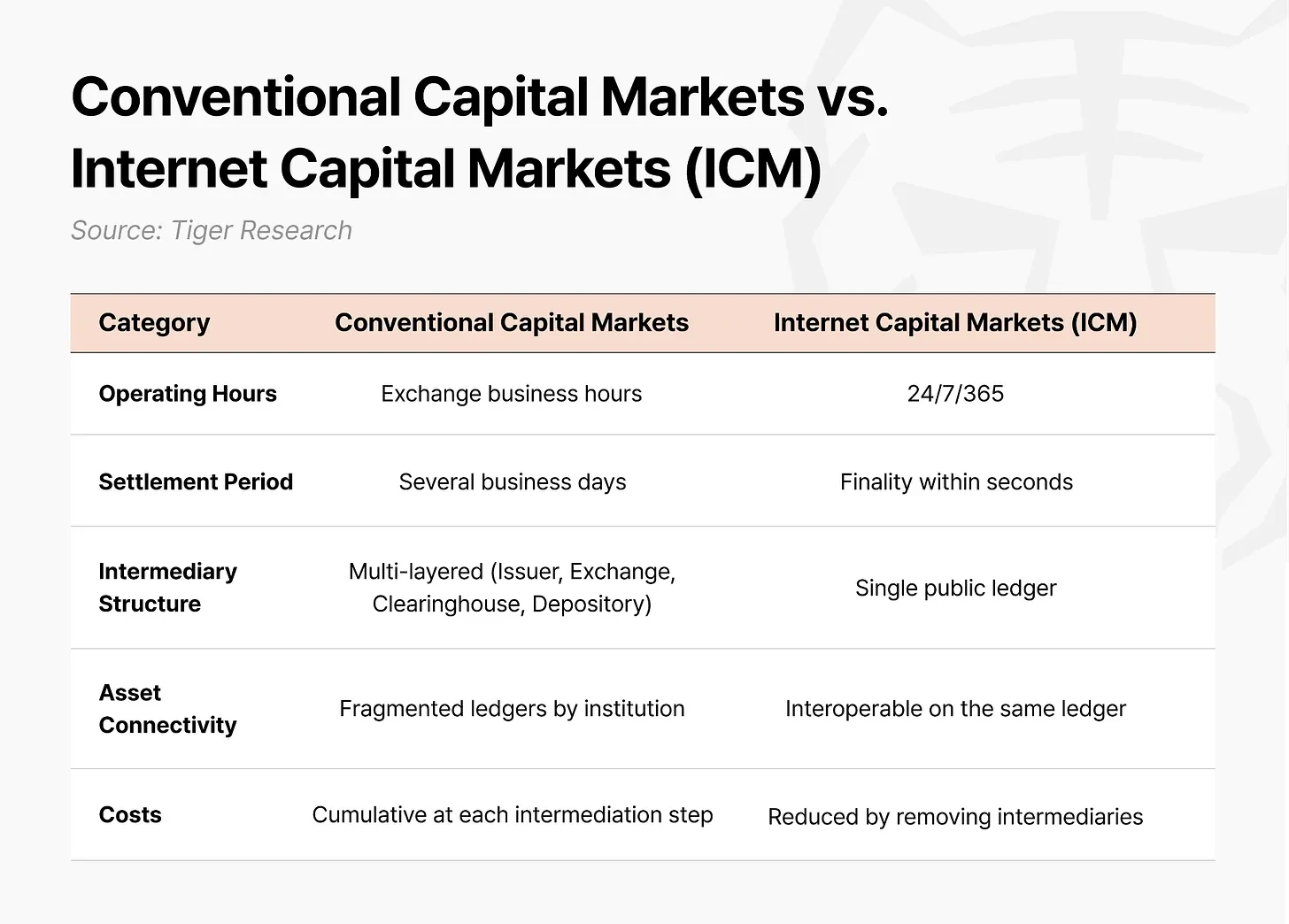
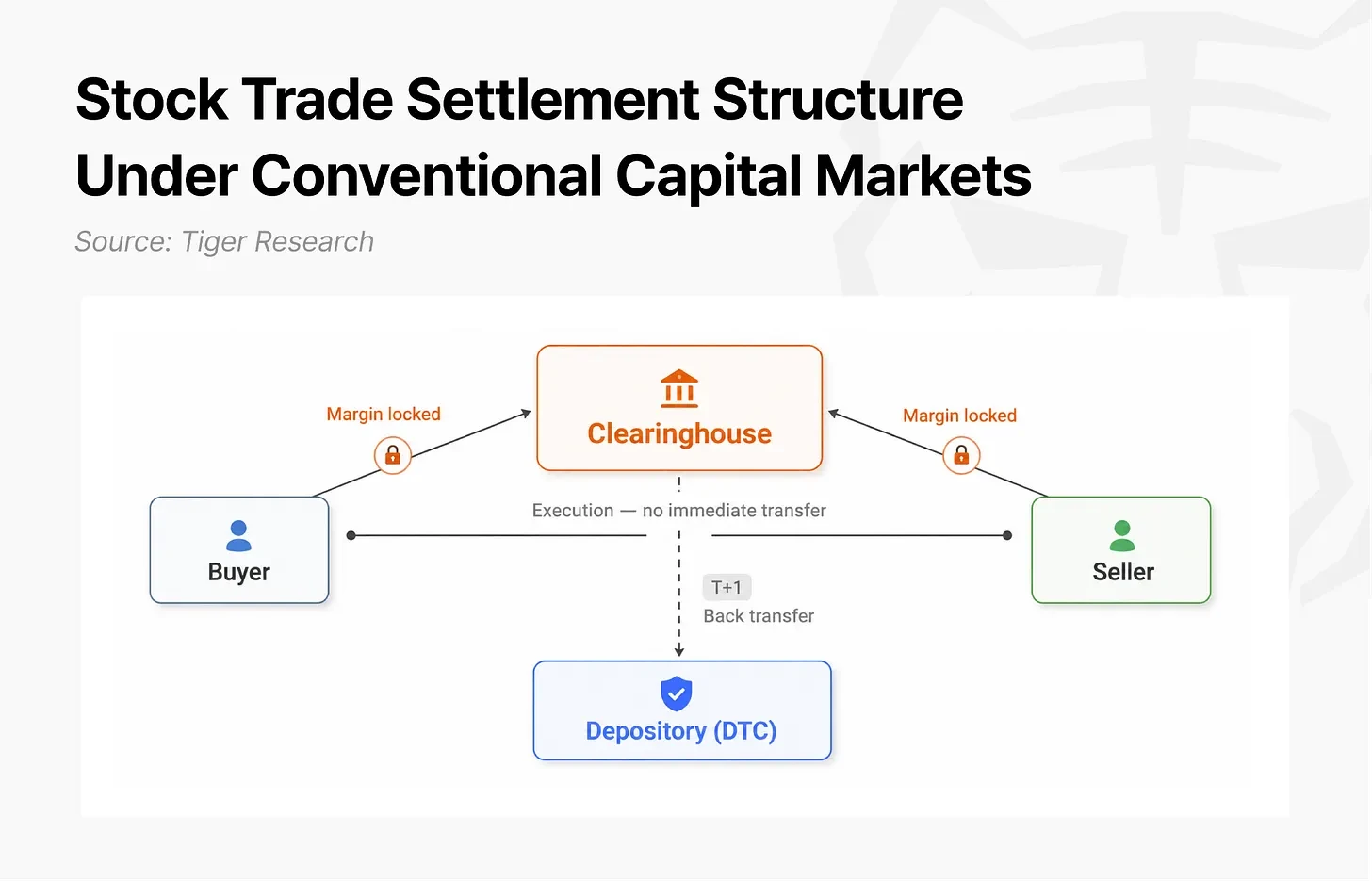
Internet Capital Markets (ICM) define a future where asset issuance, trading, and settlement all occur on a single public blockchain. Today's capital markets architecture predates the internet: buying a stock requires brokers, exchanges, clearinghouses, and depositories. Settlement is delayed (T+1 in the U.S., T+3 or more for cross-border), clearinghouses demand margin, and institutions reconcile daily—costly frictions. In ICM, smart contracts replace clearinghouses. Execution and settlement happen synchronously in seconds via atomic delivery-versus-payment (DvP), eliminating counterparty risk. History repeatedly shows that institutions slow to adopt infrastructure transitions pay higher costs or lose leadership.
U.S. Regulatory Framework Takes Shape: Stablecoin Legislation and Digital Commodity Classification
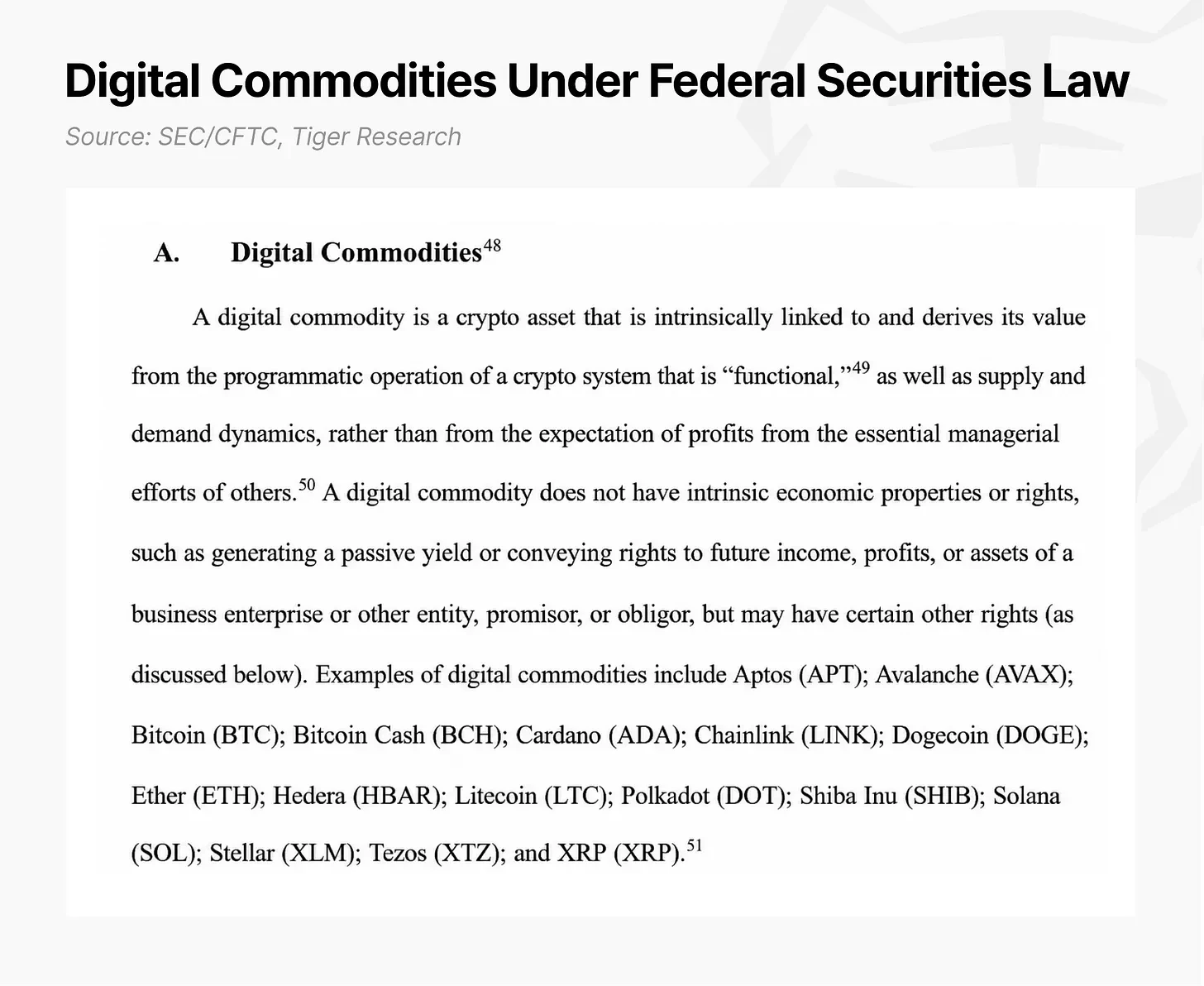
Regulatory progress underpins industrialization. Congress passed the GENIUS Act, clarifying stablecoins' legal status (but banning interest payments to holders). In March 2026, the SEC and CFTC issued joint interpretive guidance classifying 16 assets including Solana (SOL) as digital commodities, replacing the binary securities/non-securities framework with a five-category system and excluding protocol staking from securities regulation. SAB 121 was repealed, allowing banks to offer digital asset trust services. The SEC approved Nasdaq to trade tokenized securities; DTCC will pilot in July and go live in October. The CFTC approved Kalshi's bitcoin perpetual futures, bringing offshore liquidity ($61.7T in 2025) into regulated channels. The CLARITY Act aims to define overall market structure but has ~50% chance of passing in 2026 due to bipartisan disagreements over ethics provisions; the legislative window closes around July–August.
Institutional Adoption and Solana Infrastructure: Token-2022 and Compliance Capabilities
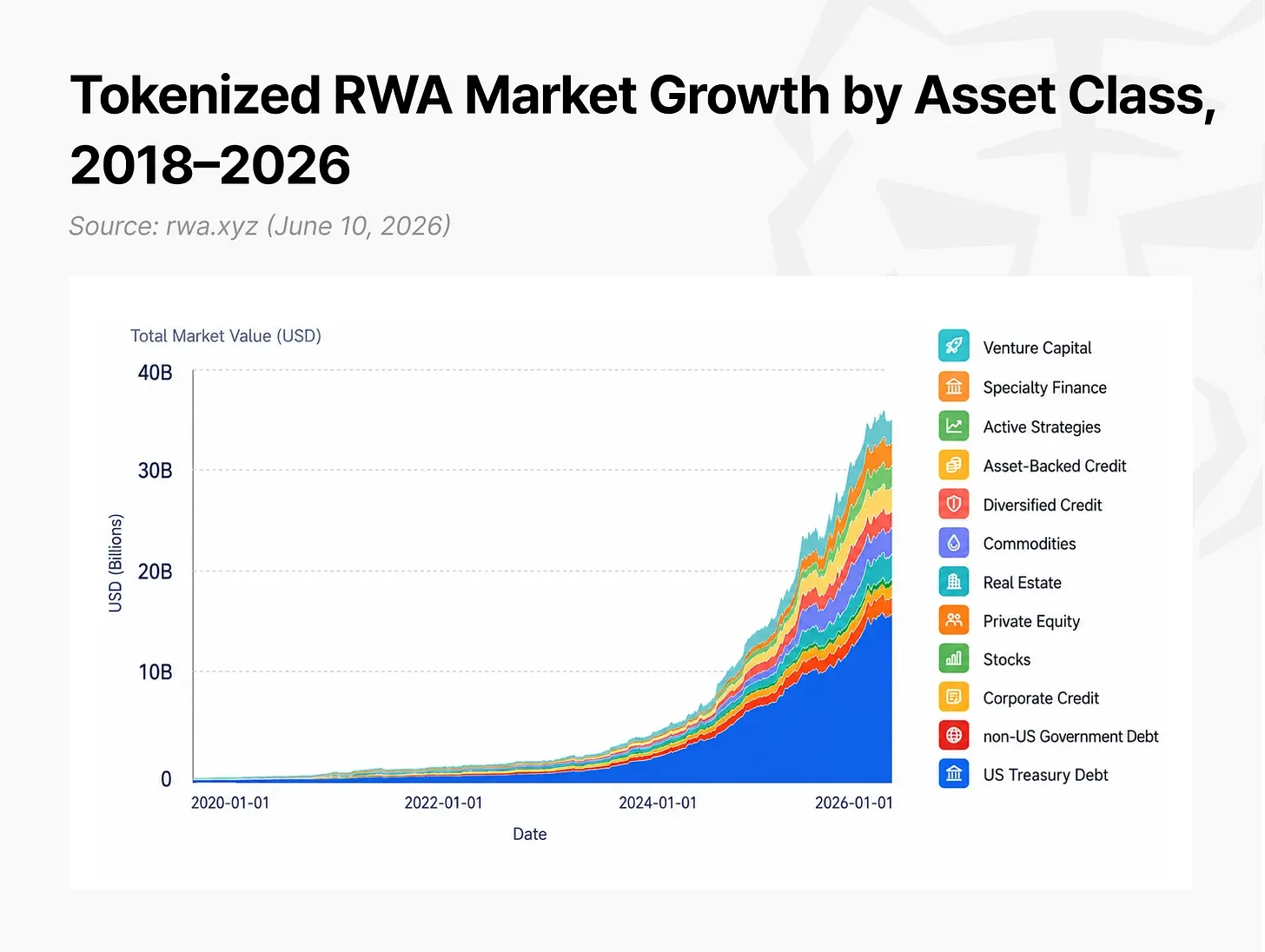
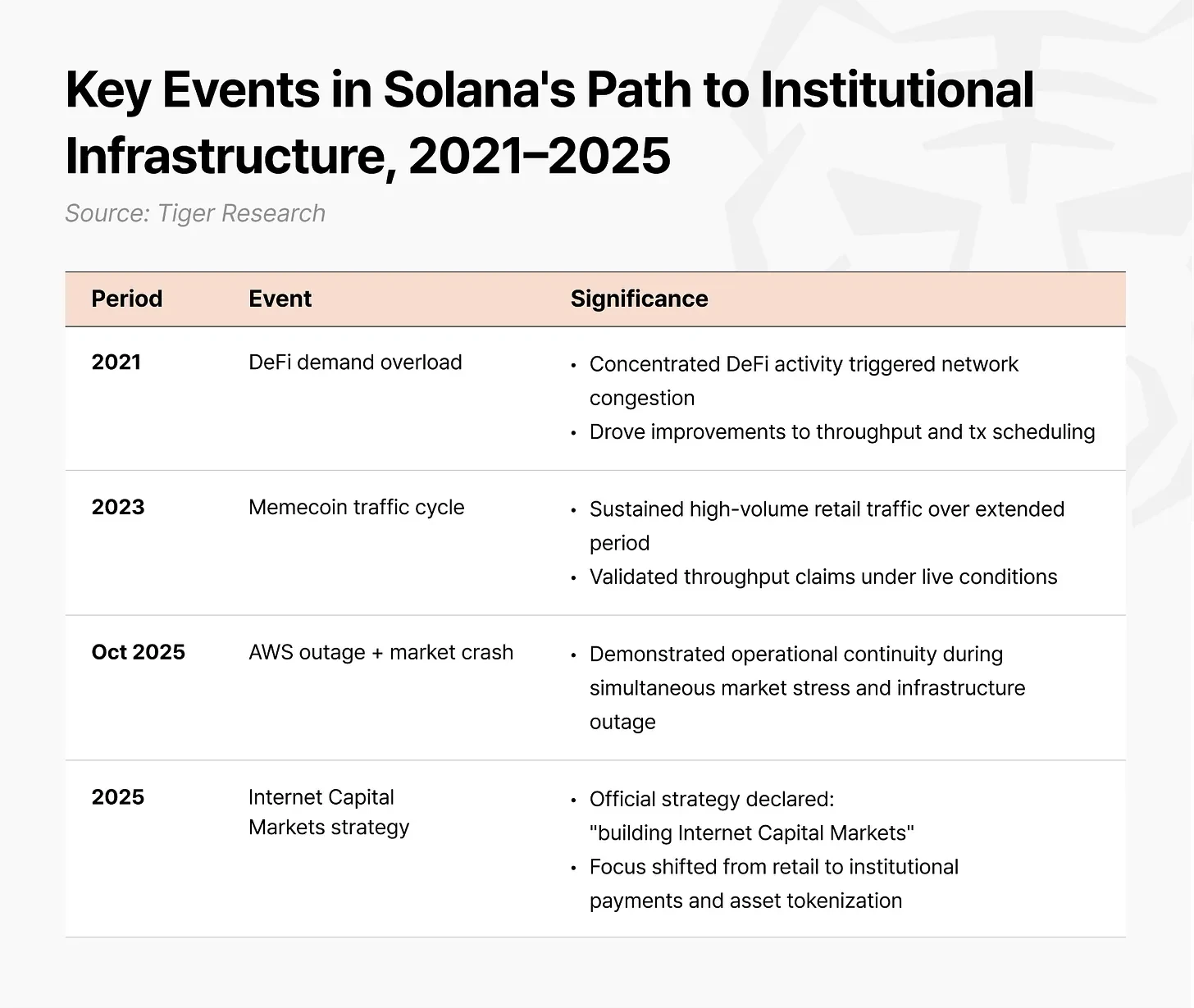
Institutional adoption continues to accelerate. The tokenized real-world asset (RWA) market grew ~257% in 15 months, from $5.4B to $19.3B; including stablecoins, on-chain assets approach $300B. Solana adopted "building Internet Capital Markets" as its official strategy, launching the Token-2022 standard that embeds freeze, clawback, whitelist, and confidential balance functions directly into the token—shifting compliance from an external afterthought to a protocol-layer design. Seven major financial institutions have conducted proofs-of-concept or real transactions on Solana: J.P. Morgan, State Street, Citi, Franklin Templeton, Visa, PayPal, and Western Union, three of which are U.S. G-SIBs. The Solana Policy Institute (SPI) was established in Washington D.C., proactively submitting the "Project Open" pilot framework to the SEC to set regulatory precedents.
On-Chain Finance Case Studies: Treasuries, Commercial Paper, Remittances, and Private Credit
Real-world cases demonstrate ICM efficiency. State Street × Galaxy launched SWEEP, an on-chain fund accepting stablecoin deposits for short-term U.S. Treasuries; Ondo Finance made a ~$200M anchor investment (26% of its TVL). J.P. Morgan arranged a $50M U.S. commercial paper issuance on Solana using atomic DvP, compressing corporate funding cycles from T+1 to real-time. Citi and PwC completed a proof-of-concept tokenizing trade finance bills, reducing settlement from days to minutes. Western Union issued USDPT (U.S. dollar payment token) to transform remittance settlement from pre-funded reserves to real-time on-demand provisioning via Solana's 0.4-second block times. Fiserv announced FIUSD, a white-label stablecoin platform covering 10,000 financial institution clients and 6 million merchants. Orca and Streamex launched GLDY (gold yield token) with token-level freeze/thaw controls enabling permissioned AMM pools. Apollo issued ACRED, a tokenized credit fund, allowing investors to leverage ~2.5x on Solana's sub-$0.001 fees, boosting base yield from 7.4% to 12–16%. Figure Technology bridged its HELOC loan rights (over $19B on-chain) to Solana via Chainlink CCIP, accessing Kamino lending for up to 9x leverage. These cases show on-chain finance moving from concept to commercial reality.
Asia's Strategic Window: Fast-Follower Path for Financial Institutions
Asian institutions need not build infrastructure from scratch; they can act as fast followers adopting proven U.S. infrastructure and regulatory references. However, entry depends on regulatory executability. In the executable phase (MAS Singapore, SFC/HKMA Hong Kong, FSA Japan, ADGM/VARA UAE), clear licensing and market infrastructure are in place—commercialization can start immediately; the risk is delay, not entry. In the transitional phase (FSC/FSS Korea, SEC Thailand, SC Malaysia, partial India), policy direction is clear but detailed rules are pending; institutions should build convertible structures that can execute upon regulatory confirmation. In the exploration phase (Indonesia, Vietnam, other emerging markets), legal definitions are unclear; small-scale experiments to accumulate data are prudent. The decision metric is not whether policy exists but whether it can be executed. Reference cases are validated but standards are not yet fixed—this is the open window for fast followers.