
Market Cycles: Higher Bottoms and Better Leverage Control
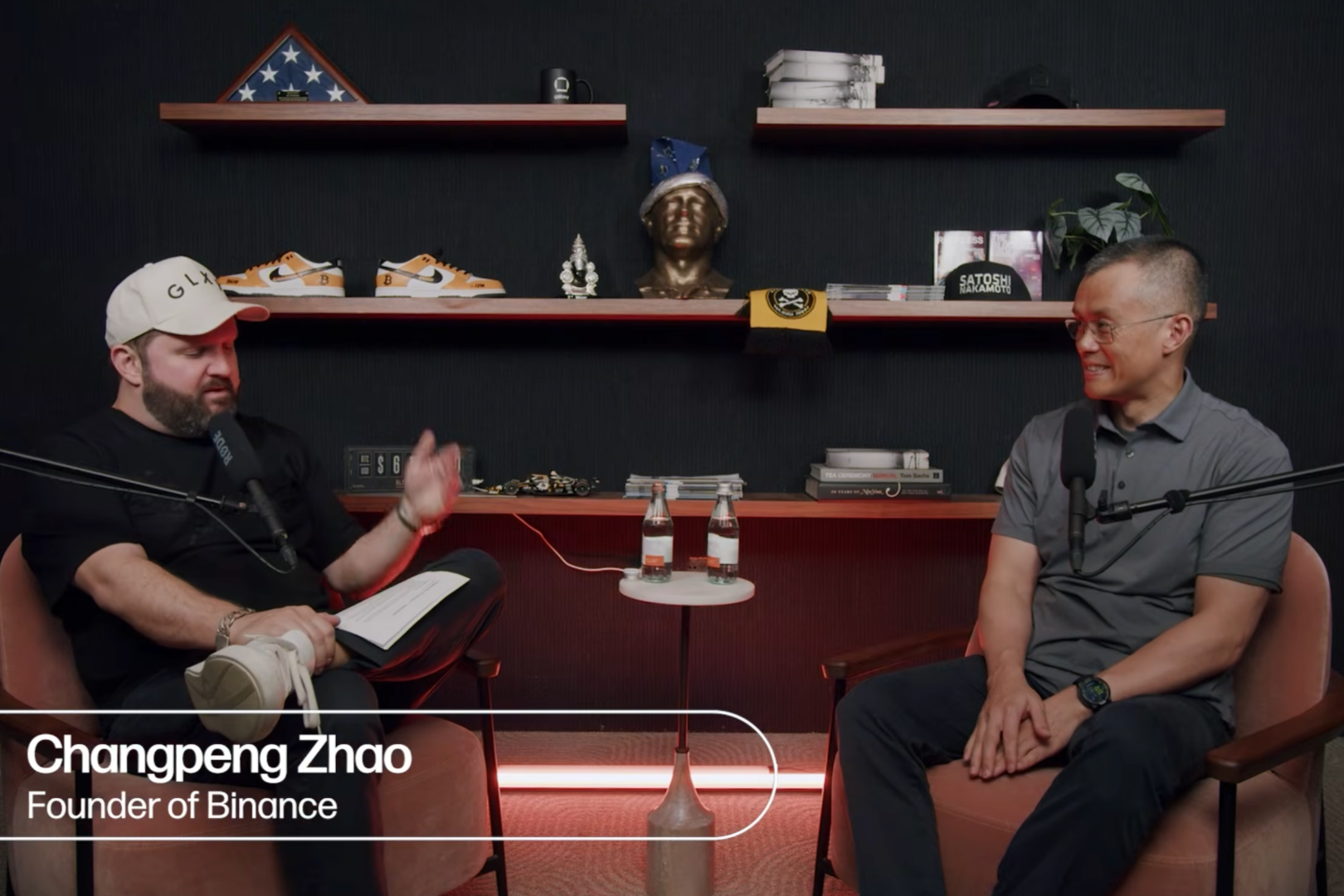
CZ confirmed the validity of the four-year crypto cycle, noting the current price is about 50% below its all-time high, far less than the 80% drawsdowns seen in previous cycles. He recalled the 2022 lows when Bitcoin hit $16,000 after Luna and FTX collapses; today's price is 4-5 times higher. Each cycle starts from a higher floor. This time, sovereign nations are actively supporting Bitcoin, institutional adoption (BlackRock), BNB ETF listings, and stablecoin expansion are real. RWA tokens like SPCX/preIPO are available on exchanges, and developer activity has returned to the US. CZ observed that the prior high ($60,000) often serves as technical support, though he declines to predict exact bottoms or duration.

On leverage risks, CZ reported no institutional bankruptcies in the past six months. The industry is managing leverage better overall. While some stablecoins offer high yields via circular lending, their scale relative to the industry is small and manageable.
Traditional Finance Meets Crypto: Centralization and Decentralization Coexist
CZ argued that crypto is not a standalone industry but a new technological tool for financial transactions—faster, cheaper, and more transparent. Traditional financial firms can build their own blockchains, and crypto companies can offer lending, savings, stock trading, and fiat services. The two will merge into a unified fintech industry. He emphasized that centralization and decentralization are not binary: any platform or team is inherently centralized, but technology trends toward decentralization. Centralized players can attract users through low-cost, secure services, creating network effects; those who abuse monopoly power eventually lose market share. CZ strongly supports decentralization, noting that more tools will become decentralized over time.

Regarding blockchain variety, CZ advocates for diversity: developers can build their own chains without being forced onto ETH or BNB. He observed that many countries want national blockchains but struggle with ceding monetary control. Allowing Wall Street giants to use private blockchains (like enterprise internet) is acceptable; true decentralization does not mean everyone must use a single open-source chain.

Perpetual Contracts, Prediction Markets, and Hyperliquid Drive Innovation in Liquidity
CZ traced the history of perpetual contracts: first introduced by BitMEX in 2014, Binance followed in 2019, and now CME offers institutional products. More institutional participation increases overall liquidity, which protects consumers and reduces crash risks. He predicted that forex trading will also move to blockchain. Exchanges like Binance enable global investors to buy US stocks and government bonds, benefiting liquidity without harming local exchanges.

On prediction markets, CZ praised Polymarket and Kalshi, noting that CFTC chair's supportive tone and US government figures backing Polymarket are positive for price discovery and liquidity. He expects 100-1,000 prediction market projects to emerge. Regarding Hyperliquid, CZ called it an innovation that occupies a niche Binance cannot compete in (no KYC, self-proclaimed decentralization). With a small team, Hyperliquid uses smart contracts for deposits and withdrawals, showcasing real technical ingenuity.

Yzi Labs Portfolio: 70% Crypto, 20% AI, 10% Biotech – Artificial Wombs and Knee Regeneration Funded
CZ revealed Yzi Labs' investment guideline: roughly 70% in crypto, 20% in AI, and 10% in biotech. He prioritizes impact over financial return: for instance, investing $1 billion in a cancer drug that cures millions but generates no profit would still make him happy. While crypto investments are not disclosed to avoid appearing promotional, he shared two non-crypto deals: an artificial womb company (testing on mice, human application 5-10 years away) and a knee cartilage regeneration technology (3D-printed scaffold implanted to regrow cartilage, about to enter human clinical trials). CZ said biotech excites him most.

AI Regulation Challenges and Crypto's Unique Edge
CZ uses multiple AI apps (OpenAI, Anthropic/Claude, Deepseek, Kimi) and finds US models more accurate but sometimes restricted by country. Chinese models are decent but less comprehensive. He warns that the AI race (US vs China building chips and data centers) could be dangerous: AI can hack computers, design nuclear weapons, and no one has deeply considered how to regulate it without stifling innovation. In contrast, crypto cannot destroy civilization and is beneficial for global trade. He notes that hot money flows to AI today, but those AI transactions will ultimately occur on blockchain, boosting crypto volumes. CZ advocates updating the financial system to be API-driven, allowing AI agents to transact seamlessly (since AI cannot use credit cards or passports). The combination of AI, blockchain, and internet will build a better financial system.