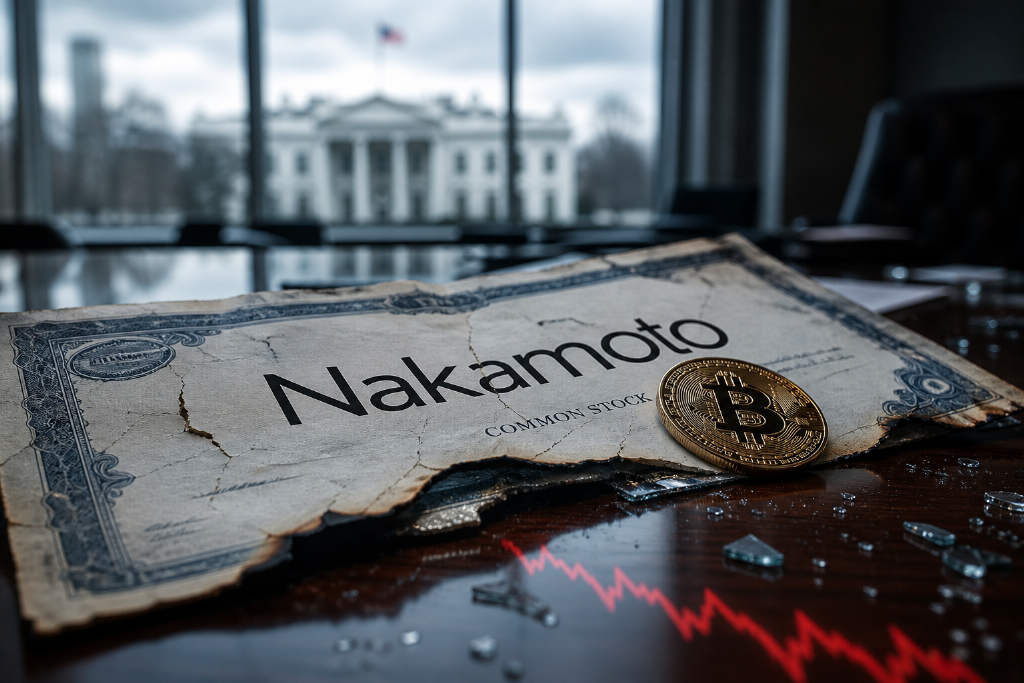
David Bailey, a bitcoin entrepreneur and ally of Donald Trump, is attempting to revive his crypto reserve business. His firm Nakamoto merged and went public in May 2025 after raising approximately $760 million to build a bitcoin reserve. Its hedge fund strategy once achieved a 640% return. However, Nakamoto's stock has plunged about 99% from its peak, reflecting the broader collapse of digital asset treasury companies. Bailey is now trying to prove the business can be sustainable without a bitcoin premium, and said he remains in irregular contact with the White House.
David Bailey, a bitcoin entrepreneur and ally of Donald Trump, is attempting to revive his crypto reserve business, ChainCatcher reports. In May 2025, Bailey's firm Nakamoto completed a merger and went public, having raised about $760 million to build a bitcoin reserve. Its hedge fund strategy once achieved a 640% return.
Since then, Nakamoto's stock has plunged about 99% from its peak, epitomizing the broader collapse of digital asset treasury companies. Investors are no longer willing to pay a premium for holding bitcoin through listed firms, hammering valuations across the sector. Bailey is now trying to prove that Nakamoto can sustain a viable business model even without the bitcoin premium, and said he remains in irregular contact with the White House.
This article was originally published by Bit.Fan. For more cryptocurrency news and market insights, visit www.bit.fan. Disclaimer:
The market information, project data, and third-party content displayed on this platform are for industry information sharing only and do not constitute any form of investment advice or return commitment.
Cryptocurrency trading carries high risks. Users should fully assess their risk tolerance and make independent decisions. All profits, losses, and legal responsibilities are borne by the users themselves.